Credit: N/A
Photosynthesis is one of the most complicated and important processes–responsible for kick-starting Earth's food chain. While we have modeled its more-than-100 major steps, scientists are still discovering the purpose of proteins that can be engineered to increase yield, as scientists recently proved in Science. Now researchers have uncovered secrets about another protein, CP12 — the full understanding of which may provide an additional route to boost yields in the future.
There are three forms of the protein CP12 that regulate the enzymes GAPDH and PRK. Think of the enzymes as the workhorses and CP12 as the groom holding the reins. CP12 tells them to get to work when there's light and reins them in when it's dark.
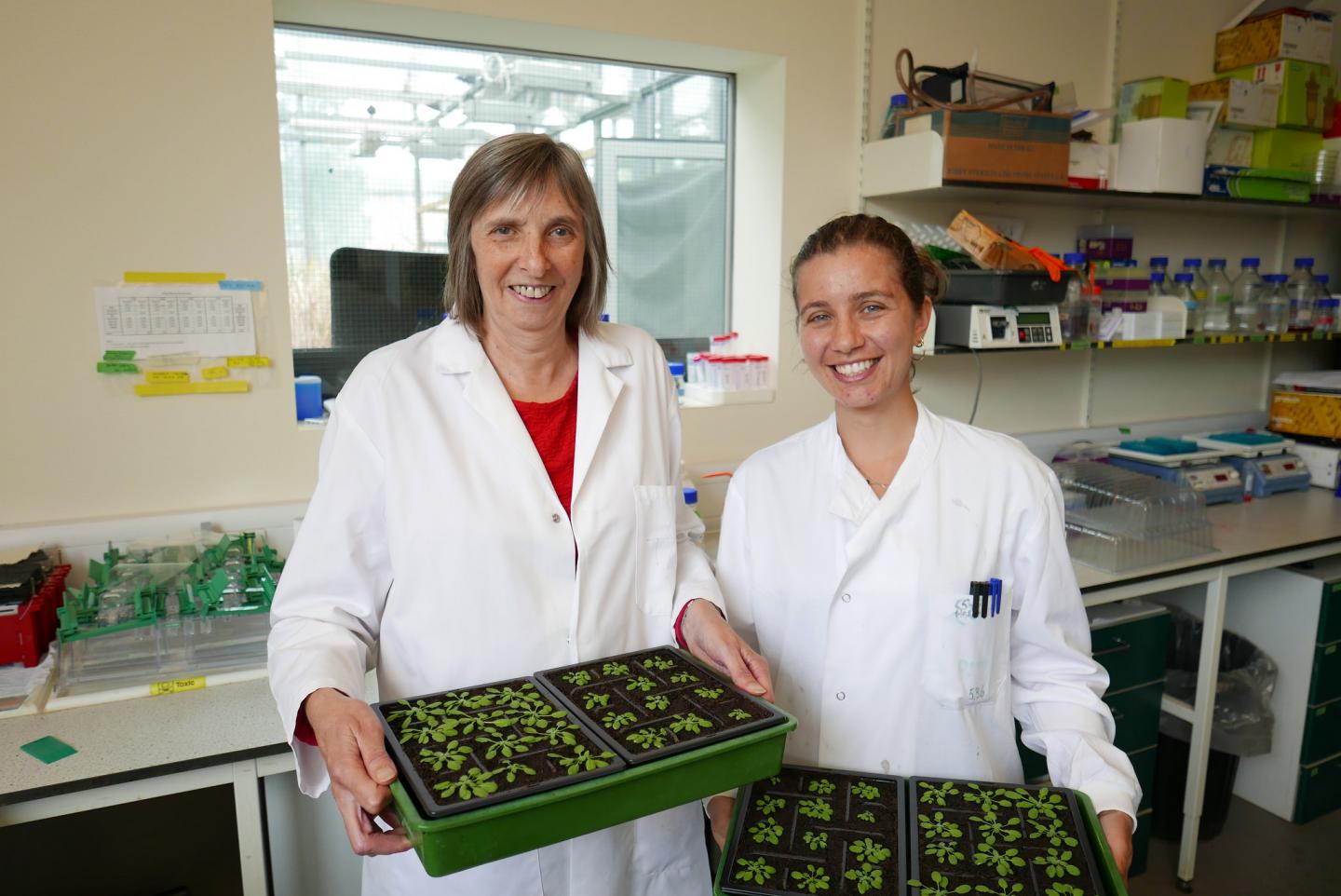
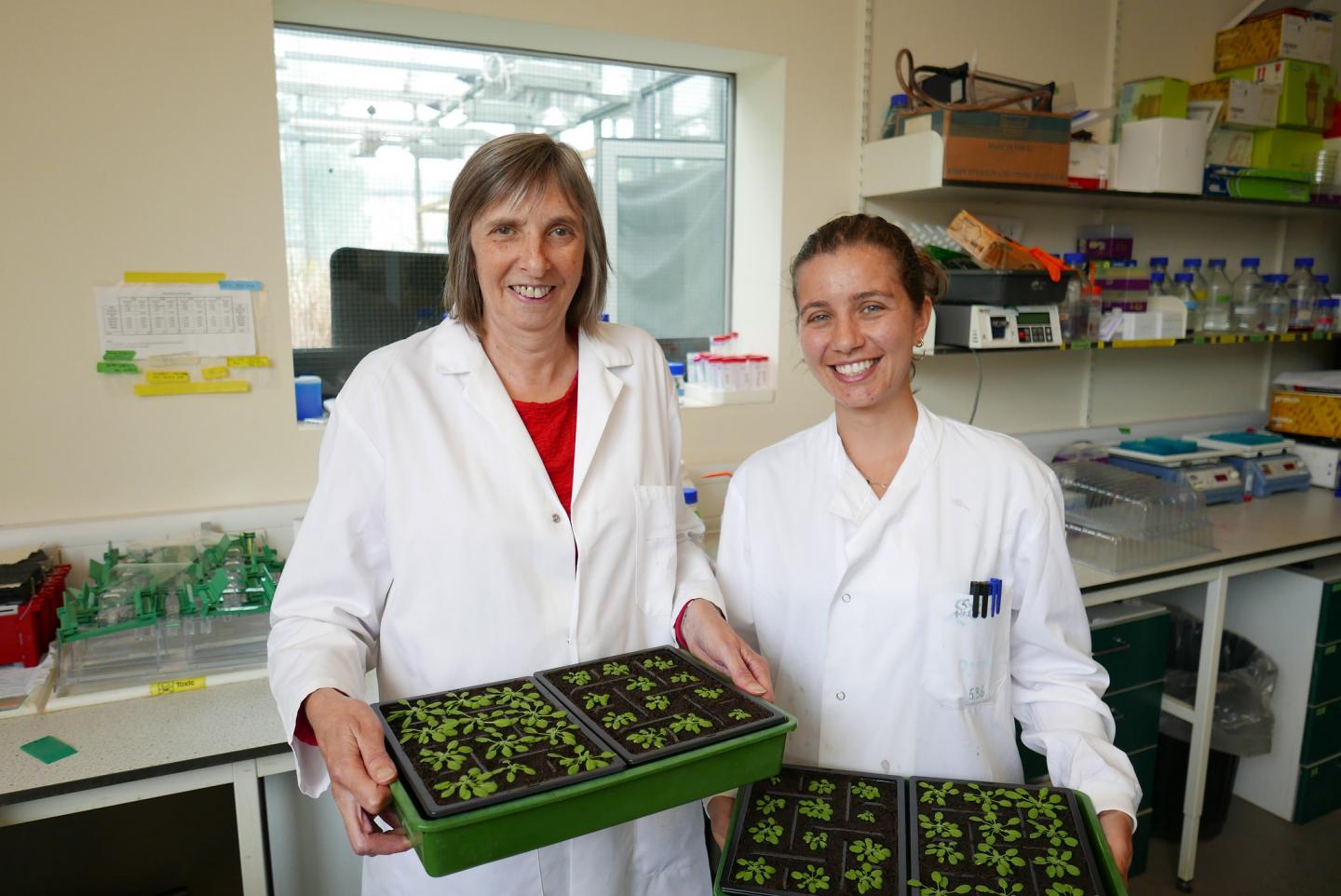
"CP12 is an important component because it helps plants respond to changing light levels, for example when the plant is shaded by a leaf or cloud," said first author Patricia Lopez, a postdoctoral researcher for Realizing Increased Photosynthetic Efficiency (RIPE) who led this research. "CP12 stops the activity of the enzymes within seconds but without CP12, it will take several minutes to slow the activity, costing the plant precious energy."
Published in the Journal of Experimental Botany, Lopez and co-authors found not all CP12 enzymes are created equal. Turns out that CP12-3 is not part of this process — whereas CP12-1 and CP12-2 are in charge and can cover for each other. Get rid of all three, and the plant can't photosynthesize efficiently, resulting in a drastically smaller plant with fewer, smaller seeds.
In fact, without CP12 to hold the reins, PRK also disappears. "PRK is a vital workhorse that provides the raw materials for the enzyme Rubisco to turn into carbohydrates — the sugars the plant uses to grow bigger and produce more yield," said lead author Christine Raines, a professor of plant molecular physiology at the University of Essex.
Agriculture is approaching the limits of the yield traits that drove the remarkable yield increases over the past century, said RIPE Associate Director Don Ort, USDA/ARS scientist and the Robert Emerson Professor of Plant Biology at the Carl R. Woese Institute for Genomic Biology. "Improving photosynthesis has the promise of being the next frontier to dramatic boost crop yields, and for the first time there is both a molecular understanding of photosynthesis and powerful technological tools to make engineering photosynthesis a realistic and attainable goal."
###
The paper "Arabidopsis CP12 mutants have reduced levels of phosphoribulokinase and impaired function of the Calvin-Benson cycle" is published by the Journal of Experimental Botany (DOI: 10.1093/jxb/erx084). Co-authors include Amani Omar Abuzaid and Tracy Lawson.
Realizing Increased Photosynthetic Efficiency (RIPE) is an international research project engineering plants to more efficiently turn the sun's energy into food to sustainably increase worldwide food productivity. The RIPE project is supported by the Bill and Melinda Gates Foundation.
The Carl R. Woese Institute for Genomic Biology advances life sciences research through interdisciplinary collaborations within a state-of-the-art genomic research facility at the University of Illinois.
Media Contact
Claire Benjamin
[email protected]
217-244-0941
@IGBIllinois
http://www.igb.uiuc.edu
Original Source
http://ripe.illinois.edu/news/incremental-discovery-may-one-day-lead-to-photosynthetic-breakthrough http://dx.doi.org/10.1093/jxb/erx084
############
Story Source: Materials provided by Scienmag