In an exciting development in the field of dermatology and artificial intelligence, researchers have paved the way for more effective acne treatment through innovative technology. The new study, titled “Automated acne lesion counting from subpar images via memory classifiers,” significantly enhances the ability to diagnose and treat acne by utilizing advanced image-processing algorithms. This breakthrough underscores the critical intersection of technology and healthcare, suggesting a future where machine learning can dramatically improve patient outcomes in dermatology.
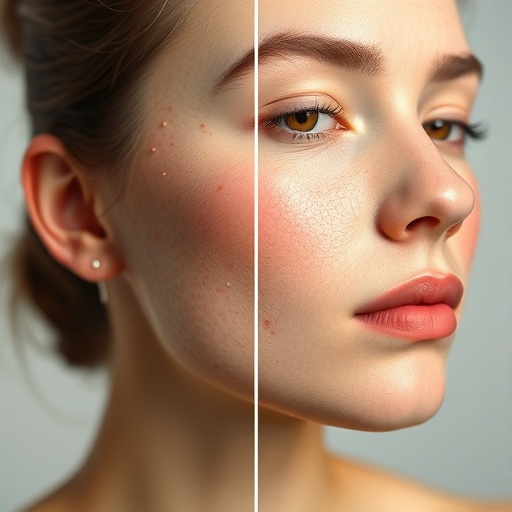
Acne is a common skin condition affecting millions worldwide, characterized by the presence of lesions, often leading to emotional distress and social anxiety for those afflicted. Effective treatments hinge largely on accurate assessments of acne severity, which is traditionally done by dermatologists using visual examinations. However, this manual approach can be subjective and may vary between practitioners, leading to inconsistencies in patient care. The introduction of automated systems can revolutionize this process by offering objective, rapid assessments based on digital images.
The study’s authors employed memory classifiers to distinguish and count acne lesions from less-than-ideal photographs. This approach is transformative, considering that many patients often submit low-quality images for remote consultations. The capability of the technology to analyze and make sense of images that traditional methods might dismiss opens up new possibilities for teledermatology. This newfound efficacy in processing such “subpar” images means that patients in remote areas can receive equitable care without needing to travel long distances to specialty clinics.
Memory classifiers work by harnessing historical data to build models that learn from past experiences. By training these models on annotated images of acne, the researchers developed a system capable of recognizing patterns and distinguishing acne lesions from other skin irregularities. This method employs complex algorithms which can adjust and refine their evaluations based on new input, gradually improving their accuracy over time.
A significant challenge faced when analyzing images is the variability in different lighting conditions, skin types, and camera resolutions. The researchers overcame these hurdles by implementing pre-processing techniques that standardize images before they are analyzed by memory classifiers. Such advancements are vital in providing a consistent baseline, which boosts the reliability of the systems used in diagnosing acne.
Another innovative aspect of the research involves using a novel architecture for the memory classifiers. The architecture allows the system to not only store learned experiences but also to retrieve and apply them effectively to new cases. This mimics human-like memory retention and can significantly enhance the speed and efficiency of lesion counting. Such techniques could be pivotal in settings where time is of the essence, such as during busy clinic hours or in emergency dermatological consultations.
Furthermore, the integration of artificial intelligence in healthcare is raising expectations regarding the management of dermatological conditions. Patients who once struggled to have timely access to acne management resources may now benefit from the rapid evaluations that AI can offer. With faster diagnosis comes faster treatments, allowing individuals to regain confidence quicker and potentially reducing the emotional and psychological toll of acne.
The implications of this research extend beyond just acne. The methodologies developed through this study have potential applications in various dermatological conditions, such as psoriasis, eczema, and other skin disorders that require careful monitoring and metrics-based evaluation. By adapting the automated systems for these conditions, healthcare providers can create a more holistic approach to skin-related health issues.
Moreover, this technology paves the way for integrating artificial intelligence further into dermatological practice. Providers could use automated systems not only for diagnosis but also for tracking treatment efficacy over time. The ability to visualize how a patient’s condition changes in response to treatment adds a compelling dimension to patient care, empowering dermatologists to make informed decisions based on data rather than intuition alone.
As this field continues to evolve, the ethical considerations surrounding AI implementation in healthcare remain paramount. Patient privacy, data security, and the need for transparency in algorithmic decision-making must be addressed as these technologies are further integrated into everyday practice. The development of regulatory frameworks and best practices will be crucial in ensuring that these advancements benefit patients without compromising their rights or the quality of care.
Looking forward, the researchers advocate for ongoing studies to validate their findings and expand the application of memory classifiers in dermatology. The exciting prospects presented in this research highlight the potential for a future where dermatological conditions are diagnosed and treated with unprecedented precision through automated systems. This aligns with a broader movement in healthcare, where technology plays a crucial role in improving lives and outcomes across various medical domains.
In conclusion, the research conducted by Yang et al. signifies a major leap forward in dermatological practice, transforming how acne is diagnosed and treated. Through the use of advanced memory classifiers and innovative image processing techniques, this study not only addresses an immediate need for effective acne management but also sets the stage for future advancements in the integration of artificial intelligence in healthcare settings. As these technologies continue to develop, they promise to reshape the landscape of dermatology, enhancing care delivery while ensuring that patients receive the best possible outcomes.
Subject of Research: Automated acne lesion counting using image-processing algorithms.
Article Title: Automated acne lesion counting from subpar images via memory classifiers.
Article References:
Yang, Y., Dutta, S., Gudobba, C. et al. Automated acne lesion counting from subpar images via memory classifiers.
Arch Dermatol Res 318, 63 (2026). https://doi.org/10.1007/s00403-026-04523-9
Image Credits: AI Generated
DOI: 10.1007/s00403-026-04523-9
Keywords: Acne, Image Processing, Memory Classifiers, Teledermatology, Artificial Intelligence, Dermatology, Lesion Counting.
Tags: acne detection technologyadvanced image processing for acneautomated acne lesion countingdigital image analysis for dermatologyenhancing dermatology with AIimpact of acne on mental healthimproving acne treatment accuracyinnovative solutions for skin conditionsmachine learning in healthcarememory classifiers in dermatologyobjective assessment of acne severityremote consultations for acne diagnosis