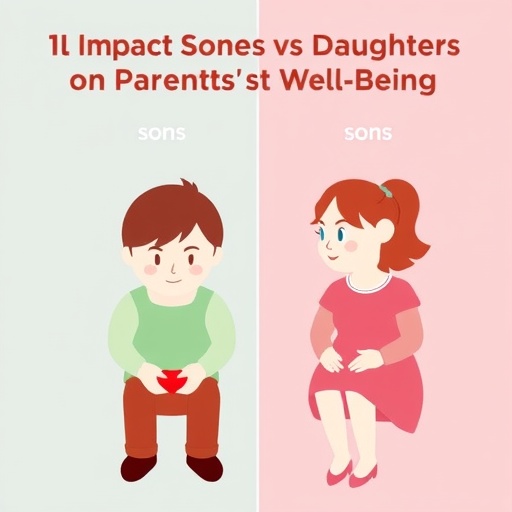
In a groundbreaking study, researchers explored the pivotal roles that gender plays in the caregiving dynamics of elderly parents. The paper, titled “Gender in old care: comparing sons’ and daughters’ role in parental functional and psychological well-being,” authored by Du, Wei, and Zhang, highlights the nuanced ways in which sons and daughters contribute to the emotional and physical health of their aging parents. This research dives deep into the implications of gender norms and societal expectations, asserting that the traditional binary gender roles can have profound effects on parental care and well-being.
The overarching objective of the study is to determine whether sons and daughters provide different levels or types of care, and how this care affects the overall well-being—both functional and psychological—of their elderly parents. This question taps into a broad spectrum of sociocultural factors, examining how these dynamics reflect larger societal issues. With aging populations increasingly common worldwide, understanding the gender differences in caregiving is not only timely but critical.
This investigation systematically delves into various qualitative and quantitative assessments to analyze the caregiving patterns between sons and daughters. Statistics reveal that daughters often take on more of the day-to-day caregiving tasks, which may include more frequent visits and direct assistance with activities of daily living. However, when sons participate in caregiving, the quality of care they provide often diverges from that of their sisters, which raises questions about the effectiveness and emotional impact of that care.
One of the fascinating outcomes of the study is the psychological ramifications that arise from different gender roles in caregiving. The research indicates that the sons ofteN manage their caregiving roles with a sense of duty, while daughters frequently engage on a deeper emotional level, often experiencing emotional burdens that can lead to caregiver burnout. These dynamics illustrate a complex interplay between gender expectations and the mental health of both the caregiver and the aging parent, showcasing the necessity for societal change in how caregiving roles are perceived and assigned.
Further, the study includes poignant anecdotal evidence collected from interviews with the caregivers themselves. Many daughters expressed feelings of guilt when unable to provide the level of care they believed their parents needed, while sons often reported feeling overwhelmed by their responsibilities. These narratives reflect wider societal pressures and highlight the need for open conversations about caregiving roles, emphasizing that societal norms can lead to mental health challenges for both caregivers and the elderly.
Moreover, the research illustrates disparities in societal support for caregiving roles according to gender. Daughters often have limited access to supportive resources, which can perpetuate cycles of stress and emotional hardship. In contrast, sons may receive more societal validation, yet they tend to lack the emotional tools to navigate the caregiving relationship effectively. This disparity begs the question of how society can bridge these gaps to ensure well-rounded support systems for all caregivers, regardless of gender.
As the study unfolds, it challenges the notion that caregiving is solely a woman’s job, advocating for an inclusive understanding that embraces the contributions of men in this critical area. This forward-thinking approach emphasizes that both sons and daughters have unique yet complementary skills that can enhance the quality of care for aging parents. Thus, the study advocates for fostering an environment where both genders can learn from each other’s strengths to optimize care strategies.
The implications of this research stretch far beyond individual families, impacting policy and creating potential pathways for societal change. With the aging global population, there is an urgent need for policies that support caregivers across the board. The study’s authors urge stakeholders—ranging from governments to community organizations—to recognize the need for gender-sensitive policies that can address the emotional and practical needs of caregivers.
The researchers strongly advocate for educating families about the emotional and psychological aspects of caregiving. By raising awareness of the challenges faced by both sons and daughters, families can take proactive steps to share caregiving responsibilities more equitably. This awareness can also prevent burnout and promote healthier family dynamics, ultimately benefiting the well-being of elderly parents.
In summation, this groundbreaking study offers a fresh perspective on the gender dynamics within caregiving roles. The varying contributions of sons and daughters shape the functionality and psychological landscapes of elderly care. As societies evolve, it becomes paramount to revisit and readjust these perspectives, paving the way for an inclusive approach to caregiving that recognizes and honors the contributions of both men and women. This study not only reveals the complexities of gender in elderly care but ultimately advocates for a more holistic understanding of familial relationships in the context of aging.
In the quest for improved caregiving strategies, the findings call upon researchers and practitioners alike to further investigate the ways in which caregiving support systems can be structured differently to accommodate the unique contributions of each gender. By promoting dialogue on these critical issues, we can cultivate a society where caregiving is seen as a shared responsibility, ultimately enhancing the quality of life for both elderly parents and their caregivers.
Strengthening the family unit requires a collective effort where support mechanisms not only empower individual caregivers but also address the holistic needs of aging family members. As the discourse surrounding gender roles continues to evolve, it’s imperative that these critical insights are incorporated into broader discussions and disseminated across various platforms to reach those who can instigate change.
Ultimately, this groundbreaking research resonates on multiple levels, illuminating the intricate interplay of gender dynamics within the caregiving landscape, while advocating for societal transformation that supports families at large.
Subject of Research: Gender roles in caregiving for elderly parents.
Article Title: Gender in old care: comparing sons’ and daughters’ role in parental functional and psychological well-being.
Article References:
Du, X., Wei, H., Zhang, X. et al. Gender in old care: comparing sons’ and daughters’ role in parental functional and psychological well-being.
BMC Geriatr 25, 1025 (2025). https://doi.org/10.1186/s12877-025-06700-3
Image Credits: AI Generated
DOI: https://doi.org/10.1186/s12877-025-06700-3
Keywords: Gender roles, caregiving, elderly parents, psychological well-being, family dynamics.
Tags: aging population and caregivingcaregiving patterns among siblingsemotional health of aging parentsfunctional health of elderly parentsgender differences in family rolesgender roles in caregivingimpact of gender on family dynamicsparental well-being and gender dynamicspsychological effects of caregivingquantitative analysis of caregiving rolessocietal expectations on caregivingsons versus daughters in elder care