


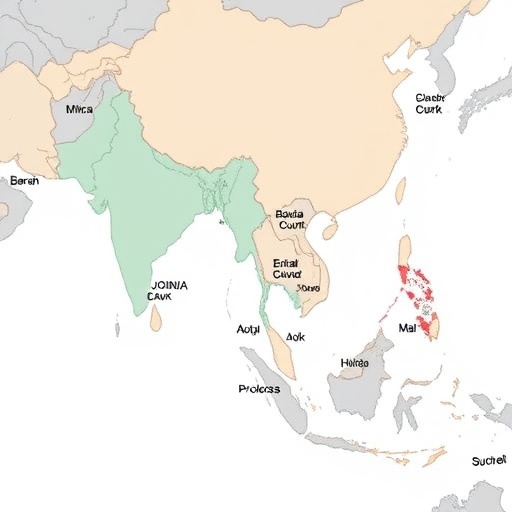
In a groundbreaking endeavor published in Nature Communications, researchers Ikhile, Highton, Gillies, and colleagues have embarked on a comprehensive exploration into the intricate relationship between quality of life and the prevalence of multiple long-term conditions (MLTCs) in Southeast Asia. As chronic diseases increasingly dominate global health landscapes, their systematic review and meta-analysis illuminate not only the complex health challenges faced by populations in this dynamic region but also the broader implications for healthcare policy and intervention strategies worldwide.
Southeast Asia, a region characterized by its vibrant populations, rapid urbanization, and diverse socioeconomic backgrounds, presents a unique setting to investigate how multiple chronic illnesses intersect and impact daily living. The rise of MLTCs—where individuals manage two or more simultaneous chronic health conditions such as diabetes, hypertension, chronic respiratory diseases, and mental health disorders—poses a significant challenge both for patients and healthcare systems. This study captures this multifaceted public health issue with an analytical rigor that transcends previous research constrained by geographic or condition-specific limitations.
By systematically compiling and evaluating data spanning numerous cohort studies, clinical trials, and health surveys, the research team applied advanced meta-analytic techniques to synthesize findings from multiple longitudinal and cross-sectional data sets. This methodological approach allowed for the quantification of the cumulative burden of MLTCs on quality of life (QoL), incorporating both physical and psychological health dimensions across various cultural and healthcare contexts within Southeast Asia. The authors sought to not only map the prevalence rates of coexisting chronic conditions but also to dissect how these combinations degrade life quality at individual and community levels.
One particularly insightful revelation of this meta-analysis is the heterogeneity in quality of life outcomes relative to the constellation of conditions experienced. While certain chronic illnesses when coexisting appear to exponentially exacerbate physical disability and mental distress, others interact in less predictable ways, influenced by local health infrastructure capacity, lifestyle factors, and cultural perceptions. For example, the often-overlooked mental health dimension, particularly anxiety and depression, was shown to disproportionately impair QoL in patients juggling multiple somatic diseases, signaling an urgent need for integrated mental health services within chronic disease management.
The research rigorously highlights the socioeconomic disparities underpinning MLTC burden and quality of life deterioration. Populations in lower-income brackets, or without robust social healthcare safety nets, disproportionately suffer the sequelae of untreated or poorly managed chronic diseases. The interplay of poverty, limited access to continual care, and insufficient health literacy creates a cycle of progressive disability and diminished life satisfaction. The authors suggest that addressing these structural determinants is as vital as clinical interventions to curb the negative impacts of MLTCs on quality of life.
In addition to individual and community health impacts, the study delves into the implications for regional healthcare systems strained under the dual pressures of increasing chronic disease prevalence and evolving demographic profiles. Southeast Asia faces a growing elder population who, by nature of aging, are more susceptible to accumulating multiple health conditions. The current fragmented health service delivery models, often focused on single diseases, are unlikely to meet these emerging needs effectively. The authors advocate for a paradigm shift towards integrated, patient-centered care pathways that holistically address the complexity of MLTCs.
The meta-analysis also underscores the importance of culturally adapted interventions in improving QoL among people living with MLTCs. Southeast Asian populations possess distinct health beliefs and practices, which notably influence disease perception, treatment adherence, and coping mechanisms. Recognizing these cultural nuances enables the tailoring of public health programs to resonate more deeply with patients, enhancing engagement and outcomes. This cultural competence is crucial in ensuring that health interventions do not merely focus on medical treatment but also enhance the lived experience of patients.
Technological advancements, including digital health platforms and telemedicine, are presented as promising tools for mitigating the challenges of managing MLTCs in resource-variable settings typical of Southeast Asia. The study signals optimism that leveraging these innovations could bridge gaps in accessibility, monitoring, and patient education, thereby improving quality of life despite systemic constraints. However, the authors caution that equitable access must be addressed to prevent exacerbating existing health inequities.
A novel element of this research is the inclusive consideration of environmental and lifestyle factors shaping the MLTC spectrum and quality of life impacts. Rapid urbanization, dietary transitions, pollution levels, and sedentary behaviors endemic to Southeast Asian urban hubs contribute substantially to chronic disease patterns and patient experiences. Addressing these modifiable risk factors at a population level could attenuate MLTC development and ameliorate quality of life declines, a preventive strategy emphasized throughout the study.
The findings presented have profound implications for policymakers, healthcare providers, and researchers. They compel a re-evaluation of clinical guidelines to accommodate the complexity of MLTCs rather than adhering to disease silo approaches. Policymakers are urged to prioritize resource allocation towards integrated care models and community-based support systems that can alleviate the multidimensional burden faced by patients and healthcare systems alike.
Educational initiatives targeting both healthcare professionals and the public emerge as critical in the study’s recommendations. Cultivating provider competencies in managing co-morbid conditions and raising patient awareness about self-management strategies can empower individuals to maintain higher QoL despite chronic disease challenges. These efforts must be contextually relevant to the diverse cultural and economic environments across Southeast Asian countries.
Furthermore, the authors identify several research gaps warranting future inquiry. Longitudinal studies elucidating causal pathways and temporal changes in QoL amidst MLTC progression are deemed essential. Equally imperative is the development of region-specific QoL measurement tools that accurately capture the lived experiences of Southeast Asian populations rather than relying solely on instruments validated in Western contexts.
The systematic review and meta-analysis by Ikhile and colleagues stand as a seminal contribution to global chronic disease literature. It marries methodological sophistication with an empathetic realistic understanding of patient realities, providing a nuanced portrait of how multiple chronic illnesses impair quality of life in one of the world’s most populous and rapidly changing regions.
In concluding their exhaustive investigation, the authors call for bold, inclusive, and multidisciplinary strategies to confront the challenges of MLTCs in Southeast Asia. Harnessing the complexities uncovered in this study can catalyze the transformation of health systems towards models that not only prolong life but enhance its quality, offering hope for millions grappling with multiple chronic conditions daily.
The resonance of this research extends beyond Southeast Asia’s borders, presenting lessons applicable to global health efforts striving to optimize care for aging populations and those living with chronic disease clusters. As the world grapples with demographic shifts and evolving disease burdens, the findings exemplify how thorough, culturally attuned research can illuminate pathways toward more equitable and compassionate healthcare worldwide.
Subject of Research: The impact of multiple long-term conditions on quality of life in Southeast Asia through a systematic review and meta-analysis.
Article Title: Quality of life and multiple long-term conditions in Southeast Asia: a systematic review and meta-analysis.
Article References:
Ikhile, D., Highton, P., Gillies, C. et al. Quality of life and multiple long-term conditions in Southeast Asia: a systematic review and meta-analysis. Nat Commun (2026). https://doi.org/10.1038/s41467-025-68197-z
Image Credits: AI Generated
Tags: chronic diseases in urban areashealthcare intervention strategieshealthcare policy implicationsimpact of multiple long-term conditionslongitudinal data analysis in healthcaremanaging multiple chronic illnessesmental health and chronic diseasesprevalence of chronic health conditionspublic health challenges in Southeast Asiaquality of life in Southeast Asiasocioeconomic factors and healthsystematic review and meta-analysis



