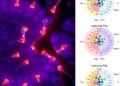

Researchers at Columbia Engineering have made groundbreaking advancements in the understanding of how cells organize and shape themselves during embryonic development. Their latest research, detailed in a publication in Nature Communications, sheds light on the intricate processes by which flat sheets of cells can fold into complex three-dimensional structures, a fundamental aspect of organ formation. This breakthrough offers new insight into the mechanical forces at play during development and opens up potential applications in fields ranging from tissue engineering to biorobotics.
The formation of organs in embryos occurs through a process known as furrowing, wherein tissues develop pockets that eventually give rise to folds. This method mirrors how a flat sheet of paper can be transformed into sophisticated shapes, such as origami. According to Andrew Countryman, a doctoral student involved in the study, the re-engineering of force-regulating proteins within cells empowers researchers to influence these folds precisely and strategically. This capability is crucial in furthering our understanding of how complex biological structures are formed and how the forces within tissues can be manipulated.
Historically, researchers have focused on examining the activation of proteins and other molecules that guide cellular behavior. However, controlling the mechanical forces that shape embryos has remained a significant challenge. The Columbia team addressed this gap by introducing light sensitivity into proteins that govern mechanical forces, thereby allowing them to regulate embryonic development dynamically. By harnessing specific wavelengths of light, the scientists can effectively manipulate the cellular machinery of embryos.
.adsslot_SPvIZputHO{width:728px !important;height:90px !important;}
@media(max-width:1199px){ .adsslot_SPvIZputHO{width:468px !important;height:60px !important;}
}
@media(max-width:767px){ .adsslot_SPvIZputHO{width:320px !important;height:50px !important;}
}
ADVERTISEMENT
Using the CRISPR-Cas9 gene-editing technique, the researchers successfully integrated light-sensitive components into genes that are naturally present in fruit flies. This innovative approach enables the team to employ light to control mechanical forces generated by the animals’ own genetic code, marking a significant advancement in the field of developmental biology. Countryman noted that these newly developed tools grant scientists unprecedented access to manipulate the forces at work in live embryos, taking a significant step forward in their understanding of embryonic development.
One of the fascinating aspects of this research lies in the ability to finely tune the contractile properties of proteins within the tissues. The light-sensitive modifications created by the researchers, known as endogenous OptoRhoGEFs, allowed for precise control over the contraction of proteins. Their findings revealed that the depth of furrows formed during tissue folding is directly linked to the amount of contractile proteins that are recruited to the cell membrane. This insight underscores the importance of protein distribution and organization in the mechanical shaping of tissues.
The implications of this research extend well beyond fruit flies. Countryman emphasized that the biological processes governing furrowing in fruit flies are highly conserved across various species, including humans. Therefore, understanding these processes has direct relevance to human health, particularly in light of conditions such as spina bifida, which stem from improper tissue folding during development. By elucidating the mechanisms involved in tissue shaping, this research could inform new strategies for diagnosing and treating congenital disorders.
In addition to its immediate relevance to human health, this innovative technique may pave the way for exciting applications in laboratory settings. The ability to manipulate the shape and behavior of tissues with light could revolutionize tissue culture methods, enabling researchers to recreate complex 3D tissues from simpler cellular sheets. This technique may serve as a model for studying disease processes and developmental biology in a controlled environment, allowing for in-depth investigations without the complexities tied to working within a living organism.
Furthermore, the potential use of controllable, cell-based machines presents a plethora of exciting opportunities in medical contexts. These engineered biological machines can function as biocompatible probes during medical procedures, enabling more precise interventions with reduced risks to patients. They may also be used as tiny pilotable vehicles capable of navigating and exploring unexplored environments, thus broadening our capabilities in both research and practical applications.
In the future, the research team aims to explore additional mechanisms by which tissues deform, beyond just furrowing. This includes investigating various forms of tissue behavior, such as bending, stretching, and flowing. By understanding how these different modes of tissue deformation work in concert, scientists can unlock the secrets to building a diverse array of tissues, organs, and body forms, facilitating progress in regenerative medicine and bioengineering.
Moreover, the development of light-based control systems for cellular behaviors harbors profound implications for the field of synthetic biology. Engineers can design living systems that respond predictably to light, providing a framework for developing programmable biological materials. Applications range from innovative drug delivery systems to synthetic organs, fostering a new wave of bioengineering projects that prioritize functionality and biological compatibility.
Ultimately, this research not only contributes to our basic understanding of biological processes but also highlights the potential for groundbreaking explorations in developmental biology and biomedical engineering. The innovative combination of CRISPR technology and light-based control mechanisms exemplifies the power of interdisciplinary approaches in addressing complex biological questions, offering a glimpse into the future of human health and technological advancements.
This study marks a pivotal moment for scientists as they continue to leap forward in harnessing the complexities of biological systems. By exploiting the fundamental principles of light and molecular engineering, researchers can reshape our understanding of development and tissue dynamics while paving the way for future discoveries with immense societal impact.
As we look forward to these promising developments, it becomes imperative to recognize the collaborative nature of scientific progress. The synergy of various fields, from molecular biology to engineering, creates a fertile ground for innovation. Researchers are setting the stage for the next generation of medical solutions that combine the best of nature and technology. Through persistent exploration and creative thinking, the future holds immense potential to transform lives and improve our understanding of the biological world around us.
Through the resilience of science and the ingenuity of researchers, the intricate dance of cellular mechanics and embryonic development will continue to unravel, inspiring a new era where light can become a powerful ally in the quest to understand life itself.
Subject of Research: Control of tissue folding in embryonic development using light-responsive proteins
Article Title: Endogenous OptoRhoGEFs reveal biophysical principles of epithelial tissue furrowing
News Publication Date: 18-Aug-2025
Web References: Nature Communications
References: DOI: 10.1038/s41467-025-62483-6
Image Credits: Andrew Countryman/Kasza lab
Keywords
Biomedical engineering, Tissue engineering, Developmental biology, CRISPR technology, Light-responsive systems.
Tags: biorobotics innovationscells folding into structuresColumbia Engineering breakthroughsembryonic development mechanicsforce-regulating proteins in cellsmanipulating biological structuresmechanical forces in biologyNature Communications publicationorgan formation processesresearch advancements in tissue foldingtissue engineering applicationstissue origami techniques