• HOME
  • NEWS
  • EXPLORE
    • CAREER
      • Companies
      • Jobs
    • EVENTS
    • iGEM
      • News
      • Team
    • PHOTOS
    • VIDEO
    • WIKI
  • BLOG
  • COMMUNITY
    • FACEBOOK
    • INSTAGRAM
    • TWITTER
Saturday, February 7, 2026
BIOENGINEER.ORG
No Result
View All Result
  • Login
  • HOME
  • NEWS
  • EXPLORE
    • CAREER
      • Companies
      • Jobs
        • Lecturer
        • PhD Studentship
        • Postdoc
        • Research Assistant
    • EVENTS
    • iGEM
      • News
      • Team
    • PHOTOS
    • VIDEO
    • WIKI
  • BLOG
  • COMMUNITY
    • FACEBOOK
    • INSTAGRAM
    • TWITTER
  • HOME
  • NEWS
  • EXPLORE
    • CAREER
      • Companies
      • Jobs
        • Lecturer
        • PhD Studentship
        • Postdoc
        • Research Assistant
    • EVENTS
    • iGEM
      • News
      • Team
    • PHOTOS
    • VIDEO
    • WIKI
  • BLOG
  • COMMUNITY
    • FACEBOOK
    • INSTAGRAM
    • TWITTER
No Result
View All Result
Bioengineer.org
No Result
View All Result
Home NEWS Science News

Identification of PTPRZ as a drug target for cancer stem cells in glioblastoma

Bioengineer by Bioengineer
July 18, 2017
in Science News
Reading Time: 1 min read
0
Share on FacebookShare on TwitterShare on LinkedinShare on RedditShare on Telegram
IMAGE

Credit: NIBB, ASUBIO Pharma

Glioblastoma is the most malignant brain tumor with high mortality. Cancer stem cells are thought to be crucial for tumor initiation and its recurrence after standard therapy with radiation and temozolomide (TMZ) chemotherapy. Protein tyrosine phosphatase receptor type Z (PTPRZ) is an enzyme that is highly expressed in glioblastoma, especially in cancer stem cells.

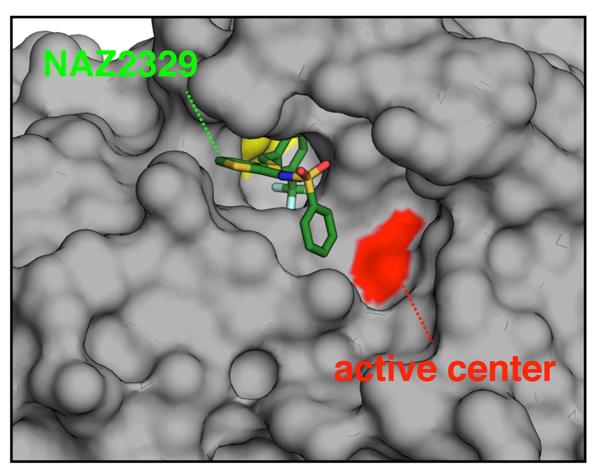
The research group of Professor Masaharu Noda and Researcher Akihiro Fujikawa of the National Institute for Basic Biology (NIBB) showed that the enzymatic activity of PTPRZ is requisite for the maintenance of stem cell properties and tumorigenicity in glioblastoma cells. PTPRZ knockdown strongly inhibited tumor growth of C6 glioblastoma cells in a mouse xenograft model. In addition, the research team discovered NAZ2329, an allosteric inhibitor of PTPRZ, in collaboration with ASUBIO Pharma Co. Ltd.. NAZ2329 efficiently suppressed stem cell-like properties of glioblastoma cells in culture, and tumor growth in C6 glioblastoma xenografts. These results indicate that pharmacological inhibition of PTPRZ is a promising strategy for the treatment of malignant gliomas.

###

The results of this research were published in Scientific Reports on June 17th, 2017.

Media Contact

Masaharu Noda
[email protected]
81-564-595-846

http://www.nins.jp/english/

Original Source

http://www.nibb.ac.jp/en/press/2017/07/17.html http://dx.doi.org/10.1038/s41598-017-05931-8

Share12Tweet8Share2ShareShareShare2

Related Posts

Succinate Receptor 1 Limits Blood Cell Formation, Leukemia

February 7, 2026

Palmitoylation of Tfr1 Drives Platelet Ferroptosis and Exacerbates Liver Damage in Heat Stroke

February 7, 2026

Oxygen-Enhanced Dual-Section Microneedle Patch Improves Drug Delivery and Boosts Photodynamic and Anti-Inflammatory Treatment for Psoriasis

February 7, 2026

Scientists Identify SARS-CoV-2 PLpro and RIPK1 Inhibitors Showing Potent Synergistic Antiviral Effects in Mouse COVID-19 Model

February 7, 2026
Please login to join discussion

POPULAR NEWS

  • Robotic Ureteral Reconstruction: A Novel Approach

    Robotic Ureteral Reconstruction: A Novel Approach

    82 shares
    Share 33 Tweet 21
  • Digital Privacy: Health Data Control in Incarceration

    63 shares
    Share 25 Tweet 16
  • Study Reveals Lipid Accumulation in ME/CFS Cells

    57 shares
    Share 23 Tweet 14
  • Breakthrough in RNA Research Accelerates Medical Innovations Timeline

    53 shares
    Share 21 Tweet 13

About

We bring you the latest biotechnology news from best research centers and universities around the world. Check our website.

Follow us

Recent News

Succinate Receptor 1 Limits Blood Cell Formation, Leukemia

Palmitoylation of Tfr1 Drives Platelet Ferroptosis and Exacerbates Liver Damage in Heat Stroke

Oxygen-Enhanced Dual-Section Microneedle Patch Improves Drug Delivery and Boosts Photodynamic and Anti-Inflammatory Treatment for Psoriasis

Subscribe to Blog via Email

Enter your email address to subscribe to this blog and receive notifications of new posts by email.

Join 73 other subscribers
  • Contact Us

Bioengineer.org © Copyright 2023 All Rights Reserved.

Welcome Back!

Login to your account below

Forgotten Password?

Retrieve your password

Please enter your username or email address to reset your password.

Log In
No Result
View All Result
  • Homepages
    • Home Page 1
    • Home Page 2
  • News
  • National
  • Business
  • Health
  • Lifestyle
  • Science

Bioengineer.org © Copyright 2023 All Rights Reserved.