In the landscape of modern medicine, particularly in the realm of oncology, the therapeutic use of chemotherapeutics has proven indispensable yet fraught with challenges. The serious side effects associated with these drugs—including toxicity, bioavailability, and solubility issues—have prompted researchers to seek innovative delivery mechanisms. RNA nanotechnology has emerged as a potential solution, offering a promising strategy for the targeted delivery of chemotherapy agents. These developments stand as a beacon of hope for more efficient cancer treatments, moving us closer to personalized medicine.
RNA molecules are inherently characterized by their structural stability, with their thermostability allowing them to maintain functionality even under varying conditions. This property is crucial in medical applications, where the integrity of the treatment must be preserved. The dynamic and flexible nature of RNA not only enhances its functional versatility but also promotes beneficial interactions within biological systems. Notably, RNA exhibits an intrinsic capacity for rapid accumulation within tumors, significantly facilitated by its deformability and motility. Consequently, these properties result in swift clearance from the body through glomerular excretion, effectively reducing the likelihood of harmful side effects in sensitive organs.
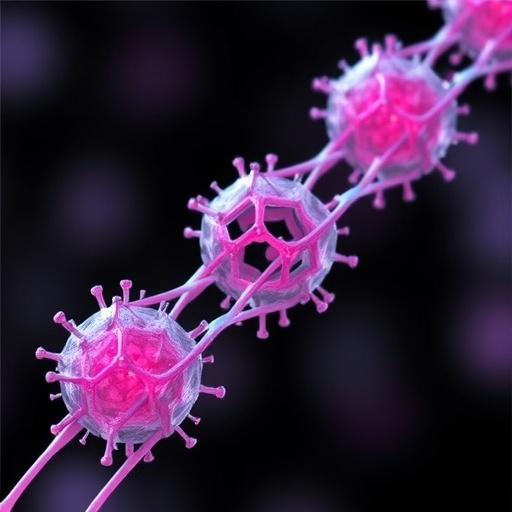
A revolutionary framework in this field is the development of branched four-way junction (4WJ) nanoparticles. These robust nanostructures demonstrate remarkable stability even at temperatures exceeding 80 °C, presenting an ideal platform for drug delivery. In a striking advancement, researchers have successfully conjugated as many as 24 drugs to a single 4WJ nanoparticle, significantly enhancing the payload delivered to tumor sites. Each RNA strand within the 4WJ configuration can accommodate six hydrophobic chemotherapeutic agents, including well-known drugs like camptothecin and paclitaxel. This careful orchestration allows for precise spatial arrangements, ensuring that drug molecules do not aggregate, which can undermine the effectiveness of treatment.
The efficacy of RNA conjugation is underscored by a substantial enhancement in the water solubility of paclitaxel—an impressive increase of 32,000-fold. This dramatic improvement not only exemplifies the potential of RNA nanoparticles in overcoming solubility issues, often a significant barrier in chemotherapy, but also showcases the transformative impact of RNA technology on pharmaceutical formulations. By addressing these challenges head-on, the therapeutic window of chemotherapeutics is widened, paving the way for more effective cancer treatments.
To realize the full potential of these RNA nanoparticles, the development protocol involves several intricate steps. It commences with the chemical modification of existing drugs, followed by a meticulous conjugation process whereby multiple prodrug molecules are linked to each synthesized RNA component strand. Following this, the assembly of RNA nanoparticles takes place, after which thorough purification and characterization processes ensue. This structured protocol ensures the integrity and functionality of the developed drug complexes, setting the stage for successful therapeutic outcomes.
A key innovative aspect of this research is the utilization of click chemistry as a means of conjugating prodrugs to RNA nanoparticles. This efficient approach creates ester linkers that are cleaved by esterases found in tumor tissues or cells. This strategic design enables the prodrugs to revert to their active forms, facilitating targeted drug release. Moreover, this click chemistry methodology minimizes systemic toxicity, as the uncoupling of active drugs from their carriers primarily occurs at the tumor site, sparing healthy tissues from unnecessary exposure.
Moreover, the experimental inclusion of tumor-targeting ligands within the nanoparticles demonstrates a commendable strategy to enhance specificity and efficacy in drug delivery. By integrating these ligands, researchers have observed a marked improvement in the delivery of high payloads directly to tumor cells while concurrently maintaining controlled release mechanisms. This dual-functionality is critical for overcoming the adaptive resistance that cancer cells often develop against standard therapies.
The implications of this research extend far beyond immediate clinical applications. The ability to harness RNA nanoparticles for targeted drug delivery may allow for a paradigm shift in how oncological treatments are approached. Innovative methods like this could reduce common treatment-related side effects, enhance therapeutic efficacy, and ultimately lead to improved survival rates for cancer patients. Further, as researchers continue to refine and optimize these methodologies, it is likely we will witness an era of more personalized and less toxic cancer therapies, fundamentally altering patient experiences.
Extensive characterization of the RNA nanoparticles is pivotal in confirming their structural integrity, functionality, and safety. Advanced imaging and analytical techniques are employed not only to elucidate the morphology of these nanoparticles but also to assess their interactions with biological systems. Comprehensive studies and tests validate the therapeutic applications of these carriers, providing crucial insights that inform their clinical translation.
As the scientific community continues to innovate and explore novel paradigms in drug delivery systems, the potential partnerships between RNA nanotechnology and cancer therapy hold great promise. By navigating the complex landscape of drug delivery, researchers are not only paving the way for breakthroughs in treating cancer but also offering a model for addressing other diseases characterized by similar therapeutic delivery challenges.
In conclusion, the progressive advancements in RNA nanotechnology exemplify how harnessing biopolymer properties can revolutionize the delivery mechanisms of chemotherapeutics. With a robust platform designed for sustained stability and targeted release, the potential benefits for cancer therapeutics are profound. This research heralds a new dawn in oncology where therapies can be harnessed more effectively, side effects minimized, and patient outcomes drastically improved.
The road ahead is filled with possibilities, and as the dialogue within the scientific community deepens, the transformative potential of these findings will undeniably echo throughout the halls of research institutions and clinical settings worldwide. The journey toward more effective and less toxic cancer therapies is steadily gaining momentum, drawing closer to the horizon of real-world applicability in patient care.
In summary, these advancements signify not just a noteworthy scientific achievement but also an essential stride towards alleviating the burdens that cancer imposes on patients and healthcare systems alike. With ongoing research and development, the future of cancer treatment appears increasingly promising.
Subject of Research: RNA Nanotechnology for Targeted Chemotherapeutic Delivery
Article Title: Conjugation of hydrophobic drugs to motile pRNA 4WJ nanoparticles for spontaneous tumor targeting and undetectable toxicity
Article References:
Binzel, D.W., Jin, K., Yudhistira, T. et al. Conjugation of hydrophobic drugs to motile pRNA 4WJ nanoparticles for spontaneous tumor targeting and undetectable toxicity.
Nat Protoc (2026). https://doi.org/10.1038/s41596-025-01306-w
Image Credits: AI Generated
DOI: https://doi.org/10.1038/s41596-025-01306-w
Keywords: RNA nanoparticles, chemotherapeutics, targeted delivery, toxicity reduction, drug conjugation, cancer therapy, click chemistry.
Tags: branched four-way junction nanoparticlesenhancing bioavailability of chemotherapeuticshydrophobic drug delivery systemsinnovative cancer treatment strategiesnanoparticle design for drug deliveryovercoming drug solubility issuespersonalized medicine in oncologyreducing chemotherapy side effectsRNA nanotechnology for cancer treatmentRNA stability in medical applicationstargeted chemotherapy with nanoparticlestumor-targeted drug accumulation