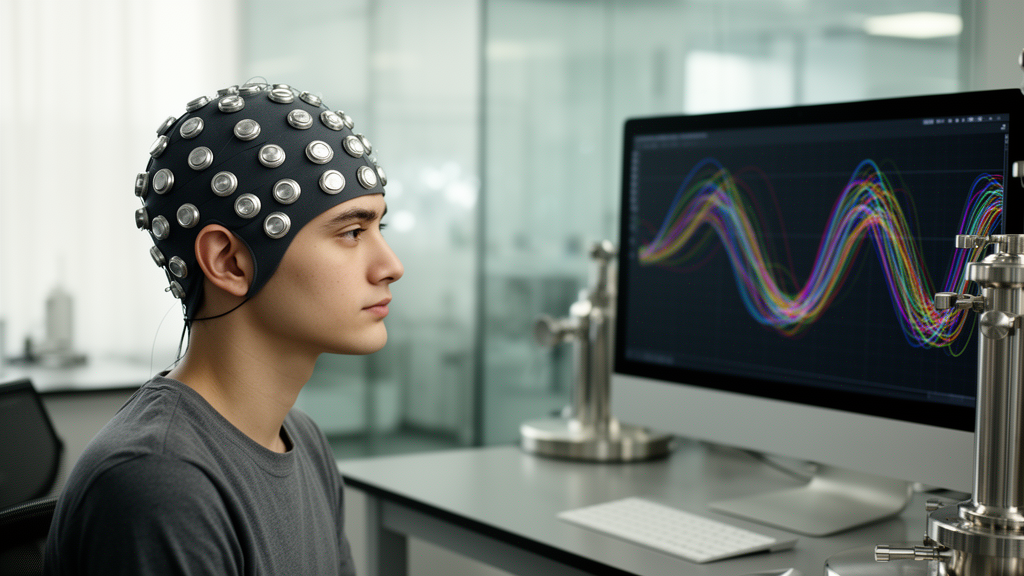
A new hybrid deep learning model designated as the Moment Attention Convolution–Emotion Transformer Network, or MAC-ETN, markedly reduces individual performance variability in cross-subject electroencephalogram emotion recognition rather than delivering superior average accuracy. The network was developed by researchers Shuran Yang and Mushan Han at Northeastern University in Shenyang, China. While conventional cross-subject investigations prioritize average classification accuracy, severe inconsistencies in individual performance remain a critical operational barrier to deploying emotion recognition systems in real-world settings.
To address this deployment barrier, the investigators structured MAC-ETN around three interconnected functional components: a local temporal feature extractor, a specialized Moment Channel Attention network, and a global temporal feature extractor. Within the initial processing tier, the architecture implements depthwise and separable convolutions to isolate fine-grained local temporal characteristics directly from recorded neural signals.
The intermediate component, termed the Moment Channel Attention network, calibrates channel importance by integrating three distinct statistical moments computed across the signal channels. Specifically, the mechanism calculates the first-order moment representing the mean, the second-order moment representing the variance, and the third-order moment representing skewness to establish the relative weight and significance of each individual recording channel. Following this statistical calibration stage, a Transformer encoder serves as the global temporal feature extractor, modeling long-range dependencies across the temporal sequence to complete the hybrid processing pipeline.
The research team evaluated the classification performance of MAC-ETN across two widely utilized public benchmark datasets, DEAP and MAHNOB-HCI. To rigorously test the generalizability of the architecture across unseen individuals, the experimental evaluation was conducted under a strict leave-one-subject-out cross-validation protocol.
Experimental testing on the DEAP dataset demonstrated that MAC-ETN achieved a mean accuracy of 61.26 percent for emotional arousal and 60.47 percent for emotional valence. This mean accuracy was lower than that of the strongest baselines reported under the same leave-one-subject-out protocol. Specifically, MAC-ETN recorded an accuracy standard deviation of 7.88 percent for arousal and 5.31 percent for valence, representing the lowest performance dispersion among all tested analytical methods on the benchmark.
Evaluations conducted on the MAHNOB-HCI dataset revealed a similarly suppressed variability, with MAC-ETN yielding an F1 score standard deviation of 1.48 percent for arousal and 0.30 percent for valence, figures substantially lower than baseline metrics documented in earlier literature. The authors emphasized, however, that this cross-study comparison remains strictly indicative, as published baseline values were derived under subject-dependent experimental protocols and utilized differing mathematical definitions of the F1 score. Ultimately, the findings confirm that MAC-ETN substantially reduces cross-individual performance discrepancies while sustaining a moderate baseline accuracy, offering a practical pathway for stabilizing real-world electroencephalogram emotion recognition systems.
Subject of Research: Cross-subject electroencephalogram emotion recognition using moment channel attention and Transformer networks
Article Title: Cross-subject EEG emotion recognition network based on moment channel attention
Article References: Yang, S., & Han, M. (2026). Cross-subject EEG emotion recognition network based on moment channel attention. Frontiers in Psychiatry, 17, Article 1992929. https://doi.org/10.3389/fpsyt.2026.1992929
Image Credits: AI Generated
DOI: 10.3389/fpsyt.2026.1992929
Keywords: electroencephalography, emotion recognition, cross-subject variability, moment channel attention, Transformer encoder, MAC-ETN, local temporal features, depthwise convolution, separable convolution, first-order moment, second-order moment, third-order moment, DEAP dataset, MAHNOB-HCI dataset, leave-one-subject-out cross-validation, arousal and valence classification, accuracy standard deviation, global dependency modeling
News Source: Cassandra Pierce. (November 11, 2026). Hybrid Neural Network Reduces Individual Performance Variance in EEG Emotion Recognition. Scienmag.