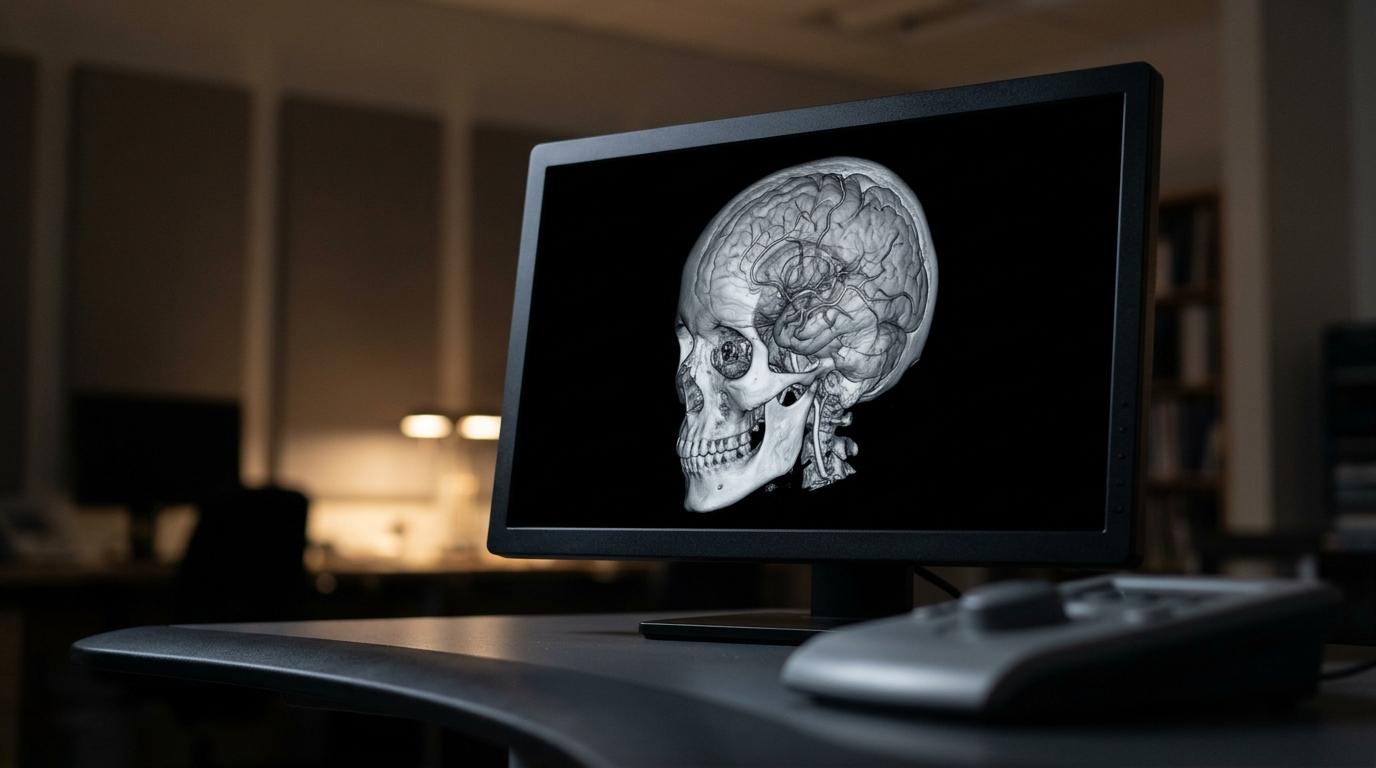
Researchers have introduced MedMamba3D, a novel hybrid architecture designed for three-dimensional medical image volume reconstruction that achieves notable performance gains over established baseline models. In comprehensive evaluations across three medical imaging datasets, the computational approach demonstrated peak signal-to-noise ratio gains of 3.7 decibels against transformers and 3.4 decibels against diffusion models, while yielding an 8.9 percent improvement in segmentation accuracy measured by Dice scores. The development directly addresses the persistent challenges of mathematical ill-posedness and anatomical consistency in clinical three-dimensional imaging analysis.
Volume reconstruction for three-dimensional medical imaging is crucial for clinical analysis, but existing state-of-the-art algorithms are inherently constrained by fundamental technical trade-offs. Standard convolutional neural networks remain limited by their relatively small receptive fields, whereas transformer models suffer from severe quadratic computational complexity scaling at O(N^2). At the same time, standalone diffusion models frequently produce anatomical inconsistency during synthesis and operate without accurate uncertainty estimation. To overcome these collective limitations, the new MedMamba3D framework integrates four complementary techniques into a single architecture governed throughout by uncertainty guidance.
The hybrid design relies on four coordinated processing stages to process volumetric data efficiently and maintain anatomical realism. First, a three-dimensional selective state space encoder based on Mamba provides linear computational complexity O(N) using bidirectional scanning. Second, a deterministic three-dimensional U-Net branch provides structured anatomical priors to preserve spatial accuracy. Third, a conditional diffusion model generates fine, high-frequency image features. Finally, a dedicated fusion module merges the resulting predictions from these components by applying optimal inverse variance weighting to balance certainty across representations.
Extensive experimental evaluations on the BraTS 2021, fastMRI, and MIMIC-CXR datasets validated the practical efficacy of the hybrid system across different clinical imaging benchmarks. Alongside the substantial peak signal-to-noise ratio improvements over transformers and diffusion baselines, the model achieved top calibration metrics, recording an expected calibration error of 0.08. Furthermore, the architecture demonstrated robust reconstruction capabilities when subjected to testing with 90 percent missing data, while delivering clinically significant segmentation improvements reflected in the 8.9 percent increase in Dice score.
Subject of Research: Three-dimensional medical imaging volume reconstruction
Article Title: A novel approach for integrating Mamba and diffusion in 3D medical imaging
Article References: Khaled, A., Abdulkadir, S. J., & Eltahir, M. M. E. (2026). A novel approach for integrating Mamba and diffusion in 3D medical imaging. BMC Bioinformatics. https://doi.org/10.1186/s12859-026-06742-3
Image Credits: AI Generated
DOI: 10.1186/s12859-026-06742-3
Keywords: MedMamba3D, 3D medical imaging, volume reconstruction, Mamba architecture, diffusion models, 3D U-Net, state space models, inverse variance weighting, uncertainty estimation, BraTS 2021, fastMRI, MIMIC-CXR, peak signal-to-noise ratio, expected calibration error, Dice similarity coefficient, anatomical consistency, bidirectional scan
News Source: Gregory Coleman. (November 27, 2026). Hybrid Mamba and Diffusion Architecture Improves Three-Dimensional Medical Image Reconstruction. Scienmag.