A prospective multicenter validation study conducted across neurology, intensive care, neuro-rehabilitation, and nursing departments has validated the Hungarian version of the Coma Recovery Scale-Revised, demonstrating exceptional reliability and strong concurrent validity for evaluating patients with disorders of consciousness. Published in Frontiers in Human Neuroscience, the investigation confirms that the translated instrument achieves near-perfect diagnostic classification agreement between independent raters, yielding a linear weighted Cohen’s kappa of 0.936 during initial baseline assessments and reaching a perfect 1.000 during follow-up evaluations. Designed to differentiate states of impaired awareness following severe acquired brain trauma, the Hungarian scale provides clinicians with a standardized, evidence-based assessment protocol capable of curbing historically elevated misdiagnosis rates. The study authors emphasize that establishing diagnostic fidelity between unresponsive wakefulness syndrome and minimally conscious states represents an urgent clinical priority within the national healthcare system, directly governing therapeutic decision-making, prognostic evaluation, and neuro-rehabilitative management.
Severe acquired brain injury frequently causes prolonged disruptions of consciousness, presenting major diagnostic challenges during bedside medical evaluations. While advances in intensive care medicine have increased survival rates following severe acquired brain trauma, recovery trajectories vary widely: some patients improve rapidly, whereas others experience prolonged recovery lasting weeks or months. During recovery, patients may regain wakefulness without regaining communicative or reactive capacities. These conditions encompass unresponsive wakefulness syndrome—historically termed the vegetative state, a designation now discouraged due to pejorative connotations—and the minimally conscious state. Patients with unresponsive wakefulness syndrome exhibit reflexive responses and spontaneous eye-opening without signs of awareness. Conversely, minimally conscious patients display fluctuating, reproducible awareness, subcategorized into minimally conscious state minus, characterized by lower-level behaviors such as visual pursuit, and minimally conscious state plus, defined by higher-level behaviors like command following. Because bedside clinical rounds yield misdiagnosis rates reaching forty percent when distinguishing these states, highly sensitive diagnostic instruments are essential.
Among existing diagnostic tools developed to evaluate disorders of consciousness, including the Glasgow Coma Scale, the Full Outline of UnResponsiveness score, and the Wessex Head Injury Matrix, previous literature demonstrates that the Coma Recovery Scale-Revised possesses the highest sensitivity for distinguishing clinical conditions. The instrument comprises a twenty-three-item scoring architecture organized into six neurobehavioral subscales: auditory, visual, motor, oromotor/verbal, communication, and arousal. The total score, which ranges from zero to twenty-three, primarily tracks global recovery and overall severity of impairment. However, clinical diagnostic classification into unresponsive wakefulness syndrome, minimally conscious state minus, minimally conscious state plus, or emergence from the minimally conscious state is not derived directly from this aggregate score. Instead, diagnosis is established through the specific presence or absence of operational behaviors scored across individual subscales. Administration takes approximately twenty to thirty minutes when conducted by trained professionals, providing reliable diagnostic differentiation that supports therapeutic rehabilitation planning and long-term patient monitoring.
To translate and adapt the Coma Recovery Scale-Revised into Hungarian, the investigators strictly adhered to the international COSMIN guidelines for cross-cultural adaptation of health measurement instruments. The original English scale was first independently forward-translated into Hungarian by a multidisciplinary team of neurologists and rehabilitation specialists, specifically Danuta Szirmai, Andrea Kovács, Gréta Benkő-Zaja, Zoltán Dénes, and Anita Kamondi. A professional English speaker, B. Juhász, who was unfamiliar with the original scale and blinded to its clinical context, then performed a back-translation into English. An expert committee comprising Anita Kamondi and Zoltán Dénes compared this back-translation with the original English text to resolve semantic discrepancies. Throughout the process, the researchers prioritized semantic clarity over literal word-for-word translation, refining phrasing to minimize word count while maintaining conceptual equivalence. The resulting consensus version was subsequently pilot-tested on two non-DOC neurological patients to confirm phrasing clarity, while standardized administration across participating clinical centers was ensured via on-site training sessions and an instructional video.
The multicenter investigation enrolled a cohort of thirty-one patients, consisting of seventeen males (fifty-five percent) and fourteen females (forty-five percent), with a mean age of 49.1 ± 16.1 years and a range from twenty-three to ninety years. Patient recruitment occurred across five participating Hungarian facilities: Semmelweis University’s Department of Neurosurgery and Neurointervention, Department of Rehabilitation Medicine, and Department of Anesthesiology and Intensive Therapy in Budapest; the University of Pécs Department of Anesthesiology and Intensive Therapy; and the Hársfalevél Nursing Care Institute in Alcsútdoboz. Etiology of brain injury was heterogeneous: traumatic brain injury was most common, accounting for sixteen patients (fifty-two percent), followed by stroke or vascular lesions in five patients (sixteen percent), and anoxia or hypoxia in five patients (sixteen percent). Five additional patients (sixteen percent) presented with other causes, including meningoencephalitis, tumor, Creutzfeldt-Jakob disease, and septic shock. Regarding chronicity, twelve patients (thirty-nine percent) had acute injury under twenty-eight days, while nineteen (sixty-one percent) were chronic.
Study inclusion required patients to have disorders of consciousness following brain injury, age between eighteen and ninety years, native Hungarian fluency, and cardiopulmonary stability—defined as spontaneous respiration without mechanical ventilation (stable tracheostomy permitted), complete absence of sedation, and no active infection. Exclusion criteria encompassed age under eighteen, medical instability where repositioning compromised safety, non-native language background, and sedation. The protocol conformed to the Declaration of Helsinki, received ethical approval from the Hungarian Medical Research Council’s Ethics Committee (ETT-TUKEB, reference BM/14256-1/2025), and secured written informed consent from patient representatives. The repeated-measures design required two independent raters blinded to each other’s scores and diagnostic classifications. Evaluations were completed within a one-week window, with same-rater assessments scheduled on separate days. When different raters evaluated a patient on the same day, a mandatory rest interval of at least sixty minutes was enforced. One patient died from medical complications following initial assessment, leaving thirty participants at follow-up.
Sample size calculation was performed using Flack’s method to account for the multinomial distribution across five clinical states: coma, unresponsive wakefulness syndrome, minimally conscious state minus, minimally conscious state plus, and emergence from minimally conscious state. Assuming equal twenty percent prevalence across states, a null hypothesis kappa of 0.50, an alternative hypothesis kappa of 0.80, a two-sided alpha of 0.05, and statistical power of 0.80, the minimum required sample was twenty-two patients. Statistical analyses were performed using R software version 2023.06.1 + 524. Normality testing via the Shapiro-Wilk test demonstrated that clinical scale scores significantly deviated from normal distribution (p < 0.01), directing non-parametric methods. Concurrent validity with the Glasgow Coma Scale was evaluated using Spearman’s rank correlation. Reliability for total and subscale scores was evaluated using squared weighted Cohen’s kappa, which applies quadratic penalties to multi-point discrepancies, while linear weighted Cohen’s kappa evaluated diagnostic classification agreement, with significance set at p < 0.05.
Concurrent validity analysis demonstrated strong, statistically significant correlations between the Hungarian Coma Recovery Scale-Revised and Glasgow Coma Scale total scores across all raters and assessment sessions, with Spearman correlation coefficients ranging from rho = 0.882 to rho = 0.934 (p < 0.001). Specifically, Rater 1 yielded rho = 0.916 at T1 and rho = 0.934 at T2, while Rater 2 demonstrated rho = 0.882 at T1 and rho = 0.892 at T2. Total score inter-rater reliability was excellent at initial evaluation T1 across thirty-one patients, recording a squared weighted kappa of 0.977 (95% CI: 0.958–0.996). At follow-up assessment T2 across thirty patients, inter-rater reliability remained equally high at 0.977 (95% CI: 0.961–0.993; p < 0.001). At the individual subscale level, visual (0.935 to 0.977), motor (0.940 to 0.964), and auditory (0.960 to 0.961) functions demonstrated the greatest stability between raters, whereas communication (0.741 at T2) and arousal (0.768 at T2) subscales exhibited moderately lower inter-rater agreement.
Intra-rater reliability assessments confirmed strong score stability over time for both examiners, with squared weighted kappa values of 0.932 (95% CI: 0.878–0.986) for Rater 1 and 0.937 (95% CI: 0.880–0.993) for Rater 2 (both p < 0.001). Diagnostic classification agreement between independent raters was nearly perfect, registering a linear weighted kappa of 0.936 (95% CI: 0.867–1.000) at T1 and reaching 1.000 at T2. Disagreements at T1 were restricted to three cases: one distinguishing unresponsive wakefulness syndrome from minimally conscious state minus, and two distinguishing minimally conscious state plus from emergence. Intra-rater diagnostic agreement was 0.765 for Rater 1 and 0.788 for Rater 2, with the raters recording eight and seven diagnosis shifts across the observation interval, reflecting clinical changes over time. Separate subgroup analyses indicated total score inter-rater reliability of 0.950 (T1) and 0.987 (T2) in acute patients, and 0.971 (T1) and 0.974 (T2) in chronic patients, with visual and motor scales remaining highly consistent.
Evaluating the lower kappa coefficients in arousal and communication subscales, the authors analyzed raw percent agreement, finding that arousal raw agreement ranged from 72.4 to 79.3 percent, with variance reflecting genuine behavioral fluctuations typical of disorders of consciousness. For communication, raw agreement reached 82.6 to 86.2 percent, but the calculated kappa was suppressed by the statistical ‘Kappa Paradox’ due to low prevalence, as only one patient exhibited functional communication. Limitations acknowledged by the authors include a sample size of thirty-one patients—though consistent with international cohorts in Brazil (n = 30), Poland (n = 20), and Spain—as well as etiological heterogeneity and the use of a single back-translator. The authors conclude that the Hungarian Coma Recovery Scale-Revised provides an evidence-based tool to reduce misdiagnosis, establishing a foundation for national implementation, future correlation with electroencephalography and functional neuroimaging, and subsequent adaptation of streamlined screening tools including SECONDs and CRSR-FAST.
Subject of Research: Validation of the Hungarian Coma Recovery Scale-Revised for disorders of consciousness
Article Title: Validation of the Hungarian version of the Coma Recovery Scale-Revised in patients with disorders of consciousness
Article References: Szirmai, D., Kamondi, A., Benkő-Zaja, G., Kovács, A., Kellermayer, A., Dénes, Z., Sógor, M., Tüttő, Z., Boldizsár, Z., Csányi, E., Tóth, S., Molnár, Z., Karim, D., Molnár, T., László, G. M., & Horváth, A. A. (2026). Validation of the Hungarian version of the Coma Recovery Scale-Revised in patients with disorders of consciousness. Frontiers in Human Neuroscience, 20, 1968866. https://doi.org/10.3389/fnhum.2026.1968866
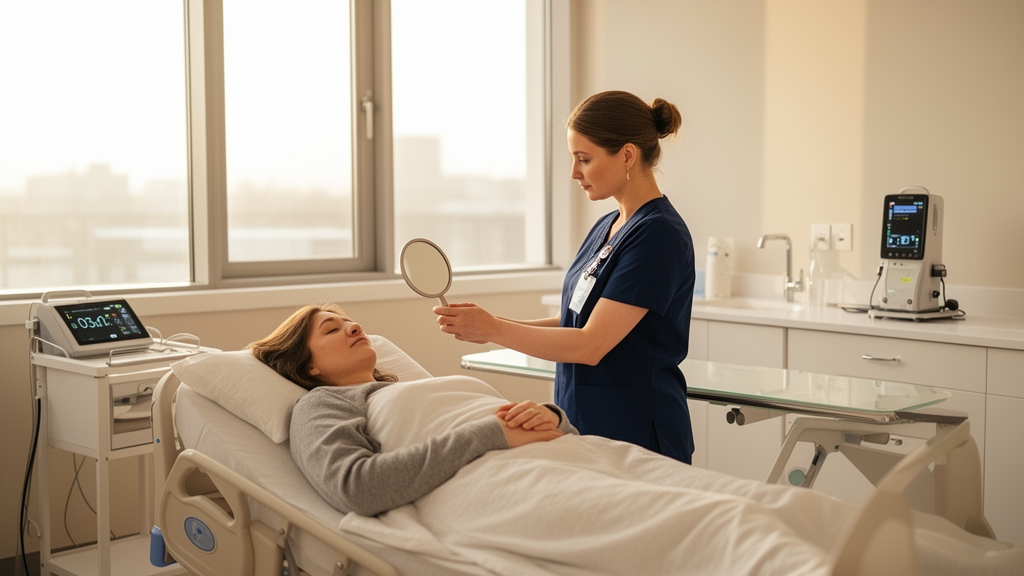
Image Credits: AI Generated
DOI: 10.3389/fnhum.2026.1968866
Keywords: Coma Recovery Scale-Revised, disorders of consciousness, minimally conscious state, unresponsive wakefulness syndrome, neuro-rehabilitation, inter-rater reliability, intra-rater reliability, Glasgow Coma Scale, traumatic brain injury, COSMIN guidelines, diagnostic classification, squared weighted Cohen's Kappa, concurrent validity, Spearman rank correlation, neurobehavioral assessment, Kappa Paradox, SECONDs scale, CRSR-FAST
News Source: Ophelia Keating. (November 12, 2026). Hungarian Coma Recovery Scale-Revised Shows High Reliability in Consciousness Disorder Study. Scienmag.