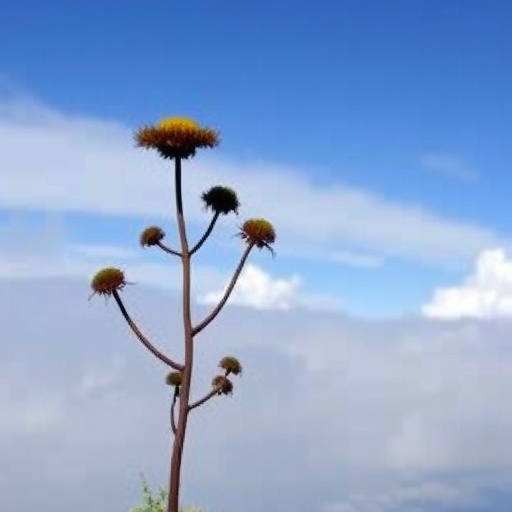
In an unprecedented discovery published in Nature Ecology and Evolution, researchers from the University of Leeds have illuminated how primitive plants, known as lycophytes, remarkably adapted to survive one of Earth’s most devastating environmental crises: the Permian-Triassic mass extinction event, colloquially termed the “Great Dying.” This catastrophe, which occurred approximately 250 million years ago, was marked by extreme global warming, collapsing forests, and a profound collapse of terrestrial ecosystems. The study reveals that lycophytes innovated a novel form of photosynthesis—similar to the CAM (Crassulacean Acid Metabolism) pathway observed in modern desert plants—allowing them to withstand the hyper-arid and scorching conditions that obliterated most contemporaneous vegetation.
This evolutionary breakthrough is pivotal to understanding how Earth’s biosphere persevered through severe carbon cycle perturbations during the terminal Permian period. CAM photosynthesis operates by temporally separating carbon dioxide uptake and fixation: lycophytes opened their stomata nocturnally to fix CO2 into organic acids, notably malate, which were then utilized during daytime photosynthesis. This mechanism significantly reduces water loss and confers an adaptive advantage under extreme thermal stress by minimizing transpiration during the hottest parts of the day. Such physiological sophistication enabled lycophytes not only to endure but also to proliferate across landscapes where other photosynthetic plants perished.
The research team meticulously analyzed carbon isotope ratios in fossilized lycophyte remains discovered in South China, a region that experienced substantial environmental volatility between the late Permian and Middle Triassic. Carbon isotope signatures serve as biochemical fingerprints reflecting photosynthetic strategies—C3, C4, or CAM pathways leave distinct isotopic patterns. Intriguingly, the isotopic data uncovered a marked divergence in lycophyte carbon isotope values precisely during the extinction interval, suggesting an active CAM-like metabolism that tapered off under more stable post-extinction climates, reaffirming the dynamic evolution of photosynthetic adaptations.
Complementing paleobotanical data with sophisticated climate modeling, the study posits that these hardy lycophytes thrived in habitats exposed to surface temperatures exceeding 50 °C, illustrating their extraordinary thermal tolerance. This aligns with the hypothesis that CAM photosynthesis, more commonly associated today with xerophytic desert flora, may have originated as an ancient survival mechanism far earlier than previously assumed. The lycophytes’ innovation underpins a previously unrecognized biological resilience that contributed to the vital drawdown of atmospheric CO2 during the event’s aftermath, effectively mitigating the planetary heat stress.
Lycophytes, a lineage of spore-bearing vascular plants, represent one of the oldest extant vascular plant groups with over 1,200 modern species predominantly inhabiting tropical ecosystems. Their evolutionary persistence through such dramatic environmental upheavals provides insight into the physiological plasticity and ecological strategies that underpin plant survival under climatic extremes. The study’s multidisciplinary approach, integrating paleobotany, geochemistry, and climate science, highlights lycophytes as a critical subject for reconstructing Earth’s deep-time biosphere dynamics.
This research has profound implications for contemporary ecology and climate science. As anthropogenic global warming continues to accelerate, understanding the acclimatization potentials and thresholds of plant photosynthetic mechanisms becomes crucial. Dr. Zhen Xu, lead author, emphasizes the relevance of CAM traits as potentially advantageous in future high-temperature scenarios, predicting a possible shift in global vegetation composition favoring CAM-like strategies under prolonged heat and water scarcity conditions.
Moreover, the findings underscore the importance of incorporating evolutionary history into predictive models of ecosystem responses to climate change. Unlike C3 and C4 plants, CAM photosynthesis offers a unique biochemical adaptation that reduces stomatal water loss by temporally dissociating gas exchange and carbon fixation. This metabolic flexibility might prove vital for plants facing increasingly erratic precipitation patterns and intensifying droughts, reinforcing the ecological value of exploring ancient survival mechanisms.
The collaborative effort across international institutions, including China University of Geosciences, University of Birmingham, University of Nottingham, University of Bristol, and others, demonstrates the integrative nature of modern paleoclimate research. Their combined expertise has bridged the gap between fossil evidence and predictive climate modeling, advancing our comprehension of biospheric resilience during Earth’s periods of climatic crisis.
Professor Barry Lomax of the University of Nottingham remarked on the interdisciplinary rigor of the investigation, emphasizing how assembling paleoecological, isotopic, and climatic data streams facilitated a holistic understanding of lycophyte survival strategies. This synergy affirms the broader scientific imperative to decode past events to better anticipate biological responses to future climate perturbations.
Finally, as plants form the cornerstone of terrestrial food webs and biogeochemical cycles, breakthroughs in uncovering their evolutionary adaptations to historic warming events are essential. Professor Benjamin Mills of Leeds remarks that shifts toward CAM-like photosynthetic dominance could fundamentally alter ecosystem function, carbon cycling, and global climate feedbacks, underlining the critical need to factor plant physiological diversity into Earth system models.
In sum, this study not only deciphers a remarkable chapter of plant evolutionary history but also provides an anticipatory framework for how vegetation may reorganize amid escalating climate challenges. The adaptation of ancestral lycophytes via CAM photosynthesis exemplifies nature’s capacity for innovation under adversity—a lesson with urgent resonance in our warming world.
Subject of Research:
Not applicable
Article Title:
CAM photosynthesis may have conferred an advantage during the Permian-Triassic mass extinction event
News Publication Date:
20-Apr-2026
Web References:
https://www.nature.com/articles/s41559-026-03026-0
References:
DOI: 10.1038/s41559-026-03026-0
Image Credits:
Please credit Dr Zhen Xu
Keywords:
Life sciences, Evolutionary biology, Plant sciences, History of biology
Tags: ancient plant survival mechanismsCAM photosynthesis in primitive plantscarbon cycle disruption during Permiandesert plant photosynthetic pathwaysevolutionary biology of early land plantsGreat Dying environmental crisishyper-arid climate plant adaptationslycophyte plant adaptationPermian-Triassic Mass Extinctionphotosynthesis under extreme heatresilience of terrestrial ecosystemsstomatal behavior in lycophytes