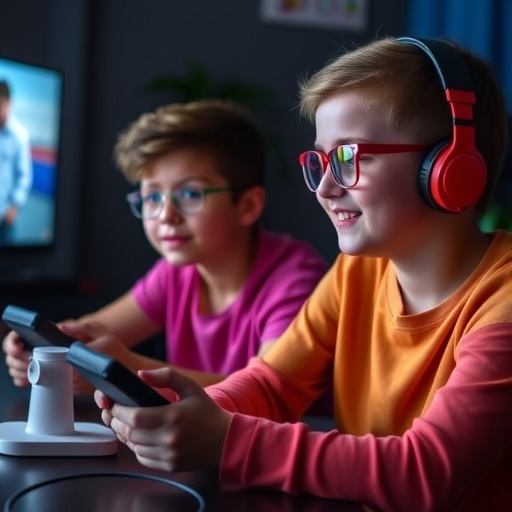
In an era dominated by digital engagement, understanding how parental behaviors influence adolescent video gaming habits has become a crucial field of study. The pervasive presence of video games in the everyday lives of young individuals raises compelling questions about the role of media parenting practices on their engagement levels. A recent prospective investigation, published in the World Journal of Pediatrics, sheds light on these dynamics, offering nuanced insights into the intersection of media parenting and adolescent gaming patterns. This comprehensive study, led by Nagata, Sportsman, Wong, and colleagues, embarks on an empirical journey to delineate how varied parental approaches guide youth video game usage over time.
The study’s methodological framework is designed to capture longitudinal shifts in gaming behavior, presenting a prospective outlook rather than a mere retrospective snapshot. By monitoring a cohort of adolescents alongside their parental media management practices, the researchers track evolving patterns of video game engagement. Such a design offers the valuable advantage of temporality, illuminating cause-and-effect relationships between parenting methods and subsequent adolescent behaviors. This approach is especially significant in cutting through the often confounding variables that complicate cross-sectional analyses in digital media research.
Central to the research is the exploration of diverse media parenting techniques, which encompass a spectrum that ranges from restrictive mediation to co-engagement and active guidance. Restrictive mediation refers to parental imposition of rules and limitations on game time or content accessibility. Conversely, co-engagement implies parents participating alongside their children in gaming activities, potentially fostering a shared understanding and enabling guided experiences. Active guidance entails more dialogic and educational interactions, wherein parents discuss the content and context of gaming with their adolescents. By categorizing and quantifying these practices, the study parses out the unique influences each approach wields over gaming trajectories.
Findings reveal a complex interplay between media parenting styles and adolescent video game use. Restrictive mediation, while intuitively expected to reduce gaming time, demonstrates ambivalent effects. The enforcement of strict boundaries can sometimes provoke resistance or stealth gaming, thereby inadvertently reinforcing the allure of video games. This paradox underscores the importance of flexibility and context in parenting strategies, dismissing the notion of a one-size-fits-all solution. The study emphasizes the potential drawbacks of overly authoritarian media governance in fostering healthy digital habits.
In contrast, parental co-engagement emerges as a promising facilitator of balanced gaming habits. When parents actively participate in video gaming, it not only demystifies the digital environment but also promotes positive communication and mutual trust. These interactions can serve educational purposes, helping adolescents develop critical media literacy skills crucial for navigating complex media ecosystems. The research highlights how such shared experiences might mitigate excessive gaming by integrating video games into broader family dynamics, reflecting an adaptive collaborative approach to media parenting.
Active guidance, characterized by open dialogues about gaming content, motivations, and consequences, aligns strongly with healthier adolescent gaming behaviors. This mediated conversation encourages youths to internalize self-regulation principles rather than comply with externally imposed restrictions. Encouraging reflective thinking about gaming content enhances adolescents’ capacity to critically evaluate their media consumption and make informed choices. The study’s results suggest that such parental engagement fosters resilience against problematic gaming patterns, promoting autonomy while maintaining supportive oversight.
The implications of these nuanced findings extend beyond the domestic sphere, inviting educational institutions and policymakers to reconsider strategies aimed at regulating adolescent media consumption. The evidence advocates for programs that empower parents with communicative tools and media literacy education to effectively guide their children’s digital interactions. This shift from restriction-centered frameworks towards empowerment and engagement ideologies aligns with broader societal trends emphasizing developmental support over control in youth media usage.
Technically, the study employs rigorous statistical modeling to parse data collected over multiple waves of assessment. Mixed-effects regression models account for individual differences and temporal variations, ensuring that the reported associations are robust and reflective of real-world complexities. The analytical approach carefully controls for confounders such as household socioeconomic status, adolescent temperament, and baseline gaming frequency, thereby isolating the unique influence of media parenting practices. This methodological sophistication enhances the validity and generalizability of the findings.
Moreover, the prospective design enriches the temporal resolution in examining media parenting impacts. By evaluating changes across predefined intervals, the investigation captures dynamic behavioral adaptations that static measurements inherently miss. This sensitivity to temporal dynamics allows for identifying critical windows during adolescence where shifts in parenting approach may yield maximal benefits. Such information is invaluable for tailoring interventions that resonate with developmental trajectories.
The neuropsychological relevance of the findings also warrants attention. Adolescence marks a pivotal period of brain maturation, particularly in domains underpinning impulse control, reward processing, and decision-making. Video gaming, with its potent reward systems and interactive engagement, influences these neurocognitive processes. By elucidating how parental mediation modulates gaming exposure, the study indirectly informs understanding of environmental factors shaping adolescent neurodevelopment. This perspective bridges behavioral science and neuroscience, underscoring the integrative nature of media parenting research.
Technological advancements in gaming platforms and content require continuous adaptation of media parenting practices. The study acknowledges the ever-evolving digital landscape, wherein new game genres, interactive features, and social connectivity options proliferate. This technological flux complicates parental attempts to govern gaming behaviors, necessitating adaptive approaches that blend restrictions with education and co-participation. The research thereby situates itself within a dynamic media ecology, advocating for flexible parenting models in tandem with technological change.
Culturally, the study recognizes variability in media parenting practices across different sociocultural backgrounds, highlighting that effective strategies must be contextually sensitive. Cultural norms shape parental expectations, communication styles, and attitudes toward technology, all of which modulate media parenting efficacy. Future research directions suggested by this work include cross-cultural comparisons to refine understanding of how contextual factors influence adolescent video gaming behaviors and parental mediation success.
In sum, this groundbreaking research bridges gaps in the understanding of how parental media practices prospectively influence adolescent video game use with technical precision and developmental insight. By disentangling the efficacy of distinct parenting approaches—restrictive mediation, co-engagement, and active guidance—the study informs more nuanced, effective strategies to support youth in navigating digital media environments. It calls for a paradigm shift from control-oriented approaches to those emphasizing active engagement, dialogue, and empowerment.
This pioneering contribution resonates across multiple domains including pediatrics, psychology, education, and media studies. As digital media continue to pervade the fabric of youth socialization and leisure, insights that illuminate parental influence mechanisms are vital. Ultimately, this research serves as a critical touchstone for scientists, clinicians, educators, and families striving to foster healthy adolescent development amid the challenges and opportunities of the digital age.
Subject of Research: Media parenting practices and their prospective associations with adolescent video game use.
Article Title: Prospective associations between media parenting practices and adolescent video game use.
Article References:
Nagata, J.M., Sportsman, D., Wong, J.H. et al. Prospective associations between media parenting practices and adolescent video game use. World J Pediatr (2026). https://doi.org/10.1007/s12519-025-01009-y
Image Credits: AI Generated
DOI: 08 January 2026
Tags: adolescent video game habitscause and effect in media usagedigital media engagementempirical research on parentinglongitudinal study on gamingmedia management practicesmedia parenting influenceparental behavior and gamingunderstanding gaming behaviorsvideo game engagement strategiesyouth gaming patterns