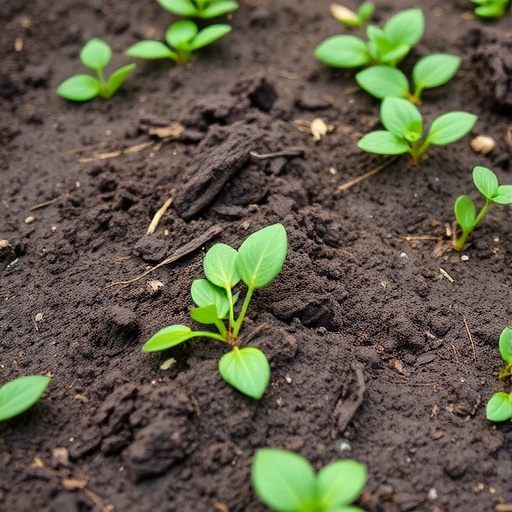
In the realm of sustainable agriculture, the emerging role of biochar as a soil amendment has captivated researchers worldwide. A groundbreaking study published in the journal Biochar reveals how distinct biochars—derived from rice husk and palm silk—differentially affect water infiltration and leakage in phosphorus-enriched sandy-loam vegetable soils. This investigation unravels critical mechanisms underlying biochar-soil interactions that hold promise for reducing nutrient loss and enhancing crop water use efficiency amidst intensive farming systems.
Vegetable cultivation often entails recurrent irrigation and liberal fertilization, practices prone to accumulating excessive phosphorus levels in soils. Such nutrient surpluses elevate the risk of phosphorus leaching into adjacent waterways, fueling eutrophication and ecological degradation. Recognizing this environmental challenge, the research explores how biochars, known for their porosity and complex chemical makeup, influence hydrological dynamics in nutrient-rich soils. This inquiry provides an unparalleled window into tailoring biochar applications to mitigate nutrient runoff while sustaining agricultural productivity.
The study focuses specifically on two biochar feedstocks prevalent in southern China’s agricultural landscape: rice husk and palm silk. Both are agricultural by-products converted into biochar through pyrolysis—a thermal decomposition in oxygen-limited conditions that yields a carbon-rich, porous, and chemically active material. By incorporating these biochars into sandy loam soils at varying application rates, the researchers conducted rigorous soil column experiments to elucidate their effects on water movement and retention characteristics.
Distinct hydrological behaviors emerged between the two biochar types. Rice husk biochar markedly impeded water infiltration across the soil surface layer, attributable to its unique pore architecture and surface chemistry. This biochar enhanced the soil’s saturated water capacity and simultaneously decreased hydraulic conductivity, indicating a slower downward water flux. Such retention not only curtails phosphorus leaching but potentially prolongs moisture availability for crops—an agronomic boon in water-limited settings.
Conversely, palm silk biochar exhibited differing effects. While it enhanced soil water retention by delaying the release of water, it did not exhibit the same pronounced resistance to infiltration seen with rice husk biochar. Its pore structure seemingly modulates water release kinetics without fundamentally restricting infiltration rates. Nevertheless, both biochars collectively demonstrated a compelling capacity to reduce cumulative water leakage by 20 to 40 percent compared to unamended soil, highlighting their efficacy in preserving soil moisture and limiting nutrient drainage.
Integral to water transport modulation are the transformations biochar imparts on soil chemical and structural properties. Total organic carbon content emerged as a pivotal factor, its augmentation increasing the soil’s capacity to engage and retain water molecules within the soil matrix. Meanwhile, shifts in soil pH mediated by biochar amendments contributed to diminishing the velocity at which water percolates through the soil profile, exemplifying a multifaceted interplay between biochemical and physical soil parameters governing hydrology.
Remarkably, the study underscores that biochar’s role transcends mere physical water absorption—it fundamentally alters the soil ecosystem’s capacity to manage water flux. By enhancing organic carbon pools and modulating soil acidity, biochar reshapes soil microenvironments to foster improved water retention and reduce nutrient export. This paradigm reframes biochar application as a dynamic soil engineering intervention rather than a passive additive.
Higher biochar application rates yielded amplified hydrological modifications, yet the researchers advocate for moderate dosing to optimize the balance between environmental benefits and practical cost-efficiency for growers. This recommendation resonates deeply within agronomic circles, where resource constraints and scalability dictate adoption feasibility. Strategically calibrated biochar incorporation can thus harmonize economic viability with environmental stewardship objectives.
This novel inquiry also elucidates broader implications for nutrient and water management in phosphorus-enriched agricultural soils. The fine-tuning of biochar feedstock selection and application dosage offers an actionable avenue to mitigate phosphorus leaching—a critical contributor to downstream aquatic ecosystem eutrophication worldwide. Integrating biochar amendments into standard vegetable production protocols could revolutionize sustainable farming by curtailing non-point source nutrient pollution.
Beyond mitigating nutrient loss, biochar’s hydrological benefits extend to enhancing crop resilience under variable irrigation regimes. By slowing water movement and augmenting soil moisture holding capacity, biochar amendments can buffer crops from drought stress and improve water use efficiency. These benefits align with global agricultural priorities seeking to maintain productivity amid increasing water scarcity and climate variability.
Mechanistic insights from this study pivotally contribute to a nuanced understanding of how biochar-soil interactions influence water and nutrient dynamics. Advanced modeling techniques, including structural equation modeling, unravel the complex causal pathways linking biochar properties to soil hydraulic behavior, organic carbon modulation, and pH adjustments. This comprehensive perspective equips soil scientists and agronomists with evidence-based tools to optimize biochar use tailored to site-specific soil and crop conditions.
As agricultural systems worldwide grapple with the dual challenges of intensification and environmental preservation, innovations such as biochar amendments gain precedence. This investigation marks a seminal advancement in decoding the differential impacts of biochar feedstocks on soil water infiltration and leakage—key processes underpinning the environmental footprint of modern agriculture. The promising outcomes herald pathways toward more sustainable vegetable production, reduced nutrient pollution, and enhanced ecosystem health.
In sum, biochar derived from rice husks and palm silk unlocks distinctive mechanisms governing water movement and phosphorus retention in enriched sandy-loam soils. Through altering soil physical and chemical properties, these biochars significantly curb water leakage, mitigate nutrient losses, and improve soil moisture regimes. Tailoring biochar application emerges as a powerful strategy to harmonize agricultural productivity with environmental sustainability, charting a progressive course for future research and practical implementation in horticultural production systems.
Subject of Research: Not applicable
Article Title: Contrasting effects of rice husk and palm silk biochars on water infiltration and leakage in a phosphorus-enriched sandy-loam vegetable soil
News Publication Date: 12-Feb-2026
Web References: http://dx.doi.org/10.1007/s42773-025-00543-2
References: Yu, X., Wang, R., Guo, Y. et al. Contrasting effects of rice husk and palm silk biochars on water infiltration and leakage in a phosphorus-enriched sandy-loam vegetable soil. Biochar 8, 26 (2026).
Image Credits: Xiongsheng Yu, Rongping Wang, Ying Guo, Yong Liu, Tingjin Ye, Wangxing Luo, Qihao Yang, Songshui Hu, Jiyi Zhu, Mu Zhang, Hongtao Qiao, Nanthi Bolan & Hailong Wang
Keywords
Soil chemistry, Soil science, Environmental chemistry, Porous materials, Applied sciences and engineering, Environmental remediation
Tags: biochar soil amendment effectscrop water use efficiency improvementintensive vegetable farming soil healthnutrient leaching mitigation strategiespalm silk biochar applicationsphosphorus runoff reduction techniquesphosphorus-rich vegetable soilspyrolysis biochar productionrice husk biochar propertiessoil water retention in sandy loamsustainable agriculture soil managementwater infiltration in agricultural soils