In a groundbreaking revelation poised to revolutionize global wastewater management, a recent systematic review published in Frontiers in Science unveils the immense untapped potential within the world’s wastewater streams. Despite generating an astonishing 359 billion cubic meters of wastewater annually—equivalent to filling Lake Geneva four times over—the majority of this resource remains either discarded or treated in ways that are costly, inefficient, and environmentally detrimental. The pioneering review brings to light microbial electrochemical technologies (METs) as a cutting-edge, sustainable solution capable of transforming wastewater from a waste burden into a vital resource capable of powering agriculture, sanitation, and even its own treatment processes, marking a significant stride towards achieving the United Nations’ Sustainable Development Goals (SDGs).
Wastewater not only serves as a transport medium for human and industrial effluents but is also a rich repository of chemical energy and essential nutrients. The review highlights that globally, wastewater harbors over 800,000 GWh of chemical energy — a scale comparable to the annual output of 100 nuclear power plants. This energy potential arises from organic compounds present in domestic sewage, commercial and industrial effluents, and food-related wastewater streams. Accompanying this chemical energy is a bounty of nutrients such as ammonia and phosphate, which, if effectively reclaimed, could meet approximately 11% and 7% of global agricultural fertilizer demands, respectively. This dual resource profile emphasizes the importance of wastewater as a core element in circular economy frameworks aimed at sustainable resource recovery.
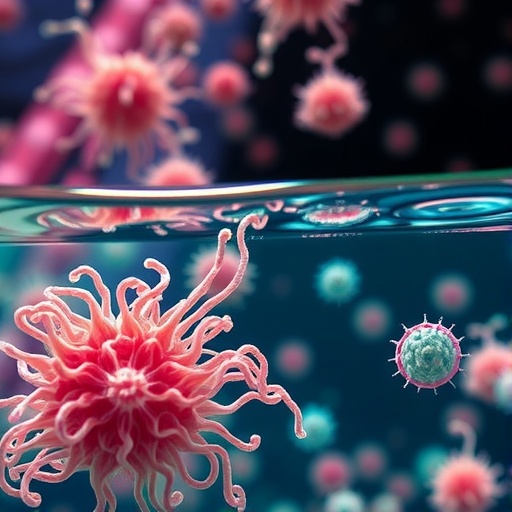
Microbial electrochemical technologies harness microorganisms known as electrogenic bacteria, which have the remarkable ability to transfer electrons extracellularly during their metabolic processes, thus generating electricity. This bio-electrochemical phenomenon is engineered within fuel cell-like systems where bacteria oxidize organic matter in wastewater, releasing electrons to electrodes and creating an electrical current. Unlike traditional anaerobic digestion processes that covertly recycle biogas, METs can directly convert up to 35% of the chemical energy in wastewater into usable electricity under laboratory conditions, outperforming the 28% energy conversion efficiency typical of biogas systems. These advances suggest that METs could play a transformative role in reducing the water sector’s current 4% share of global energy consumption by enabling self-powered treatment infrastructures.
Beyond energy recovery, METs present remarkable capabilities for nutrient extraction from wastewater streams. The electrochemically active bacteria can facilitate the bio-assisted removal of nitrogen and phosphorus compounds, which are critical fertilizing agents, through processes integrated into the MET system’s design. Recovering these elements not only curtails reliance on energy-intensive and environmentally taxing ammonia synthesis and phosphate mining but also mitigates the environmental problem of eutrophication. Nutrient-laden wastewater released into natural water bodies typically spurs algal blooms, causing hypoxic conditions deleterious to aquatic ecosystems. METs thus inherently support ecosystem health by intercepting and valorizing these nutrients on-site.
Field deployments of METs have already demonstrated practical and scalable success, exemplifying their capacity to enhance sanitation while generating decentralized energy. One standout example is the urine-powered MET system known as Pee Power®, which debuted at the Glastonbury Festival in the UK in 2015. This innovative system effectively converts human urine into electricity, powering LED lights to improve safety around sanitation facilities in electricity-scarce contexts. Following this success, prolonged field trials in East and Southern Africa — Uganda, Kenya, and South Africa — have validated the system’s function under real-world conditions, showcasing METs as viable low-cost interventions that could drastically elevate sanitation standards and hygiene safety in underserved regions.
The promise of METs as a multifaceted solution to global sanitation challenges aligns intimately with the UN’s sixth SDG, which demands universal access to safe water and sanitation and emphasizes sustainable water management. With approximately 3.5 billion people worldwide lacking managed sanitation services, improving wastewater treatment infrastructure through these microbial electrochemical approaches offers a pragmatic pathway to uplift living conditions, curtail disease transmission, and protect scarce water resources. The modularity and scalability of MET systems also provide adaptability across diverse settings, from urban wastewater treatment plants to small-scale rural installations, prioritizing inclusivity in technological deployment.
Nonetheless, the review does not sidestep the formidable challenges restraining METs from full-scale adoption. Predominant regulatory frameworks globally are steeped in linear waste disposal paradigms, often ill-equipped to accommodate circular economic models that valorize waste streams as resources. For instance, legislation in many countries forbids the use of urine-derived fertilizers for food or livestock production, impeding the utilization of reclaimed nutrients from MET-treated wastewater. Overcoming these regulatory bottlenecks requires policy innovation and cross-sector collaboration involving scientists, legislators, water utilities, and the agricultural industry to harmonize safety with sustainability.
From an engineering standpoint, maintaining the long-term performance and stability of MET materials remains a technical hurdle. Continuous operation in complex wastewater matrices demands electrodes and membranes that resist biofouling, corrosion, and mechanical degradation while sustaining electrochemical activity. Advances in materials science and reactor design are critical to enhance system durability and cost-effectiveness. Furthermore, integrating METs into existing wastewater infrastructure involves overcoming compatibility issues, retrofitting constraints, and ensuring that energy outputs can be efficiently harnessed and distributed.
Experts emphasize that although powering entire households solely from wastewater energy is currently beyond reach, METs promise to optimize existing wastewater treatment processes significantly. Their application is especially pertinent for heavily contaminated wastewater with high organic loads where conventional treatment is economically prohibitive or inaccessible. By boosting energy and nutrient recovery efficiency, METs can help pivot the wastewater sector towards a resilient, sustainable, and economically viable future.
The trajectory of MET development over the past two decades has traversed from deciphering the enigmatic “microbial black box” that underpins electrogenic activity, towards constructing modular and scalable prototypes with tangible real-world impact. Now cognizant of their technical feasibility, researchers are pivoting towards demonstrating economic competitiveness and aligning these technologies with market and regulatory conditions. The strategic integration of METs promises to redefine wastewater treatment infrastructures as self-sustaining engines of resource recovery, empowering global efforts towards sustainable water management and equitable sanitation access.
The global challenge of wastewater management and renewable resource recovery demands innovative, interdisciplinary solutions, and microbial electrochemical technologies present an unprecedented opportunity. By capturing chemical energy and nutrients from what was once deemed waste, METs hold the power to transform water treatment paradigms, create value from waste, decrease environmental impacts, and contribute meaningfully to the Sustainable Development Goals. As the technology matures and barriers are addressed, microbial electrochemical systems stand poised to become cornerstones of a circular and sustainable future in water and sanitation management.
Subject of Research: Not applicable
Article Title: Waste to value: microbial electrochemical technologies for sustainable water, material and energy cycles
News Publication Date: 24-Feb-2026
Web References: http://dx.doi.org/10.3389/fsci.2026.1688727
Keywords: Wastewater treatment, Water treatment, Water management, Sustainability, Natural resources conservation, Natural resource recovery, Energy resources conservation, Natural resources management, Natural resources, Water resources, Renewable resources, Sewage treatment, Water quality control, Civil engineering, Sanitary engineering, Waste management, Agriculture, Sustainable agriculture, Electrochemical cells, Electrochemical energy, Fuel cells, Microbial fuel cells, Microbiology, Bacteriology, Bacteria
Tags: ammonia and phosphate recovery in wastewaterbacteria energy recovery from wastewaterchemical energy in sewageenergy-efficient sanitation technologiesenvironmental impact of wastewater disposalinnovative wastewater purification methodsmicrobial electrochemical technologies in wastewater treatmentnutrient recovery from wastewaterorganic compound energy extraction from sewagesustainable wastewater management solutionswastewater as a resource for agriculturewastewater treatment and the Sustainable Development Goals