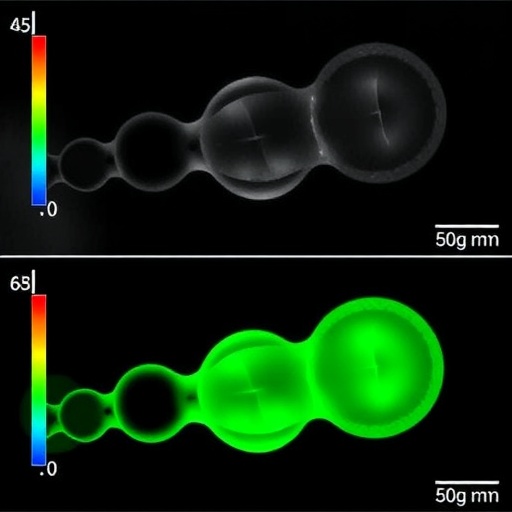
Poor diet and a lack of physical activity are major contributors to the world's obesity epidemic, but researchers have also identified common environmental pollutants that could play a role. Now one team reports in ACS' journal Environmental Science & Technology that small amounts of house dust containing many of these compounds can spur fat cells to accumulate more triglycerides, or fat, in a lab dish.
Endocrine-disrupting chemicals, or EDCs, are synthetic or naturally occurring compounds that can interfere with or mimic the body's hormones. EDCs, such as flame retardants, phthalates and bisphenol-A, are known for their potential effects on reproductive, neurological and immune functions. But animal studies also suggest that early life exposure to some EDCs can cause weight gain later in life, and, as a result, have been called "obesogens." Some manufacturers have reduced the use of EDCs in products, but many are still ubiquitous in consumer goods. And they wind up in indoor dust that can be inhaled, ingested, or absorbed through the skin. The U.S. Environmental Protection Agency estimates that children consume 50 milligrams of house dust each day. Concerned about the potential effects EDCs in dust might have on children's health, Heather Stapleton and colleagues wanted to see if the compounds in house dust might have an effect on fat cells.
The researchers collected samples of indoor dust from 11 homes in North Carolina and tested extracts from the samples in a mouse pre-adipocyte cell model, 3T3-L1 cells, often used to test compounds for potential effects on the accumulation of triglycerides, a type of fat. Extracts from seven of the 11 dust samples triggered the pre-adipocytes to develop into mature fat cells and accumulate triglycerides. Extracts from nine samples spurred the cells to divide, creating a larger pool of precursor fat cells. Only one dust sample had no effect. Additionally, among the 44 individual common house dust contaminants tested in this model, pyraclostrobin (a pesticide), the flame-retardant TBPDP, and DBP, a commonly used plasticizer, had the strongest fat-producing effects. This suggests that the mixture of these chemicals in house dust is promoting the accumulation of triglycerides and fat cells, the researchers say. Amounts of dust as low as 3 micrograms — well below the mass of dust that children are exposed to daily — caused measurable effects. Thus, the researchers also suggest that house dust is a likely exposure source of chemicals that may be able to disrupt metabolic health, particularly in children.
###
The authors acknowledge funding from the National Institute of Environmental Health Sciences, Fred and Alice Stanback, the Nicholas School of the Environment at Duke University and the Duke Cancer Institute.
The paper's abstract will be available on July 12 here: http://pubs.acs.org/doi/abs/10.1021/acs.est.7b01788.
The American Chemical Society is a not-for-profit organization chartered by the U.S. Congress. ACS is the world's largest scientific society and a global leader in providing access to chemistry-related research through its multiple databases, peer-reviewed journals and scientific conferences. ACS does not conduct research, but publishes and publicizes peer-reviewed scientific studies. Its main offices are in Washington, D.C., and Columbus, Ohio.
To automatically receive news releases from the American Chemical Society, contact [email protected].
Follow us: Twitter | Facebook
Media Contact
Katie Cottingham
[email protected]
301-775-8455
@ACSpressroom
http://www.acs.org