A scientific review published in Plant Molecular Biology evaluates the molecular machinery governing perennial bud dormancy, reporting that the critical threshold between seasonal growth arrest and reactivation is governed by the quantitative balance between abscisic acid and gibberellin rather than by either phytohormone operating in isolation. Perennial buds must successfully hold their growth arrested across an entire dormant season yet remain capable of releasing that arrest within days of receiving the right environmental cue. Resolving how such a stable state remains rapidly reversible represents a central problem in dormancy biology, holding substantial practical importance as winter chilling accumulation becomes increasingly unreliable.
The authors explain that scientific accounts of bud dormancy have developed along largely separate disciplinary trajectories. In particular, research into hormonal regulation and investigations into epigenetic reprogramming have historically advanced independently, and neither regulatory layer has previously been evaluated in conjunction with intercellular transport pathways. Although hormonal signaling, chromatin modifications, and symplasmic transport mechanisms are all implicated in guiding the very same seasonal transitions, current empirical evidence supports conclusions across these domains unevenly across different perennial plant species.
Beyond the antagonistic threshold maintained by abscisic acid and gibberellin, the review examines how several other classes of phytohormones establish the depth of bud dormancy. Auxin, cytokinins, strigolactones, and multiple stress-responsive hormones participate in this process, influencing the arrest state not through simple additive effects, but by converging upon a small set of central transcriptional nodes. The synthesis identifies DORMANCY-ASSOCIATED MADS-box, or DAM, and BRANCHED1, designated BRC1, as the principal regulatory nodes where these diverse hormonal inputs intersect to regulate dormancy depth.
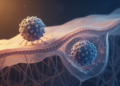
Alongside transcriptional control, the review documents direct evidence of symplasmic signal gating at intercellular connections. Specifically, studies in hybrid aspen demonstrate that abscisic acid stimulates the deposition of callose at plasmodesmata, effectively closing the symplasmic route through which growth-promoting signals reach the meristematic tissue. The subsequent enzymatic removal of this callose blockage accompanies dormancy release, illustrating that physical closure of intercellular transport routes serves as a critical mechanism enforcing growth arrest during the dormant period.
The synthesis further maps where hormonal signaling and epigenetic mechanisms directly intersect, identifying specific genomic loci where histone modifications and DNA methylation act in concert with hormonal inputs. Throughout this mapping, the authors separate experimentally verified regulatory links from associations that have only been inferred by comparing disparate species. By clarifying these shared molecular junctions, the review identifies candidate genetic and molecular targets that could guide future plant breeding programs and chemical intervention strategies aimed at supporting climate-resilient crops under erratic chilling regimes.
Finally, the review establishes clear scientific boundaries, emphasizing that a fully integrated coupling among hormonal crosstalk, epigenetic reprogramming, and plasmodesmatal gating currently remains a working hypothesis rather than an experimentally established mechanism. At present, individual regulatory links have each been demonstrated in separate species, with no complete end-to-end pathway substantiated within any single biological system. In addition, critical questions remain untested, including whether plant chromatin states actively preserve seasonal information across years or are simply rebuilt during every dormancy cycle.
Subject of Research: Perennial plant bud dormancy regulation and molecular signaling mechanisms
Article Title: Beyond ABA-GA antagonism in bud dormancy: hormonal crosstalk, epigenetic regulation, and symplasmic control
Article References: Chen, N., Ye, R., Xu, H., Shi, R., Liu, H., & Yasin, M. U. (2026). Beyond ABA-GA antagonism in bud dormancy: hormonal crosstalk, epigenetic regulation, and symplasmic control. Plant Molecular Biology, 116(6), Article 114. https://doi.org/10.1007/s11103-026-01784-w
Image Credits: AI Generated
DOI: 10.1007/s11103-026-01784-w
Keywords: bud dormancy, phytohormones, abscisic acid, gibberellins, epigenetic regulation, plasmodesmata, callose deposition, hybrid aspen, symplasmic transport, DAM genes, BRC1, histone modifications, DNA methylation, auxin, cytokinins, strigolactones, perennial plants, chilling accumulation
News Source: Juliet Wilcox. (November 21, 2026). Hormone Balance and Symplasmic Gating Regulate Bud Dormancy, Review Finds. Scienmag.