

• HOME
  • NEWS
  • EXPLORE
    • CAREER
      • Companies
      • Jobs
    • EVENTS
    • iGEM
      • News
      • Team
    • PHOTOS
    • VIDEO
    • WIKI
  • BLOG
  • COMMUNITY
    • FACEBOOK
    • INSTAGRAM
    • TWITTER
Tuesday, April 7, 2026
BIOENGINEER.ORG
No Result
View All Result
  • Login
  • HOME
  • NEWS
  • EXPLORE
    • CAREER
      • Companies
      • Jobs
        • Lecturer
        • PhD Studentship
        • Postdoc
        • Research Assistant
    • EVENTS
    • iGEM
      • News
      • Team
    • PHOTOS
    • VIDEO
    • WIKI
  • BLOG
  • COMMUNITY
    • FACEBOOK
    • INSTAGRAM
    • TWITTER
  • HOME
  • NEWS
  • EXPLORE
    • CAREER
      • Companies
      • Jobs
        • Lecturer
        • PhD Studentship
        • Postdoc
        • Research Assistant
    • EVENTS
    • iGEM
      • News
      • Team
    • PHOTOS
    • VIDEO
    • WIKI
  • BLOG
  • COMMUNITY
    • FACEBOOK
    • INSTAGRAM
    • TWITTER
No Result
View All Result
Bioengineer.org
No Result
View All Result
Home NEWS Science News Health

Highly elastic biodegradable hydrogel for bioprinting of new tissues

Bioengineer by Bioengineer
May 3, 2018
in Health
Reading Time: 2 mins read
0
Share on FacebookShare on TwitterShare on LinkedinShare on RedditShare on Telegram
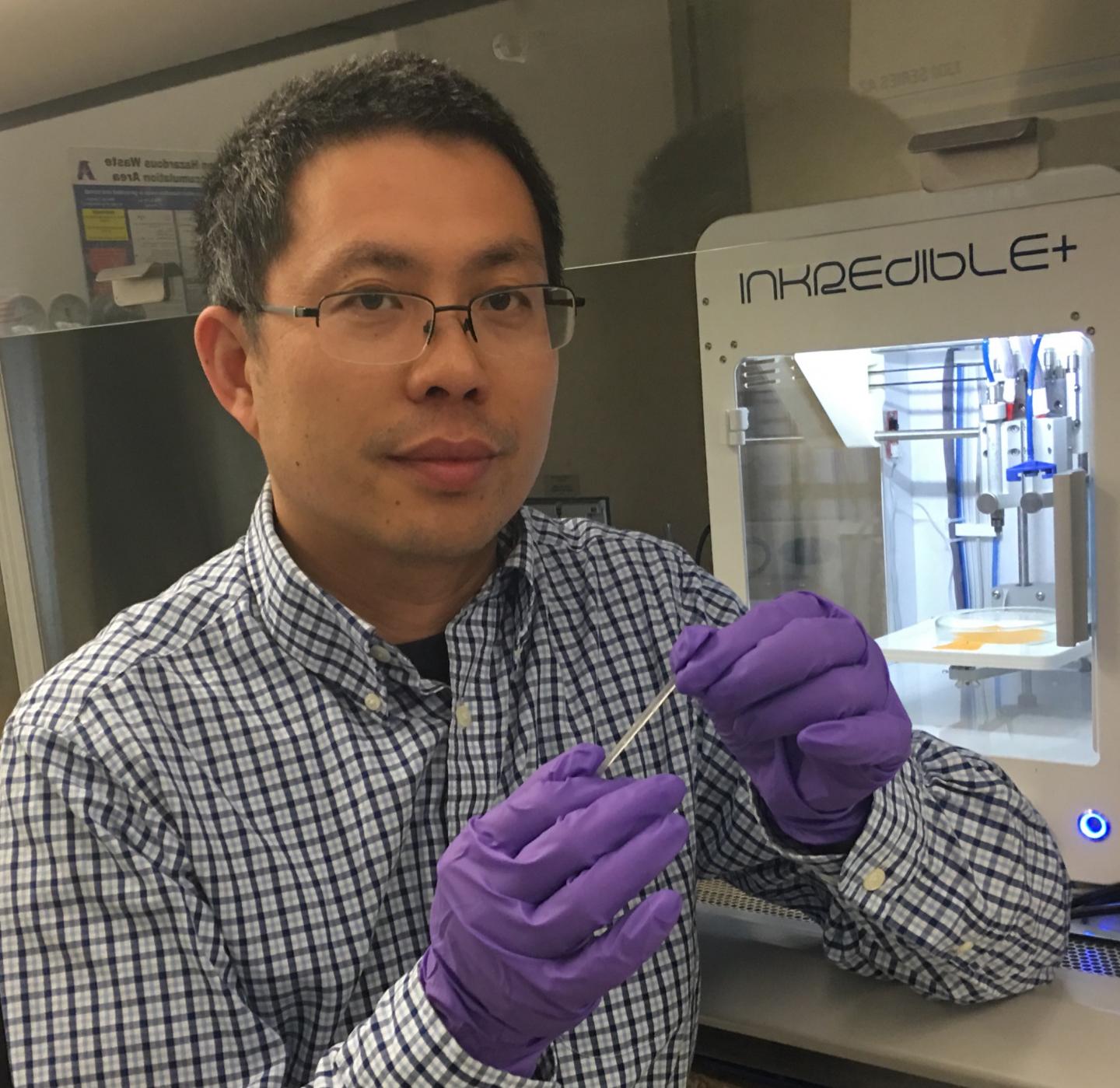
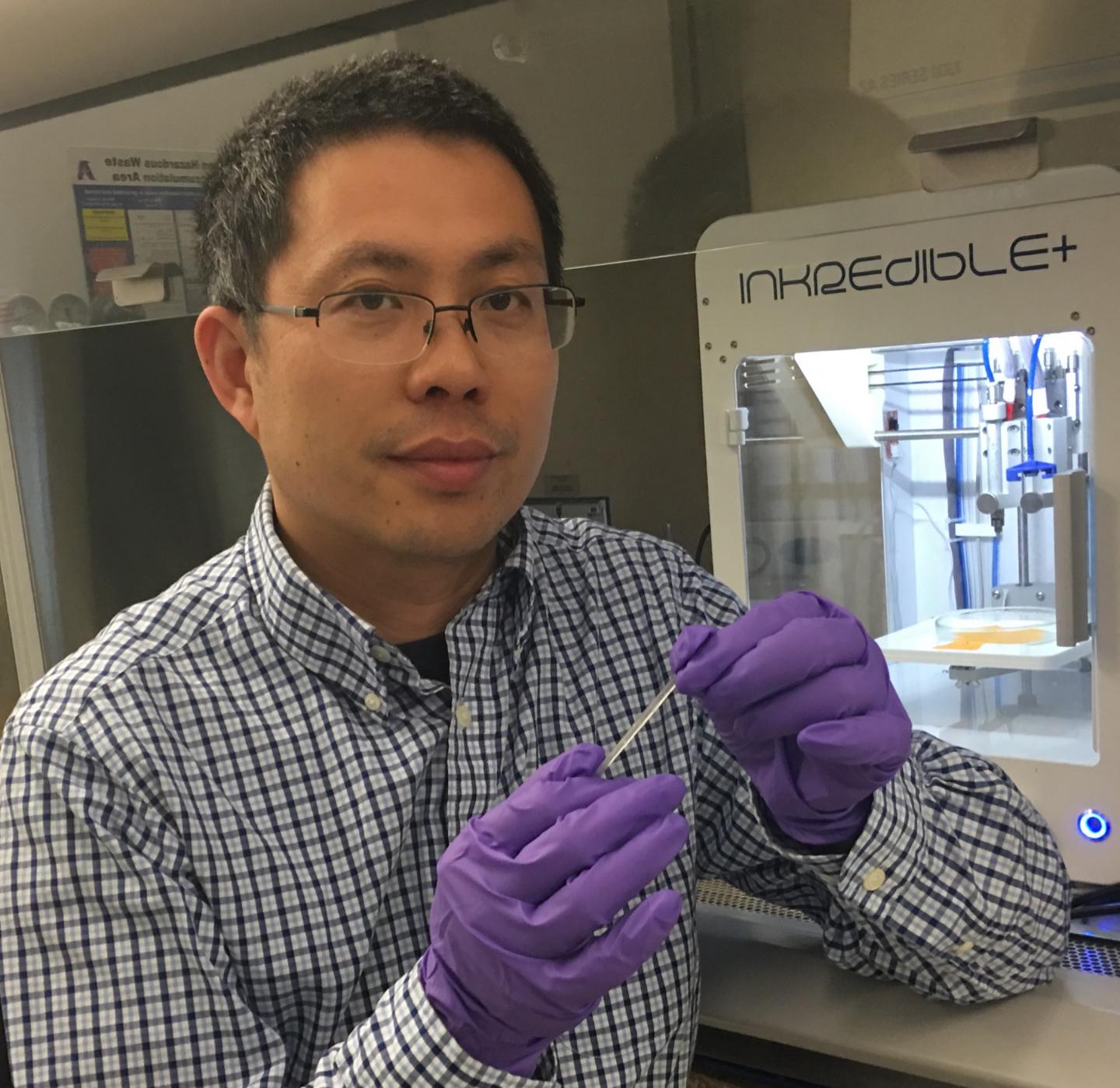
IMAGE

Credit: UTA

Researchers at The University of Texas at Arlington have developed a highly elastic biodegradable hydrogel for bio-printing of materials that mimic natural human soft tissues. Bio-printing uses live cells within the scaffolding of the new tissues and could potentially transform cell printing.

A provisional patent application has been filed on this new material, which will be able to generate multiple types of human soft tissues, including skin, skeletal muscles, blood vessels and heart muscles.

"Soft tissue bio-printing suffers from significant challenges as the hydrogels were often brittle and un-stretchable and could not mimic the mechanical behavior of human soft tissues," said Yi Hong, UTA professor of bioengineering and leader of the project.

"To overcome these challenges, we developed a simple system using a single cross-linking mechanism activated by visible light to achieve a highly elastic and robust, biodegradable and biocompatible hydrogel for cell printing," Hong added.

The researchers have described their findings in a new journal paper published recently in the American Chemical Society's ACS Applied Materials and Interfaces as "Highly Elastic Biodegradable Single-Network Hydrogel for Cell Printing." The paper was also selected as an American Chemical Society Editors' Choice.

A tri-block biodegradable polymer of polycaprolactone – poly (ethylene glycol) – polycaprolactone (PCL-PEG-PCL) with two end groups of acrylates and a visible-light water-soluble initiator forms this hydrogel for cell printing.

"Polycaprolactone and poly (ethylene glycol) are already widely used in Food and Drug Administration – approved devices and implants, which should facilitate quick translation of the material into pre-clinical and clinical trials in the future," Hong said.

"The tunability of the mechanical properties of this hydrogel to match different soft tissues is a real advantage," he added.

Michael Cho, UTA chair of bioengineering, congratulated Hong and his colleagues on this research.

"These colleagues may have created a new way of thinking about hydrogel bio-printing research," Cho said. "This work is also critical in advancing UTA's strategic theme of health and the human condition through cross-disciplinary work."

###

Dr. Gaohao Dai of Northeastern University in Boston also participated in this work and the prestigious paper.

Media Contact

Louisa Kellie
[email protected]
817-524-8926
@utarlington

http://www.uta.edu

Original Source

https://www.uta.edu/news/releases/2018/05/Yi%20Hong%20hydrogel%20for%20bioprinting.php http://dx.doi.org/10.1021/acsami.8b01294

Share12Tweet8Share2ShareShareShare2

Related Posts

Cold Metabolism Reveals Ethnic Obesity Differences

April 7, 2026

Risk Factors and Nomogram for Fatty Pancreas

April 7, 2026

New Study Finds Reducing Emissions Isn’t the Only Key to Saving Lives from Air Pollution

April 7, 2026

Sarcopenia, Frailty Predict Surgery Risks in Elderly

April 7, 2026
Please login to join discussion

POPULAR NEWS

  • blank

    Revolutionary AI Model Enhances Precision in Detecting Food Contamination

    97 shares
    Share 39 Tweet 24
  • Promising Outcomes from First Clinical Trials of Gene Regulation in Epilepsy

    51 shares
    Share 20 Tweet 13
  • Imagine a Social Media Feed That Challenges Your Views Instead of Reinforcing Them

    1009 shares
    Share 399 Tweet 249
  • Popular Anti-Aging Compound Linked to Damage in Corpus Callosum, Study Finds

    44 shares
    Share 18 Tweet 11

About

We bring you the latest biotechnology news from best research centers and universities around the world. Check our website.

Follow us

Recent News

Cold Metabolism Reveals Ethnic Obesity Differences

Risk Factors and Nomogram for Fatty Pancreas

New Study Finds Reducing Emissions Isn’t the Only Key to Saving Lives from Air Pollution

Subscribe to Blog via Email

Enter your email address to subscribe to this blog and receive notifications of new posts by email.

Join 78 other subscribers
  • Contact Us

Bioengineer.org © Copyright 2023 All Rights Reserved.

Welcome Back!

Login to your account below

Forgotten Password?

Retrieve your password

Please enter your username or email address to reset your password.

Log In
No Result
View All Result
  • Homepages
    • Home Page 1
    • Home Page 2
  • News
  • National
  • Business
  • Health
  • Lifestyle
  • Science

Bioengineer.org © Copyright 2023 All Rights Reserved.
