• HOME
  • NEWS
  • EXPLORE
    • CAREER
      • Companies
      • Jobs
    • EVENTS
    • iGEM
      • News
      • Team
    • PHOTOS
    • VIDEO
    • WIKI
  • BLOG
  • COMMUNITY
    • FACEBOOK
    • INSTAGRAM
    • TWITTER
Wednesday, April 1, 2026
BIOENGINEER.ORG
No Result
View All Result
  • Login
  • HOME
  • NEWS
  • EXPLORE
    • CAREER
      • Companies
      • Jobs
        • Lecturer
        • PhD Studentship
        • Postdoc
        • Research Assistant
    • EVENTS
    • iGEM
      • News
      • Team
    • PHOTOS
    • VIDEO
    • WIKI
  • BLOG
  • COMMUNITY
    • FACEBOOK
    • INSTAGRAM
    • TWITTER
  • HOME
  • NEWS
  • EXPLORE
    • CAREER
      • Companies
      • Jobs
        • Lecturer
        • PhD Studentship
        • Postdoc
        • Research Assistant
    • EVENTS
    • iGEM
      • News
      • Team
    • PHOTOS
    • VIDEO
    • WIKI
  • BLOG
  • COMMUNITY
    • FACEBOOK
    • INSTAGRAM
    • TWITTER
No Result
View All Result
Bioengineer.org
No Result
View All Result
Home NEWS Science News Biology

Highly contagious infection threatens endangered San Joaquin kit fox population

Bioengineer by Bioengineer
February 12, 2018
in Biology
Reading Time: 2 mins read
0
Share on FacebookShare on TwitterShare on LinkedinShare on RedditShare on Telegram
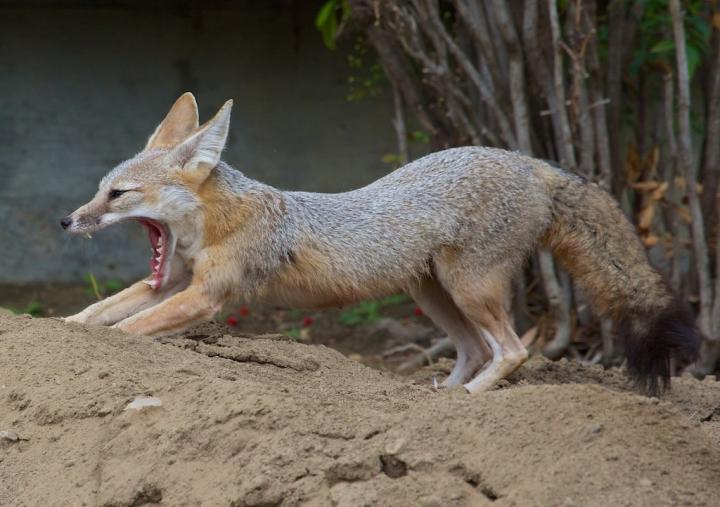
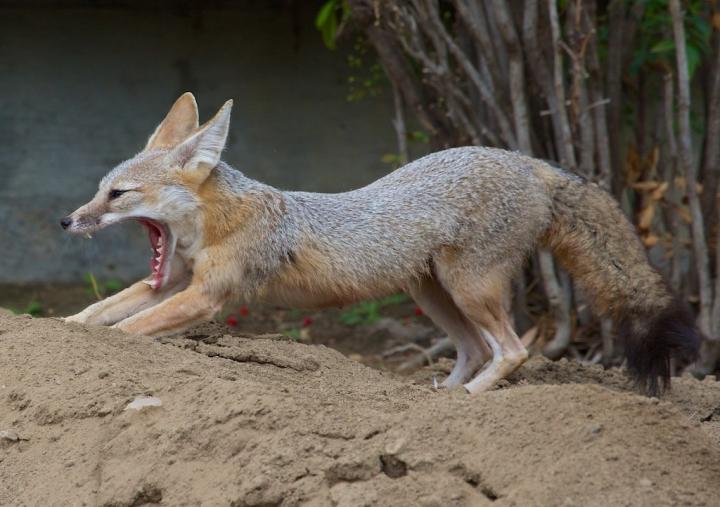
IMAGE

Credit: Rick Derevan

DENVER/ March 17 – Endangered San Joaquin kit foxes face many threats to their survival, including loss of habitat and competition with non-native species such as the red fox. Now, scientists are rushing to save remaining fragile populations from a new danger – sarcoptic mange, a skin disease caused by mites.

A recent publication by Morris Animal Foundation-funded researchers sheds light on the dynamics of this highly contagious disease, and gives desperately needed information to those working to save the San Joaquin kit fox, a subspecies of the smallest canid in North America. The paper was published in the January 2017 Journal of Wildlife Diseases.

The San Joaquin kit fox (Vulpes macrotis mutica) is endemic to central California's San Joaquin Valley, but development of the area over the last century has led to a sharp decline in its population. Currently, there are fewer than 7,000 San Joaquin kit foxes, according to the California Department of Fish and Wildlife. A critical population located in the city of Bakersfield is threatened by sarcoptic mange, first identified in spring of 2013.

Sarcoptic mange is a highly contagious, zoonotic disease caused by Sarcoptes scabiei, a mite that burrows into the skin. Hair loss and skin lesions, compounded by intense itching and self-trauma, can be fatal in severe cases. Urgent management strategies are needed to stop transmission of the disease to other members of this unique population, as well as to to other kit fox groups and other canids, both wild and domestic.

"The research results presented in this paper established a critical foundation for understanding the epidemiology of sarcoptic mange and its impacts on an extremely important population of endangered San Joaquin kit foxes," said Dr. Brian Cyphers, Associate Director and Research Ecologist of the Endangered Species Recovery Program at California State University, Stanislaus, and one of the paper's authors.

During the study, the research team confirmed the diagnosis of sarcoptic mange in 15 kit foxes either captured or found deceased. The team successfully treated three animals of nine found alive. They found no evidence that untreated kit foxes can recover from the infection, meaning prevention and treatment are critical to containing the spread of the disease.

"With this foundational study, we have been able to leverage additional funding to continue our research, including identifying potential strategies to eliminate the disease from portions of this kit fox population and possibly from the entire population," said Dr. Cyphers.

###

About Morris Animal Foundation

Morris Animal Foundation is a global leader in funding scientific studies that advance the health of companion animals, horses and wildlife. Since its founding in 1948, the Foundation has invested over $113 million in more than 2,500 studies that have led to significant breakthroughs in the diagnosis, treatment and prevention of diseases to benefit animals worldwide. To learn more, or to make a donation in support of life-saving research, visit Morris Animal Foundation.

Media Contact

Carol Borchert
[email protected]
303-708-3434
@morris_animal

http://www.morrisanimalfoundation.org

Share12Tweet8Share2ShareShareShare2

Related Posts

New Study Reveals Respiratory Evolution as Key Driver of Body Size Variation in Early Terrestrial Vertebrates

New Study Reveals Respiratory Evolution as Key Driver of Body Size Variation in Early Terrestrial Vertebrates

April 1, 2026
Survey Reveals Many Dog Owners Overlook Subtle Pain Signs Like Nighttime Restlessness and Clinginess

Survey Reveals Many Dog Owners Overlook Subtle Pain Signs Like Nighttime Restlessness and Clinginess

April 1, 2026

Ancient 500-Million-Year-Old Clawed Predator Redefines the Evolution of Spiders and Horseshoe Crabs

April 1, 2026

Chikungunya Virus Lingers in Joint Macrophages, Causes Chronic Disease

April 1, 2026
Please login to join discussion

POPULAR NEWS

  • blank

    Revolutionary AI Model Enhances Precision in Detecting Food Contamination

    96 shares
    Share 38 Tweet 24
  • Imagine a Social Media Feed That Challenges Your Views Instead of Reinforcing Them

    1006 shares
    Share 398 Tweet 249
  • Promising Outcomes from First Clinical Trials of Gene Regulation in Epilepsy

    51 shares
    Share 20 Tweet 13
  • Popular Anti-Aging Compound Linked to Damage in Corpus Callosum, Study Finds

    43 shares
    Share 17 Tweet 11

About

We bring you the latest biotechnology news from best research centers and universities around the world. Check our website.

Follow us

Recent News

In Vivo Parkinson’s Histology via Quantitative Mapping

Adiposity Changes Impact Hypertension Differently by Life Stage

Superagonist µ-Opioid Analgesic Minimizes Side Effects

Subscribe to Blog via Email

Enter your email address to subscribe to this blog and receive notifications of new posts by email.

Join 78 other subscribers
  • Contact Us

Bioengineer.org © Copyright 2023 All Rights Reserved.

Welcome Back!

Login to your account below

Forgotten Password?

Retrieve your password

Please enter your username or email address to reset your password.

Log In
No Result
View All Result
  • Homepages
    • Home Page 1
    • Home Page 2
  • News
  • National
  • Business
  • Health
  • Lifestyle
  • Science

Bioengineer.org © Copyright 2023 All Rights Reserved.