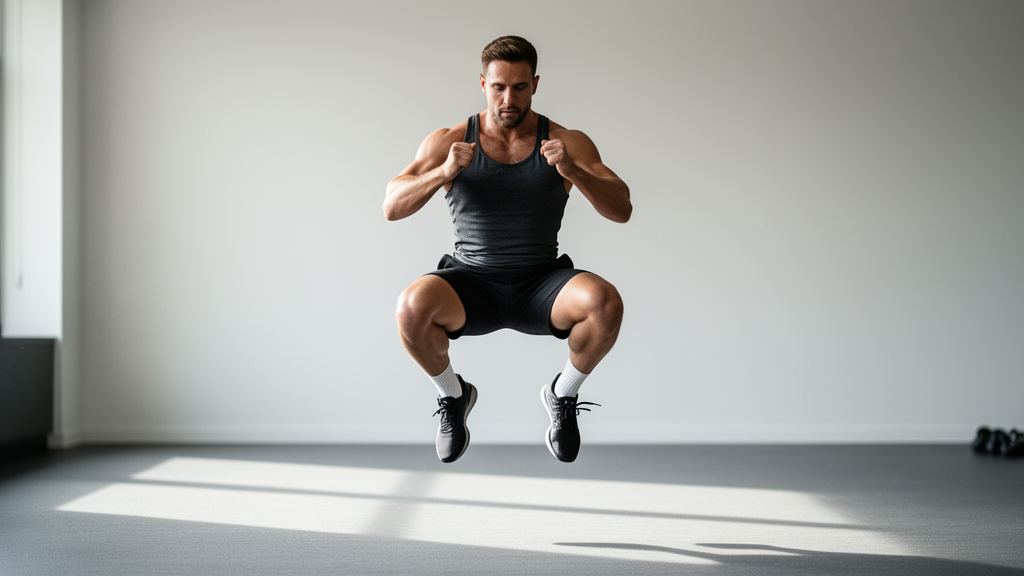
Healthy adults who regularly engage in higher levels of physical activity demonstrate significantly lower trial-to-trial variability when performing maximal squat jumps compared to their less active peers, according to a cross-sectional biomechanics study published in Frontiers in Sports and Active Living. Conducted by researchers at Huashan Hospital of Fudan University alongside collaborating institutions in Shanghai, China, the investigation explored how an individual’s habitual activity status correlates with the mechanical consistency of vertical jump execution. By evaluating forty-seven young men and women across three distinct activity classifications using dual force-plate instrumentation, the scientific team established that individuals maintaining demanding physical lifestyles achieve substantially tighter consistency in repeated squat jump height across consecutive maximal efforts. However, this stabilization of motor output was notably task-dependent, failing to reach statistical significance during countermovement jumping or in assessments of isolated isometric lower-limb strength. The findings suggest that routine engagement in demanding physical tasks may foster specialized neuromuscular control mechanisms that enhance movement reproducibility under specific ballistic constraints.
In sports medicine, athletic development, and clinical rehabilitation, vertical jump assessments serve as foundational diagnostic tools to evaluate lower-limb explosive power, mechanical force capacity, and functional movement integrity. Clinicians and exercise scientists routinely implement two standardized ballistic jump modalities: the countermovement jump, which incorporates an active downward dipping action to engage the stretch-shortening cycle, and the squat jump, which is initiated from a motionless static squat position to deliberately isolate concentric propulsion. Historically, the overwhelming majority of scientific literature has focused almost exclusively on the magnitude of physical performance, recording metrics such as peak jump elevation, ground-reaction force production, and total mechanical power output. Comparatively little attention has been directed toward performance consistency, specifically how reliably an individual reproduces their movement outcomes across repeated maximal attempts. While the widely recognized Tegner Activity Scale systematically grades daily occupational, recreational, and competitive sporting demands on an ordinal numerical scale ranging from zero to ten, it does not directly capture task-specific execution dynamics during standardized laboratory testing.
To investigate whether habitual physical exertion corresponds to reduced trial-to-trial performance fluctuations, the research team recruited forty-seven healthy adult volunteers from the local community in Shanghai between February and May 2026. The study cohort comprised twenty-six male and twenty-one female participants with an average chronological age of 25.19 years and a mean body mass index of 23.62 kilograms per square meter. Strict exclusion protocols eliminated prospective volunteers presenting any historical record of lower-limb musculoskeletal trauma, previous orthopedic surgery, active joint pain, or cardiovascular and neurological conditions that might impair maximal physical performance or compromise safety during rigorous testing. Based on their validated baseline Tegner Activity Scale scores, participants were categorized into three analytical cohorts: a low-activity group containing eleven individuals scoring between zero and four, an active group containing twenty-three individuals scoring between five and six, and a high-activity group containing thirteen individuals scoring between seven and ten. Detailed self-reported questionnaires additionally documented sport disciplines, weekly training volume, athletic experience duration, and explosive conditioning backgrounds.
All functional performance assessments were administered during a single laboratory visit at Huashan Hospital’s rehabilitation center under strictly standardized experimental conditions. Each subject commenced the testing battery with a structured five-minute warm-up on a stationary cycle ergometer, followed by dedicated familiarization trials to ensure comprehensive comprehension of movement standards and eliminate procedural learning artifacts. Jump performance was recorded utilizing a Bertec dual force-plate system sampling force signals at one hundred hertz, with participants required to keep both hands positioned firmly on their hips throughout each repetition to eliminate the confounding momentum of arm swing. For the countermovement jump, participants performed a rapid downward countermovement immediately transitioning into a maximal vertical leap, whereas for the squat jump, they assumed a stationary squat posture and avoided any preparatory downward dip before initiating upward propulsion. Any attempt exhibiting premature hand displacement, excessive mid-air joint flexion, landing instability, or visible countermovement during squat jump trials was recorded as invalid and systematically repeated until seven valid maximal trials were successfully captured per jump modality.
To quantify relative performance variability across the seven valid jump attempts for each participant, the researchers calculated the within-participant coefficient of variation, determined by dividing the sample standard deviation across trials by the individual’s mean jump height and multiplying the quotient by one hundred. Complementing this relative percentage metric, absolute within-participant variability was computed as the direct standard deviation of jump height expressed in centimeters. Statistical evaluations employed ordinary least-squares linear regression models incorporating HC3 heteroskedasticity-consistent robust standard errors to account for potential variance discrepancies across unequal participant groupings, designating the low-activity cohort as the comparative baseline. False discovery rate adjustments using the Benjamini–Hochberg procedure were systematically applied to control for multi-comparison inflation across primary jump-height variability outcomes. Furthermore, the investigative team developed multiple multivariable regression models adjusting for key demographic covariates, including participant biological sex, chronological age, and body mass index, alongside exploratory analytical models that integrated self-reported weekly exercise hours, years of active sport participation, and specific plyometric training backgrounds.
The empirical results revealed a statistically significant, graded inverse relationship between Tegner activity levels and relative trial-to-trial variability during squat jump testing. Specifically, the mean coefficient of variation for squat jump height progressively decreased across ascending activity categories, registering at 8.24 percent in the low-activity group, 6.44 percent in the active group, and 4.99 percent in the high-activity group, yielding a statistically significant overall group effect with a false discovery rate-adjusted P-value of 0.002. Planned pairwise contrast analyses demonstrated that participants in the high-activity category achieved a significant 3.25 percentage point reduction in their coefficient of variation compared to the low-activity baseline, supported by a ninety-five percent confidence interval spanning from minus 5.04 to minus 1.45 percentage points. This performance difference remained virtually unchanged after statistical adjustment for participant sex, age, and body mass index, reflecting an adjusted disparity of minus 3.3 percentage points. Furthermore, the overall group difference retained statistical significance in the exploratory model accounting for cumulative exercise volume, athletic duration, and plyometric training exposure.
In sharp contrast to the distinct patterns observed during squat jumping, relative trial-to-trial variability in countermovement jump height did not demonstrate a statistically significant differentiation across the three activity cohorts. Although countermovement jump height coefficients of variation exhibited a descriptive downward trend across the groups—averaging 6.10 percent among low-activity individuals, 5.37 percent within the active cohort, and 4.21 percent among high-activity participants—the overall difference was not statistically significant after false discovery rate adjustment, yielding a P-value of 0.121. Similarly, absolute within-participant standard deviations revealed no significant group differences for either jump task, averaging 2.02, 2.24, and 1.72 centimeters for the squat jump and 1.60, 2.09, and 1.56 centimeters for the countermovement jump. When examining absolute jump elevation, mean heights were significantly superior in both active and high-activity groups relative to the low group, measuring 25.03, 34.77, and 34.36 centimeters for squat jumps and 27.60, 39.03, and 38.83 centimeters for countermovement jumps, though the active and high groups performed virtually identically to each other.
Normalized peak vertical ground-reaction forces initially demonstrated higher average values in more active participants during unadjusted analyses; however, these differences dissipated entirely following statistical adjustment for participant sex, age, and body mass index. Crucially, trial-to-trial coefficients of variation for peak bilateral ground-reaction forces exhibited no statistically meaningful variation across activity tiers for either countermovement jumps or squat jumps, with adjusted P-values of 0.180 and 0.528, respectively. Furthermore, assessments of maximal bilateral isometric leg-press force performed on a computerized dynamometer at a fixed one-hundred-and-twenty-degree knee angle revealed no significant differences in force variability across left, right, or combined limbs, with adjusted P-values exceeding 0.900. Correlational analyses revealed that jump-height variability did not significantly correlate with ground-reaction force variability, demonstrating that movement consistency operates independently from peak force stability.
Sensitivity analyses further confirmed the robust nature of the squat jump variability findings while highlighting critical methodological requirements for accurate performance assessment. When the analytical framework was applied to the chronological first five valid trials, the overall group disparity in squat jump coefficient of variation remained statistically significant; however, when the evaluation was restricted to only the initial three trials, statistical significance was lost, indicating that an adequate repetition volume is vital to capture true individual variability characteristics. The primary findings remained statistically consistent when including borderline-invalid trials or excluding participants who recorded two or more invalid execution attempts. Biomechanically, the authors suggested that the unique structural constraints of the squat jump explain its selective association with activity level: initiating propulsion from a stationary posture without preparatory dipping eliminates countermovement adjustments and demands strict, repeatable concentric neuromuscular recruitment. Conversely, the countermovement jump affords greater kinematic freedom in dip depth, eccentric duration, and stretch-shortening dynamics, allowing individuals across varying activity levels to achieve comparable jump elevations through distinct internal execution strategies.
Despite providing novel insights into neuromuscular performance consistency, the study authors outlined several methodological limitations that warrant careful consideration when interpreting the conclusions. The cross-sectional research design precludes establishing causal mechanisms, leaving unresolved whether regular participation in demanding physical activity directly trains movement consistency or whether individuals with inherently stable neuromuscular coordination naturally pursue higher activity tiers. Moreover, the study cohort was relatively modest in size, exhibited unequal group distributions, and relied on self-reported activity questionnaires that cannot capture technical movement mastery or daily training intensity nuances. Because testing was conducted exclusively among healthy young adults within a single experimental session, the findings cannot be directly extrapolated to competitive elite athletes, older populations, or injured patients navigating clinical rehabilitation pathways. Consequently, the investigators emphasized that jump-height coefficient of variation should currently be interpreted as a complementary diagnostic parameter alongside traditional jump-height benchmarks rather than an isolated clinical criterion, underscoring the urgent necessity for comprehensive longitudinal investigations to establish its responsiveness and long-term test-retest reliability across diverse populations.
Subject of Research: Physical activity level and trial-to-trial vertical jump variability in healthy adults
Article Title: Tegner activity level and task-specific trial-to-trial variability in countermovement and squat jump height: a cross-sectional study
Article References: Han, Y., Chen, Y., Zhou, X., Aizezi, A., Cheng, J., Jin, H., Xue, X., Wang, D., Shi, D., & Hua, Y. (2026). Tegner activity level and task-specific trial-to-trial variability in countermovement and squat jump height: a cross-sectional study. Frontiers in Sports and Active Living, 8, Article 1983083. https://doi.org/10.3389/fspor.2026.1983083
Image Credits: AI Generated
DOI: 10.3389/fspor.2026.1983083
Keywords: squat jump, countermovement jump, Tegner activity scale, trial-to-trial variability, coefficient of variation, jump height, biomechanics, ground reaction force, stretch-shortening cycle, isometric leg press, force plates, sports medicine, motor control, exercise volume, Huashan Hospital, neuromuscular performance
News Source: Ophelia Keating. (November 24, 2026). Higher Activity Levels Link to More Consistent Squat Jump Performance in Adults. Scienmag.