• HOME
  • NEWS
  • EXPLORE
    • CAREER
      • Companies
      • Jobs
    • EVENTS
    • iGEM
      • News
      • Team
    • PHOTOS
    • VIDEO
    • WIKI
  • BLOG
  • COMMUNITY
    • FACEBOOK
    • INSTAGRAM
    • TWITTER
Saturday, April 11, 2026
BIOENGINEER.ORG
No Result
View All Result
  • Login
  • HOME
  • NEWS
  • EXPLORE
    • CAREER
      • Companies
      • Jobs
        • Lecturer
        • PhD Studentship
        • Postdoc
        • Research Assistant
    • EVENTS
    • iGEM
      • News
      • Team
    • PHOTOS
    • VIDEO
    • WIKI
  • BLOG
  • COMMUNITY
    • FACEBOOK
    • INSTAGRAM
    • TWITTER
  • HOME
  • NEWS
  • EXPLORE
    • CAREER
      • Companies
      • Jobs
        • Lecturer
        • PhD Studentship
        • Postdoc
        • Research Assistant
    • EVENTS
    • iGEM
      • News
      • Team
    • PHOTOS
    • VIDEO
    • WIKI
  • BLOG
  • COMMUNITY
    • FACEBOOK
    • INSTAGRAM
    • TWITTER
No Result
View All Result
Bioengineer.org
No Result
View All Result
Home NEWS Science News Biology

High-sugar feeding only at active times of day reduces adverse effects in rats

Bioengineer by Bioengineer
August 27, 2018
in Biology
Reading Time: 2 mins read
0
Share on FacebookShare on TwitterShare on LinkedinShare on RedditShare on Telegram
IMAGE

Credit: Hiroaki Oda

Nagoya, Japan – A sedentary lifestyle combined with a diet dominated by processed foods has widely resulted in a range of conditions including diabetes, obesity, and high blood pressure, which are known collectively as metabolic syndrome. Although many insights into the causes of metabolic syndrome have been made, much remains to be understood about the complex interplay among the genetic, environmental, and lifestyle-related factors related to ways of preventing this condition.

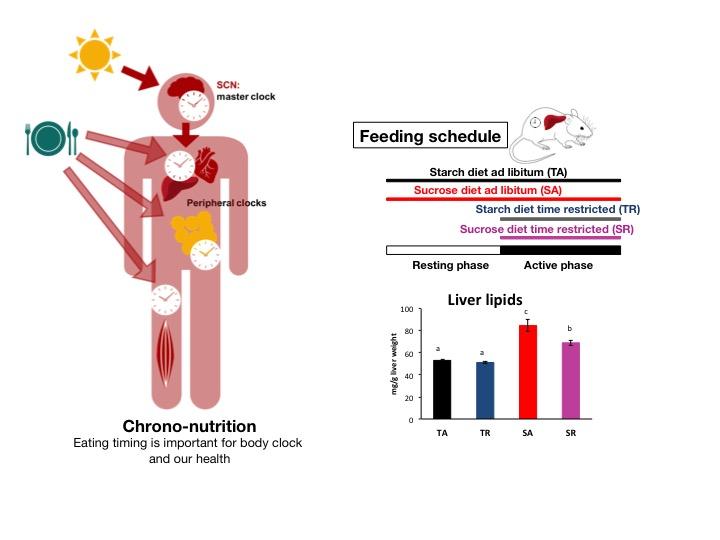
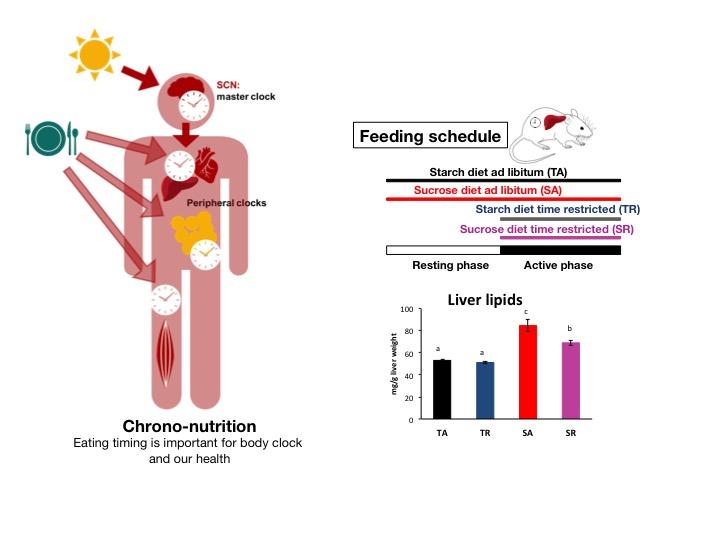
Sucrose, a common form of sugar made up of glucose and fructose, is one part of the diet known to be associated with conditions such as obesity and high blood pressure when consumed in excess. However, it is still somewhat unclear how this occurs and how to minimize it. In a new paper published in PLOS ONE, a research team centered at Nagoya University has shown that restricting the consumption of a high-sucrose diet in rats to the part of the day when they are active avoids many of the deleterious effects of excess sugar on the body.

The team established four groups of rats with different diets: either a high-sucrose diet or an equivalent diet with starch replacing the sucrose, with these being made available either throughout the day and night, or only when the rats were active. Given the nocturnal nature of rats, this corresponded to the nighttime.

"We chose to study rats because their body weight is ten times that of the commonly used animal model of mice, making them more similar to humans, and because they have a more stable metabolism" Hiroaki Oda of the Laboratory of Nutritional Biochemistry says. "We subjected the four groups to various analyses, including of body weight, lipids in blood and liver, and hepatic gene expression."

The results showed that, when the rats had access to high-sucrose food only at night when they were active, their levels of fat in the blood and liver were lower than those in the group in which such food was available all the time, despite the two groups consuming the same amount overall. The results also indicated that this improvement was not caused by any knock-on effect on the expression of genes for fat metabolism, indicating that it was the temporal restriction on feeding itself that produced the beneficial effects.

"Our findings could be very important for the fight against obesity and other lifestyle-related diseases in humans," lead author Shumin Sun says. "Potentially, limiting sugar intake to the part of the day when people are most active could reduce many of the damaging effects of its excessive consumption across the globe."

###

Media Contact

Sebastian Eifrid
[email protected]
@NU__Research

http://www.nagoya-u.ac.jp/en/

Original Source

http://en.nagoya-u.ac.jp/research/activities/news/2018/08/08272018-med.html http://dx.doi.org/10.1371/journal.pone.0201261

Share12Tweet8Share2ShareShareShare2

Related Posts

Epigenetic Alterations at Birth Linked to Infant Microbiome and Neurodevelopment

Epigenetic Alterations at Birth Linked to Infant Microbiome and Neurodevelopment

April 10, 2026
Lung Cancer That Alters Its Identity Could Be Concealed in Plain Sight

Lung Cancer That Alters Its Identity Could Be Concealed in Plain Sight

April 10, 2026

Neuronal Motor Protein Composition Determines Cargo Specificity

April 10, 2026

How Your Housemates Might Be Altering Your Gut Microbiome

April 10, 2026
Please login to join discussion

POPULAR NEWS

  • Boosting Breast Cancer Risk Prediction with Genetics

    47 shares
    Share 19 Tweet 12
  • Popular Anti-Aging Compound Linked to Damage in Corpus Callosum, Study Finds

    44 shares
    Share 18 Tweet 11
  • Imagine a Social Media Feed That Challenges Your Views Instead of Reinforcing Them

    1012 shares
    Share 400 Tweet 250
  • Revolutionary Theory Transforms Quantum Perspective on the Big Bang

    41 shares
    Share 16 Tweet 10

About

We bring you the latest biotechnology news from best research centers and universities around the world. Check our website.

Follow us

Recent News

Single-Cell Map Reveals Immune Crosstalk in Cholangitis

Patternable Electrophoretic Display Textiles via Fiber-Crossbar

Berry Gold Nanoparticles Trigger Cancer Cell Death and Immune Response

Subscribe to Blog via Email

Enter your email address to subscribe to this blog and receive notifications of new posts by email.

Join 78 other subscribers
  • Contact Us

Bioengineer.org © Copyright 2023 All Rights Reserved.

Welcome Back!

Login to your account below

Forgotten Password?

Retrieve your password

Please enter your username or email address to reset your password.

Log In
No Result
View All Result
  • Homepages
    • Home Page 1
    • Home Page 2
  • News
  • National
  • Business
  • Health
  • Lifestyle
  • Science

Bioengineer.org © Copyright 2023 All Rights Reserved.