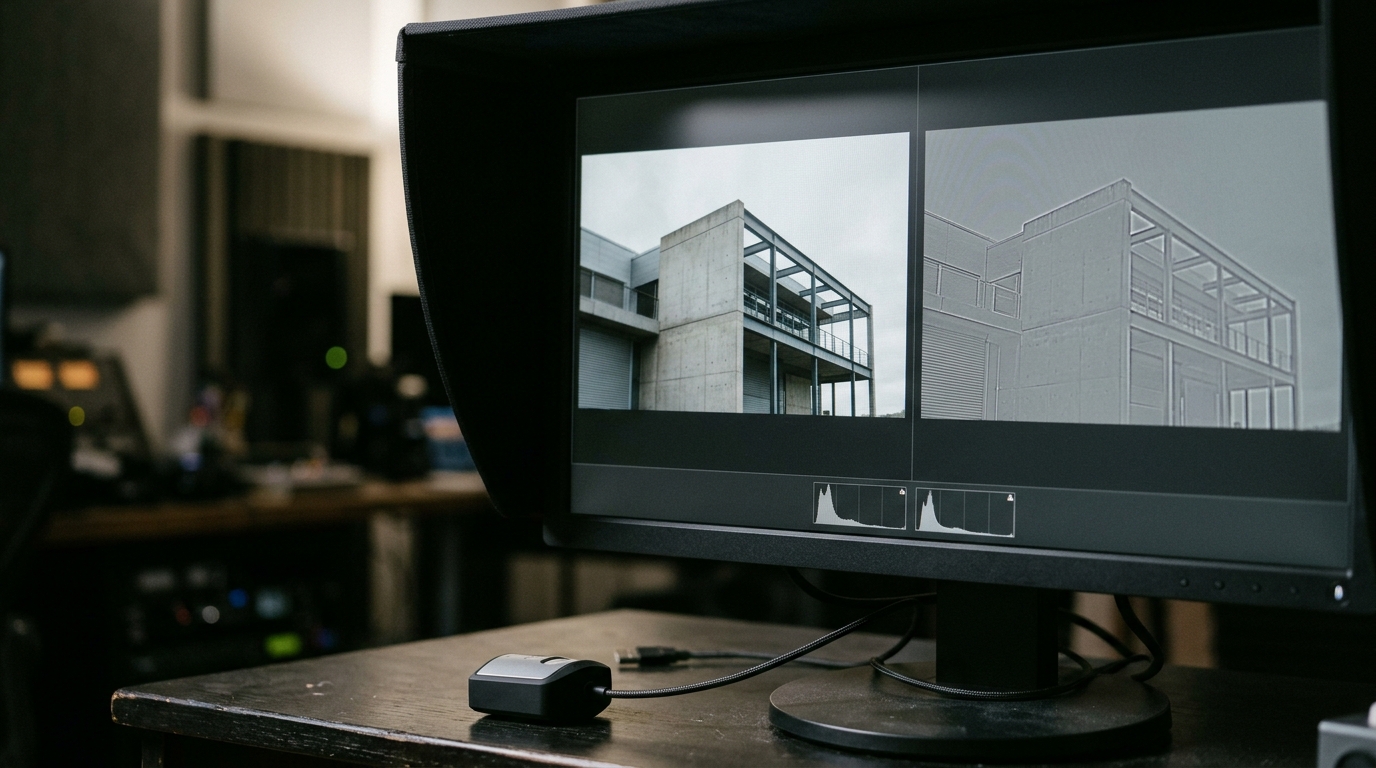
A research team led by Qike Li, Yue Sun, Zhaoyang Zhang, and Wei Wang has engineered a digital image tampering detection architecture that couples a Ringed Residual U-Net backbone with hierarchical edge enhancement and full-scale skip connections. Documented in Discover Artificial Intelligence, the study demonstrates that explicitly reinforcing boundary artifacts across multiple network depths enables machine learning systems to reliably pinpoint subtle image manipulations. Evaluated across benchmark image collections, the proposed framework, designated as the Deep Supervised Full-Scale Detection Network, achieved F1 scores of 91.77 percent on the CASIA Image Tampering Detection Evaluation Database version 2.0 and 90.25 percent on the Image Manipulation Dataset 2020. These metrics represent performance gains of 6.11 percent and 6.59 percent, respectively, over the baseline Ringed Residual U-Net architecture. Concurrently, intersection-over-union scores improved by more than 8 percent, underscoring the system’s enhanced capacity to identify altered regions that evade standard convolutional inspection.
Digital forensics faces escalating operational challenges as contemporary photo editing software facilitates increasingly covert image modifications. Manipulations such as image splicing, copy-paste cloning, and targeted boundary blurring frequently leave visual artifacts that remain imperceptible to human observers while compromising the evidential credibility of photographs in legal proceedings, public media, and institutional records. Automated tampering detection systems seek to localize these manipulations by discovering statistical irregularities, inconsistent noise distributions, and disrupted edge boundaries. Early digital forensic approaches depended heavily on handcrafted feature extractors, including manual edge contour comparisons and noise inconsistency algorithms. However, these classical models exhibited poor adaptability when encountering complex manipulation combinations or routine image post-processing operations. While modern deep learning architectures like Fully Convolutional Networks and basic U-Net variants automated feature extraction, they routinely suffered from the progressive loss of shallow edge detail during downsampling and failed to fully synthesize high-level semantic abstractions with localized pixel variations.
The Ringed Residual U-Net was originally introduced to address network degradation during image splicing detection by implementing residual propagation alongside residual feedback within its structural stages. Residual propagation transfers shallow features directly across internal layers by summing input feature representations with double-layer convolutional transformations, thereby mitigating vanishing gradients. Complementing this, residual feedback routes convolutional outputs through an activation mechanism that multiplies the original input feature map, effectively accentuating pixel differences between authentic and forged image segments. Despite these advantages, three systemic structural deficiencies persisted within standard implementations. First, edge artifacts were captured only implicitly through stacked convolutions, preventing the explicit amplification of weak gradient signatures produced by lossy compression or intentional smoothing. Second, the residual loops operated exclusively within individual stages, lacking cross-scale data conduits between encoder and decoder hierarchies. Consequently, delicate tampering traces decayed before reaching deep decoding layers. Third, loss supervision was applied exclusively to the final network output, naturally skewing optimization toward expansive semantic targets while neglecting small-scale alterations.
To overcome these limitations without separating edge processing from primary semantic detection, the researchers devised the Deep Supervised Full-Scale Detection Network. Existing experimental frameworks frequently relegated edge detection to external, independent preprocessing pipelines or dual-stream configurations, which created substantial computational overhead and suffered from inefficient cross-stream interaction. In contrast, the newly proposed architecture embeds an Edge Hierarchical Enhancement Module directly within the forward encoding path of the Ringed Residual U-Net. By integrating classical Sobel differential operations into the encoder stages, the network executes end-to-end joint optimization of boundary characteristics alongside semantic tampering representations within a single training loop. This architectural coupling ensures that edge reinforcement directly informs spatial feature extraction, preserving boundary clarity while retaining the global contextual comprehension necessary to distinguish authentic image structures from composite photographic elements.
The embedded Edge Hierarchical Enhancement Module operates across three discrete structural tiers: Shallow Edge Enhancement at the initial encoder layer, Middle Edge Enhancement at the second layer, and Deep Edge Enhancement spanning the third and fourth layers. In the shallow tier, three-channel color images are processed using horizontal and vertical Sobel convolution kernels to extract fine pixel gradients independently across each channel. The resulting gradient magnitude arrays are channel-averaged to form a single-channel edge weight map, which is multiplied element-wise with the shallow features before being summed with the original input. For the mid-level tier, the network applies dual-scale Sobel convolutions utilizing 3-by-3 and 5-by-5 receptive fields to capture structural contours of varying widths. These dual gradient maps are fused through sigmoid activation and integrated via residual connections to safeguard baseline contour data. In the deep tier, global average pooling extracts broad semantic weights while a deep Sobel gradient computes boundary attention maps. These two spatial arrays are blended using equal balance parameters to generate a joint attention map that prevents boundary blurring across high-level semantic representations.
To prevent the degradation of shallow boundary details as information traverses the deep network, the architecture incorporates Full-Scale Skip Connections. Standard U-Net and Ringed Residual U-Net models connect each encoder stage strictly to its corresponding decoder counterpart at the identical spatial resolution. This restricted arrangement prevents fine-grained spatial evidence from directly influencing deep semantic decoding stages. The Full-Scale Skip Connection mechanism reconfigures this topology by constructing interconnected communication paths between all four encoder tiers and all four decoder tiers. Using bilinear interpolation with precise corner-pixel alignment, encoder representations from disparate spatial resolutions are dynamically resized to match the target decoder stage dimensions. These resized representations are concatenated along the channel axis alongside the native decoder features and channeled through 1-by-1 convolutional transformations to reduce dimensionality and suppress channel redundancy. This comprehensive connectivity guarantees that delicate manipulation traces identified in early encoding layers remain accessible throughout the entirety of the decoding process.
The network complements its full-scale structural routing with a multi-scale Deep Supervision framework and an Edge-Aware Hybrid Loss formulation. Deep supervision branches comprising 3-by-3 convolutions and sigmoid activation functions are attached to each of the four decoder levels, outputting four distinct scale-specific tampering probability maps. The final global prediction map is derived through a weighted summation of these four probability maps, utilizing learnable parameters that are normalized via softmax functions during backpropagation rather than relying on static, hand-tuned coefficients. Optimization is governed by the hybrid loss function, which balances region segmentation loss against edge gradient loss using an empirically established balance weight of 0.5 identified via grid search across candidate values from 0.1 to 0.9. The segmentation component calculates multi-scale cross-entropy against ground-truth binary masks, while the edge loss applies an L2 norm to the difference between the Sobel gradients of the final prediction map and the actual tampering boundaries, enforcing spatial continuity along manipulated image seams.
Rigorous experimental evaluation was conducted using three established public benchmarks and a dedicated synthetic robustness collection. The public datasets comprised the CASIA Tampered Image Detection Database version 2.0 containing 2,000 images at 256-by-256 resolution, the Image Manipulation Dataset 2020 featuring 5,000 images at 512-by-512 resolution, and the Columbia Image Splicing Detection Dataset consisting of 1,800 uncompressed spliced samples. The research team also constructed a 3,000-image Hybrid dataset designed specifically to assess algorithmic resilience against aggressive post-processing artifacts. To eliminate data leakage and prevent memorization of source content, authentic base images were extracted from CASIA and Columbia datasets and filtered using 64-bit perceptual hashing and MD5 checksums; any sample exhibiting a perceptual hash Hamming distance of five or less relative to training images was strictly discarded. The retained authentic backdrops were paired with disjoint copy-paste fragments and exposed to five discrete levels of Gaussian blur, Gaussian noise, and lossy JPEG compression across balanced 600-sample subsets.
All experimental evaluations adhered to standardized data partitions, reserving 70 percent of samples for training, 15 percent for validation, and 15 percent for isolated testing, stratified across tampering categories to ensure equal representation of splicing, copy-move, and post-processed instances. Comparative testing against established benchmarks—including Fully Convolutional Networks, standard U-Net, baseline Ringed Residual U-Net, DeepLabV3, and ManTra-Net—demonstrated the clear performance advantages of the proposed model. On the CASIA collection, the Deep Supervised Full-Scale Detection Network surpassed the baseline RRU-Net by 6.11 percent in F1 score and achieved a synchronous IoU gain exceeding 8 percent. Performance remained consistently superior on the IMD 2020 dataset despite pervasive post-processing noise. Stratified evaluations on CASIA test samples categorized by tampering area revealed that the model delivered its most pronounced improvements on small manipulations measuring 32-by-32 pixels or fewer, yielding an F1 improvement of 10.53 percentage points over baseline RRU-Net and validating the efficacy of the edge enhancement modules.
Comprehensive ablation experiments carried out on the CASIA dataset confirmed the functional complementarity of the architectural innovations. When the Edge Hierarchical Enhancement Module, Full-Scale Skip Connections, and Deep Supervision were deployed concurrently in the full model, performance improvements substantially exceeded those achieved by any individual module or pairwise combination, such as pairing edge enhancement with full-scale skip routing. Comparing the full architecture against an identical variant lacking the edge-aware hybrid loss confirmed that explicit gradient constraints were vital for maximizing boundary precision. Furthermore, robustness trials conducted on the Hybrid dataset under peak degradation settings demonstrated that the proposed model maintained an accuracy of 86.07 percent, a precision of 81.53 percent, an F1 score of 82.17 percent, and an IoU of 74.83 percent. At this extreme stress tier, the model outperformed baseline RRU-Net by 10.64 percent in accuracy, 10.27 percent in precision, 9.72 percentage points in F1 score, and 10.55 percentage points in IoU, demonstrating exceptional stability against distortion.
Hardware benchmarking on an Nvidia RTX 3090 graphics processor utilizing 256-by-256 pixel inputs indicated that the integration of the edge enhancement modules, skip paths, and deep supervision branches introduced 3.4 million additional parameters relative to the original RRU-Net. Despite this structural expansion, the computational overhead and floating-point operations remained lower than those documented for complex comparison models such as ManTra-Net and DeepLabV3. The authors highlighted specific operational boundaries, noting that performance still degrades when confronting severe image corruptions characterized by extreme blurring kernels or overwhelming additive noise. Additionally, the system remains restricted to single static frames. Future development initiatives will focus on network pruning and lightweight structural parameter compression to enhance inference speeds for edge device deployment, alongside investigating frequency-domain feature integration and multi-frame temporal analysis to detect manipulations within streaming video sequences.
Subject of Research: Digital image tampering detection using neural networks with hierarchical edge enhancement
Article Title: Digital image tampering detection technology based on the RRU-net model and edge hierarchical enhancement
Article References: Li, Q., Sun, Y., Zhang, Z., & Wang, W. (2026). Digital image tampering detection technology based on the RRU-net model and edge hierarchical enhancement. Discover Artificial Intelligence, 6(1), Article 2003. https://doi.org/10.1007/s44163-026-02910-9
Image Credits: AI Generated
DOI: 10.1007/s44163-026-02910-9
Keywords: Digital Forensics, Image Tampering Detection, RRU-Net, Edge Hierarchical Enhancement, Sobel Operator, Full-Scale Skip Connections, Deep Supervision, Edge-Aware Hybrid Loss, CASIA TID, IMD 2020, COLUMB Dataset, Image Splicing, Copy-Paste Forgery, Post-Processing Robustness, Convolutional Neural Networks, Feature Fusion, Boundary Artifact Localization
News Source: Denise Maddox. (November 28, 2026). Hierarchical Edge Enhancement Architecture Improves Digital Image Tampering Detection Accuracy. Scienmag.