• HOME
  • NEWS
  • EXPLORE
    • CAREER
      • Companies
      • Jobs
    • EVENTS
    • iGEM
      • News
      • Team
    • PHOTOS
    • VIDEO
    • WIKI
  • BLOG
  • COMMUNITY
    • FACEBOOK
    • INSTAGRAM
    • TWITTER
Sunday, November 8, 2026
BIOENGINEER.ORG
No Result
View All Result
  • Login
  • HOME
  • NEWS
  • EXPLORE
    • CAREER
      • Companies
      • Jobs
        • Lecturer
        • PhD Studentship
        • Postdoc
        • Research Assistant
    • EVENTS
    • iGEM
      • News
      • Team
    • PHOTOS
    • VIDEO
    • WIKI
  • BLOG
  • COMMUNITY
    • FACEBOOK
    • INSTAGRAM
    • TWITTER
No Result
View All Result
Bioengineer.org
No Result
View All Result
Home NEWS Science News Health

Herd Size and Cattle Residency Time Predict Large Bovine Tuberculosis Breakdowns

by
November 8, 2026
in Biology, Health
Reading Time: 2 mins read
0
Herd Size and Cattle Residency Time Predict Large Bovine Tuberculosis Breakdowns

Herd Size and Cattle Residency Time Predict Large Bovine Tuberculosis Breakdowns

Share on FacebookShare on TwitterShare on LinkedinShare on RedditShare on Telegram

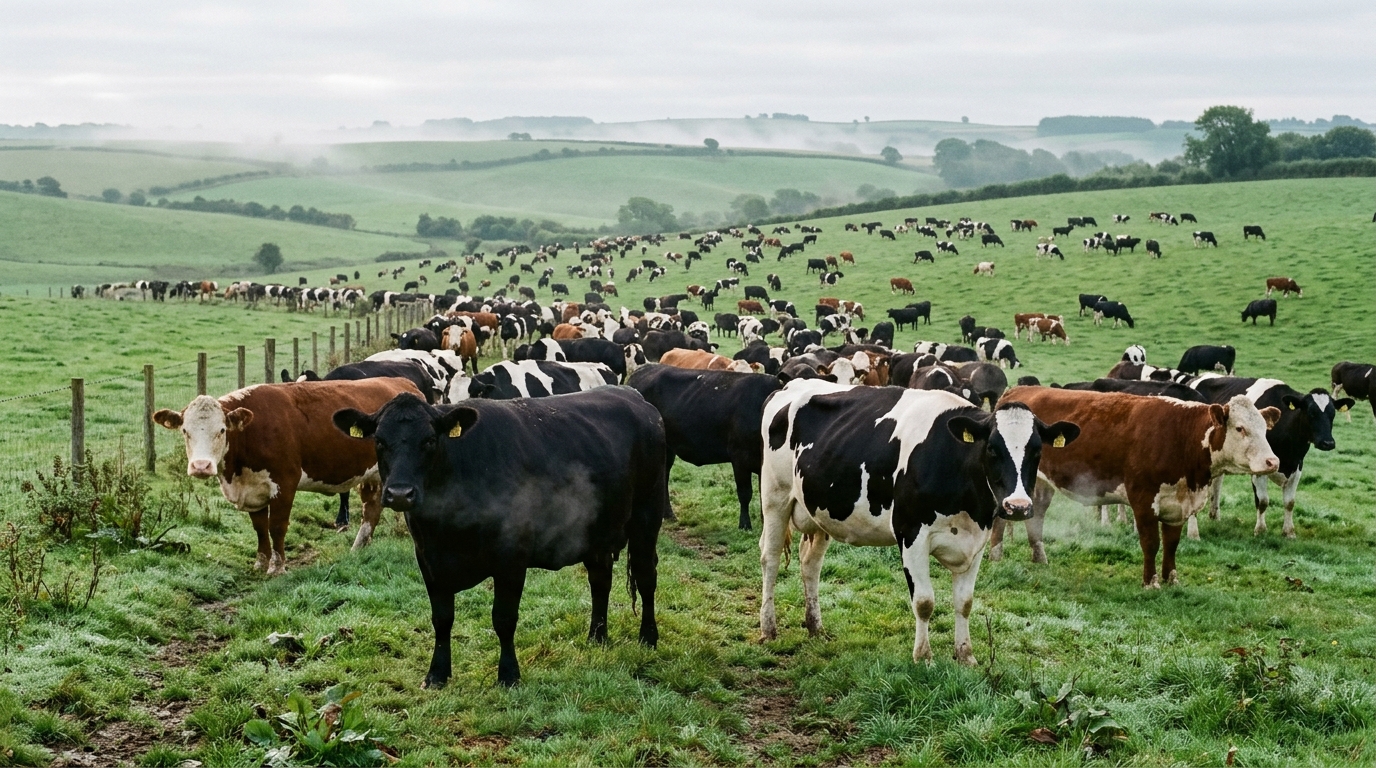
Between 2016 and 2024, annual herd-level incidence of bovine tuberculosis in Irish cattle herds increased from 3.27% to 6.04%, with cattle residency times and herd size serving as the strongest predictors of large disease breakdowns. Investigating risk factors for these events, defined as periods of trade restriction and enhanced testing associated with the detection of cases, researchers evaluated how herd management variables correlate with breakdown severity.

The study population encompassed 37,176 breakdowns across 24,730 herds that concluded between 2012 and 2023. Using logistic regression models, investigators evaluated associations between case counts exceeding one, four, and ten animals and variables including herd size, residency times, previous breakdown history, initiating test type, year, inward animal movements, and neighbourhood infection burden.

For a distinct subpopulation of 15,834 breakdowns initiated by skin testing, the authors evaluated standard skin reactor counts using zero-truncated negative binomial regression. In this analysis, the highest quintile of herd size yielded an incidence rate ratio of 3.20 (95% CI [2.88–3.57]) compared to the lowest quintile. Similarly, herds in the highest quintile for cattle residency times demonstrated an incidence rate ratio of 3.25 (95% CI [2.94–3.59]) relative to the lowest quintile.

Herd enterprise types and detection pathways also showed notable differences in breakdown case counts. Dairy herds exhibited an incidence rate ratio of 1.42 (95% CI [1.31–1.54]) and fattener herds recorded an incidence rate ratio of 1.32 (95% CI [1.20–1.44]) compared to beef breeding herds. In terms of initiating surveillance, risk-based skin tests were associated with higher case counts than routine annual skin tests, showing an incidence rate ratio of 1.52 (95% CI [1.38–1.68]), whereas slaughterhouse-initiated breakdowns had lower odds of exceeding a single case compared to annual skin tests (odds ratio 0.30, 95% CI [0.29–0.32]).

When cases identified through interferon-gamma testing were excluded from the analysis, calendar year accounted for less variation across the statistical models. Metrics of neighbourhood disease burden contributed the least explanatory capacity to the negative binomial models, yielding a Likelihood Ratio Test statistic of χ2 = 4.5 (p = 0.21). Because herd size and residency duration showed strong associations with large case counts while local spatial risk did not, the findings suggest within-herd transmission among cattle may amplify infections following an initial introduction, indicating that preventing introduction into larger herds could aid control efforts.

Subject of Research: Risk factors for large bovine tuberculosis breakdowns in Irish cattle herds

Article Title: Residency time and other risk factors for large bovine tuberculosis breakdowns in Irish cattle herds

Article References: Casey-Bryars, M., Tratalos, J. A., Byrne, A. W., More, S. J., Barrett, D., Madden, J. M., & Conlan, A. J. K. (2026). Residency time and other risk factors for large bovine tuberculosis breakdowns in Irish cattle herds. BMC Veterinary Research. https://doi.org/10.1186/s12917-026-05969-9

Image Credits: AI Generated

DOI: 10.1186/s12917-026-05969-9

Keywords: bovine tuberculosis, cattle herds, residency time, herd size, epidemiology, veterinary disease, disease transmission, Ireland, Residency, time, other, risk

News Source: William Thompson. (November 8, 2026). Herd Size and Cattle Residency Time Predict Large Bovine Tuberculosis Breakdowns. Scienmag.

Tags: bovine tuberculosiscattle herdsdisease transmissionEpidemiologyherd sizeIrelandotherresidencyresidency timerisktimeveterinary disease
Share12Tweet7Share2ShareShareShare1

Related Posts

Sprint Time Correlates with Change-of-Direction Performance in Children

Sprint Time Correlates with Change-of-Direction Performance in Children

November 8, 2026
AlphaFold2 Model Fails to Link Fibrocystin Variants to ARPKD Severity

AlphaFold2 Model Fails to Link Fibrocystin Variants to ARPKD Severity

November 8, 2026

Rodent Toxicity Archives Reveal Candidate Longevity Agents

November 8, 2026

New Primulaceae Plant Species Discovered in Danxia Landscape of Southern China

November 8, 2026

POPULAR NEWS

  • SGLT2 Inhibitors Outperform DPP-4 Inhibitors in Safety for Super-Elderly Diabetic Patients

    SGLT2 Inhibitors Outperform DPP-4 Inhibitors in Safety for Super-Elderly Diabetic Patients

    29 shares
    Share 12 Tweet 7
  • Eye surface microbes shift dramatically in neurotrophic keratitis patients

    29 shares
    Share 12 Tweet 7
  • International Workshop Explores AI Biomarkers and Equity in Breast Density Screening

    29 shares
    Share 12 Tweet 7
  • Fused silica quintic nonlinearity measured at femtosecond intensities

    29 shares
    Share 12 Tweet 7

About

We bring you the latest biotechnology news from best research centers and universities around the world. Check our website.

Follow us

Recent News

Biocapsulated Vermicompost Fertilizer Linked to Enhanced Early Maize Growth in Trial

Sprint Time Correlates with Change-of-Direction Performance in Children

AlphaFold2 Model Fails to Link Fibrocystin Variants to ARPKD Severity

Subscribe to Blog via Email

Enter your email address to subscribe to this blog and receive notifications of new posts by email.

Join 86 other subscribers
  • Contact Us

Bioengineer.org © Copyright 2023 All Rights Reserved.

Welcome Back!

Login to your account below

Forgotten Password?

Retrieve your password

Please enter your username or email address to reset your password.

Log In
No Result
View All Result
  • Homepages
    • Home Page 1
    • Home Page 2
  • News
  • National
  • Business
  • Health
  • Lifestyle
  • Science

Bioengineer.org © Copyright 2023 All Rights Reserved.