

• HOME
  • NEWS
  • EXPLORE
    • CAREER
      • Companies
      • Jobs
    • EVENTS
    • iGEM
      • News
      • Team
    • PHOTOS
    • VIDEO
    • WIKI
  • BLOG
  • COMMUNITY
    • FACEBOOK
    • INSTAGRAM
    • TWITTER
Thursday, January 22, 2026
BIOENGINEER.ORG
No Result
View All Result
  • Login
  • HOME
  • NEWS
  • EXPLORE
    • CAREER
      • Companies
      • Jobs
        • Lecturer
        • PhD Studentship
        • Postdoc
        • Research Assistant
    • EVENTS
    • iGEM
      • News
      • Team
    • PHOTOS
    • VIDEO
    • WIKI
  • BLOG
  • COMMUNITY
    • FACEBOOK
    • INSTAGRAM
    • TWITTER
  • HOME
  • NEWS
  • EXPLORE
    • CAREER
      • Companies
      • Jobs
        • Lecturer
        • PhD Studentship
        • Postdoc
        • Research Assistant
    • EVENTS
    • iGEM
      • News
      • Team
    • PHOTOS
    • VIDEO
    • WIKI
  • BLOG
  • COMMUNITY
    • FACEBOOK
    • INSTAGRAM
    • TWITTER
No Result
View All Result
Bioengineer.org
No Result
View All Result
Home NEWS Science News Biology

Helping in the fight against illegal gold mining in Colombia

Bioengineer by Bioengineer
September 5, 2017
in Biology
Reading Time: 2 mins read
0
Share on FacebookShare on TwitterShare on LinkedinShare on RedditShare on Telegram
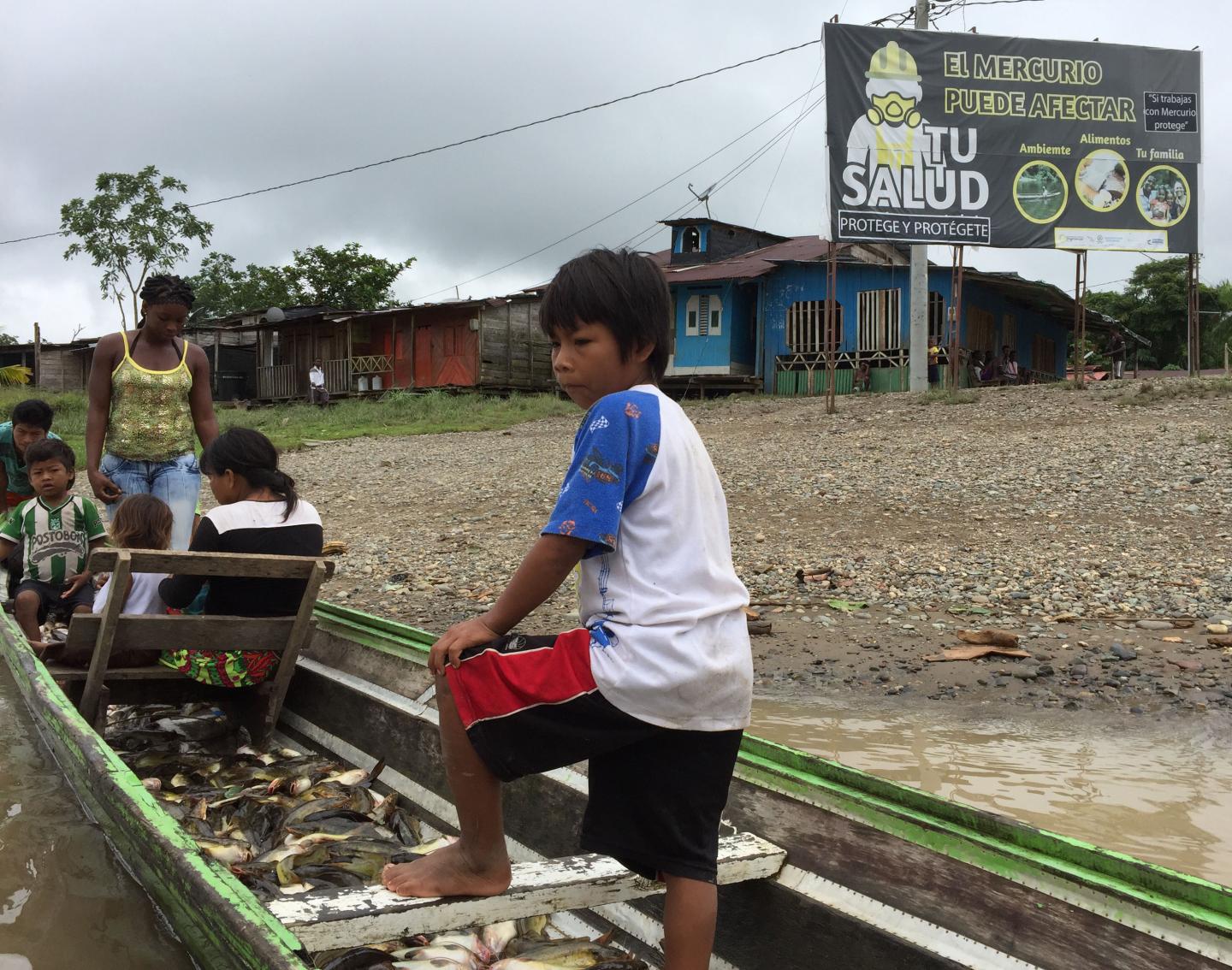
IMAGE

Credit: University of Portsmouth

A University of Portsmouth disaster specialist is helping with the fight in Colombia against illegal gold mining and its impacts, from deforestation and toxic pollution, to socio-economic pressures on nearby communities.

Dr Richard Teeuw is part of a multidisciplinary team of scientists, human rights NGOs (led by London-based ABColombia), and MPs from Ireland and England, supporting Colombian communities in bringing legal cases against the mining organisations behind the devastation of people's villages, livelihoods and the environment.

Dr Teeuw's expertise is providing satellite imagery of deforested areas to detect and monitor illegal mining activity. Focusing on one of the most impacted areas, the Rio Quito area, near Quibdo in Colombia's Pacific Region, the satellite image analysis has shown that since 2014, some 17 km2 of rainforest has been destroyed by illegal mining.

"The extent and rapidity of the mining and deforestation is shocking. I've worked in similar mining districts in West Africa, Guyana and Borneo, but have never seen so much devastation from mining in such a short time," said Dr Teeuw.

The team recently conducted a fact-finding mission to the Rio Quito area, visiting communities impacted by the illegal mining and associated pollution, notably toxic mercury from the gold processing. The visit was hosted by Choco Technical University, an agency of the Environment Ministry, local NGOs, the Diocese of Choco and local communities.

Following the visit, the team met with Colombia's Minister for Environment and Sustainable Development, Luis Gilberto Murillo. Dr Teeuw said: "We discussed ways of mitigating the impacts of the illegal mining, reforesting the thousands of hectares of associated deforestation, stabilising the devastated Rio Quito and assisting affected communities.

"We reported on community-hosted discussions in the mining district – those communities and their schools need to be involved in the study of damage done to the ecosystem, as well as the search for ways of rehabilitating the mined areas and providing better livelihoods.

"Ending the devastating illegal mining is important because the region is a biodiversity 'hotspot'. The Rio Quito is a tributary of the Rio Atrato, one of only three river systems in the world that have been given legal protection because of their bio-cultural value."

###

Media Contact

Glenn Harris
[email protected]
0239-284-2728

http://www.port.ac.uk

Original Source

http://uopnews.port.ac.uk/2017/09/05/helping-in-the-fight-against-illegal-gold-mining-in-colombia/


Share12Tweet8Share2ShareShareShare2

Related Posts

Homozygosity in Italian Holstein Bulls: A Permutation Study

January 22, 2026
blank

Identifying Wheat GLK Genes: Environmental Expression Insights

January 20, 2026

Dusky Damselfish Navigate Challenging Detour Tasks Successfully

January 20, 2026

Rewrite Population structure, regions of homozygosity (ROH) and selection signal of two domesitic goat breeds revealed by whole-genome resequencing as a headline for a science magazine post, using no more than 8 words

January 20, 2026
Please login to join discussion

POPULAR NEWS

  • Enhancing Spiritual Care Education in Nursing Programs

    156 shares
    Share 62 Tweet 39
  • PTSD, Depression, Anxiety in Childhood Cancer Survivors, Parents

    148 shares
    Share 59 Tweet 37
  • Robotic Ureteral Reconstruction: A Novel Approach

    79 shares
    Share 32 Tweet 20
  • Study Reveals Lipid Accumulation in ME/CFS Cells

    56 shares
    Share 22 Tweet 14

About

We bring you the latest biotechnology news from best research centers and universities around the world. Check our website.

Follow us

Recent News

Creating Vectorial Vortex Arrays Using Metasurfaces

Homozygosity in Italian Holstein Bulls: A Permutation Study

Impact of Air-Fuel Ratio and Fuel Type on Diesel Soot Reactivity

Subscribe to Blog via Email

Enter your email address to subscribe to this blog and receive notifications of new posts by email.

Join 71 other subscribers
  • Contact Us

Bioengineer.org © Copyright 2023 All Rights Reserved.

Welcome Back!

Login to your account below

Forgotten Password?

Retrieve your password

Please enter your username or email address to reset your password.

Log In
No Result
View All Result
  • Homepages
    • Home Page 1
    • Home Page 2
  • News
  • National
  • Business
  • Health
  • Lifestyle
  • Science

Bioengineer.org © Copyright 2023 All Rights Reserved.
