• HOME
  • NEWS
  • EXPLORE
    • CAREER
      • Companies
      • Jobs
    • EVENTS
    • iGEM
      • News
      • Team
    • PHOTOS
    • VIDEO
    • WIKI
  • BLOG
  • COMMUNITY
    • FACEBOOK
    • INSTAGRAM
    • TWITTER
Wednesday, April 1, 2026
BIOENGINEER.ORG
No Result
View All Result
  • Login
  • HOME
  • NEWS
  • EXPLORE
    • CAREER
      • Companies
      • Jobs
        • Lecturer
        • PhD Studentship
        • Postdoc
        • Research Assistant
    • EVENTS
    • iGEM
      • News
      • Team
    • PHOTOS
    • VIDEO
    • WIKI
  • BLOG
  • COMMUNITY
    • FACEBOOK
    • INSTAGRAM
    • TWITTER
  • HOME
  • NEWS
  • EXPLORE
    • CAREER
      • Companies
      • Jobs
        • Lecturer
        • PhD Studentship
        • Postdoc
        • Research Assistant
    • EVENTS
    • iGEM
      • News
      • Team
    • PHOTOS
    • VIDEO
    • WIKI
  • BLOG
  • COMMUNITY
    • FACEBOOK
    • INSTAGRAM
    • TWITTER
No Result
View All Result
Bioengineer.org
No Result
View All Result
Home NEWS Science News Biology

Helping dental retainers and aligners fight off bacteria

Bioengineer by Bioengineer
May 27, 2018
in Biology
Reading Time: 2 mins read
0
Share on FacebookShare on TwitterShare on LinkedinShare on RedditShare on Telegram

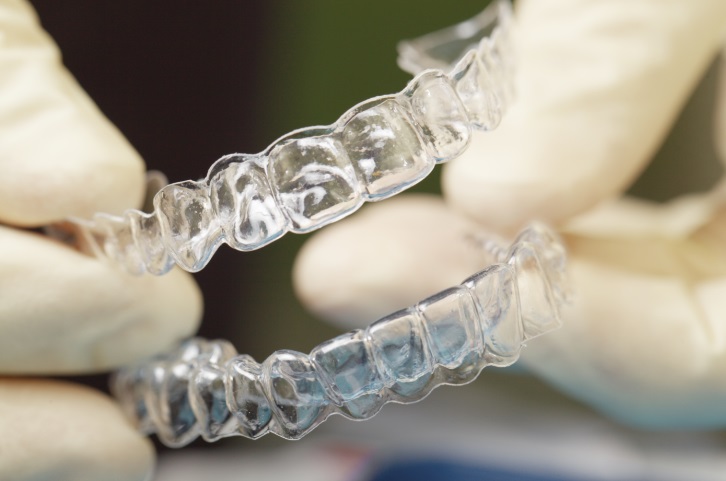
Clear, plastic aligners have been growing in popularity as alternatives to bulky, metal braces. And once the teeth are straightened, patients graduate to plastic retainers to maintain the perfect smile. But these appliances can become contaminated, so one group is now reporting in ACS Applied Materials & Interfaces that they have developed a film to prevent bacteria from growing on them.

According to the American Association of Orthodontists, more than 5 million people seek orthodontic treatments each year. These procedures include braces and aligners, a set of plastic pieces that shift the teeth slightly over time, in an attempt to fix crowded jaws, over- and under-bites and improperly aligned teeth. Clear aligners or retainers, known collectively as clear overlay appliances (COAs) are made by taking a dental cast and using pressure or heat on a plastic sheet. But bacteria frequently build up on COAs as difficult-to-treat biofilms, and the plastics easily wear down. Scientists have turned to developing simple and affordable coatings to combat this. Drawing inspiration from super-hydrophilic antibacterial coatings on other medical devices, Hyo-Won Ahn, Jinkee Hong and colleagues wanted to see if they could make something similar for COAs in the unique oral environment.

The researchers took a polymer sheet made of polyethylene terephthalate that was modified with glycol (PETG) and layered films of carboxymethylcellulose and chitosan on it. This layered film created a super-hydrophilic surface, or a surface that loves water, that prevented bacteria from adhering. When PETG with the film was compared to the bare material, bacterial growth was reduced by 75 percent. The coated plastic also was stronger and more durable, even when tested with artificial saliva and various acidic solutions.

###

The authors acknowledge funding from the Korea Health Industry Development Institute, the Ministry of Health & Welfare, Republic of Korea and the Ministry of Science and ICT.

The abstract that accompanies this study is available here.

The American Chemical Society, the world’s largest scientific society, is a not-for-profit organization chartered by the U.S. Congress. ACS is a global leader in providing access to chemistry-related information and research through its multiple databases, peer-reviewed journals and scientific conferences. ACS does not conduct research, but publishes and publicizes peer-reviewed scientific studies. Its main offices are in Washington, D.C., and Columbus, Ohio.

To automatically receive news releases from the American Chemical Society, contact [email protected].

Follow us on Twitter | Facebook

Media Contact

Katie Cottingham
[email protected]
301-775-8455
@ACSpressroom

http://www.acs.org

Share12Tweet8Share2ShareShareShare2

Related Posts

New Study Reveals Respiratory Evolution as Key Driver of Body Size Variation in Early Terrestrial Vertebrates

New Study Reveals Respiratory Evolution as Key Driver of Body Size Variation in Early Terrestrial Vertebrates

April 1, 2026
Survey Reveals Many Dog Owners Overlook Subtle Pain Signs Like Nighttime Restlessness and Clinginess

Survey Reveals Many Dog Owners Overlook Subtle Pain Signs Like Nighttime Restlessness and Clinginess

April 1, 2026

Ancient 500-Million-Year-Old Clawed Predator Redefines the Evolution of Spiders and Horseshoe Crabs

April 1, 2026

Chikungunya Virus Lingers in Joint Macrophages, Causes Chronic Disease

April 1, 2026
Please login to join discussion

POPULAR NEWS

  • blank

    Revolutionary AI Model Enhances Precision in Detecting Food Contamination

    96 shares
    Share 38 Tweet 24
  • Imagine a Social Media Feed That Challenges Your Views Instead of Reinforcing Them

    1006 shares
    Share 398 Tweet 249
  • Promising Outcomes from First Clinical Trials of Gene Regulation in Epilepsy

    51 shares
    Share 20 Tweet 13
  • Popular Anti-Aging Compound Linked to Damage in Corpus Callosum, Study Finds

    43 shares
    Share 17 Tweet 11

About

We bring you the latest biotechnology news from best research centers and universities around the world. Check our website.

Follow us

Recent News

Enabling Long-Haul 400G Optical Networks

Moiré Engineering Reveals Tunable Cooper-Pair Modulation

YY1/Asprosin/PFKP Axis Drives Cardiac Hypertrophy

Subscribe to Blog via Email

Enter your email address to subscribe to this blog and receive notifications of new posts by email.

Join 78 other subscribers
  • Contact Us

Bioengineer.org © Copyright 2023 All Rights Reserved.

Welcome Back!

Login to your account below

Forgotten Password?

Retrieve your password

Please enter your username or email address to reset your password.

Log In
No Result
View All Result
  • Homepages
    • Home Page 1
    • Home Page 2
  • News
  • National
  • Business
  • Health
  • Lifestyle
  • Science

Bioengineer.org © Copyright 2023 All Rights Reserved.