


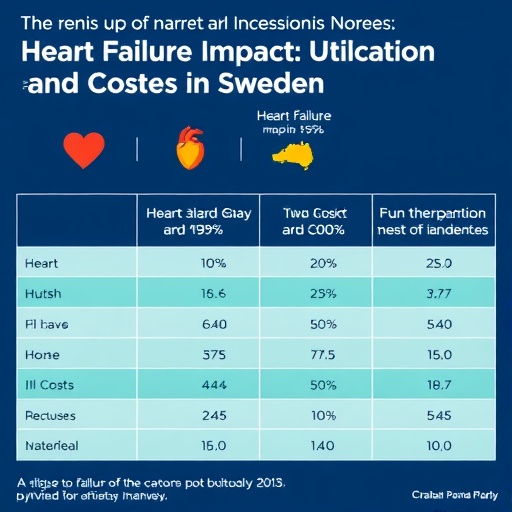
In a groundbreaking observational study conducted in southwestern Sweden, researchers have illuminated the intricate dynamics of healthcare utilization and costs following a heart failure diagnosis. The work of Davidge, Halling, and Agvall introduces significant findings that could reshape our understanding of post-diagnosis trajectories across different heart failure phenotypes. This pivotal research, set to be published in BMC Health Services Research in 2026, highlights the nuances of heart failure management and its varying economic burdens over the initial two years.
Heart failure, a complex clinical syndrome characterized by the heart’s inability to pump sufficient blood to meet the body’s needs, has long been a target for medical research due to its rising prevalence and associated healthcare costs. The study delves into the varied patterns of healthcare utilization, uncovering how these patterns differ based on phenotypic expressions of heart failure. The detailed examination undertaken by the research team provides crucial insights that could inform healthcare strategies aimed at improving patient outcomes and optimizing resource allocation.
Patients diagnosed with heart failure face a multitude of challenges, from physical limitations to psychological stress, creating a multifaceted burden on healthcare systems. The significance of this study lies in its retrospective examination of real-world data, enabling researchers to track healthcare service use, including hospital admissions, outpatient visits, and medication management, over a critical period following diagnosis. By focusing on phenotypes, the researchers integrate aspects such as demographic variables, co-morbid conditions, and individual patient characteristics, revealing a more comprehensive picture of healthcare needs.
The findings of this research are particularly relevant in the context of increasing heart failure prevalence, prompting healthcare systems worldwide to adapt their resources efficiently. Each phenotype of heart failure exhibits distinctive clinical features and patient characteristics, resulting in diverse treatment pathways and resource requirements. Understanding these intricacies helps refine patient care strategies, leading to improved resource management and cost-effectiveness in treating this complex condition.
Throughout the first two years post-diagnosis, the variability in healthcare utilization patterns becomes evident. Some patients may require frequent hospital visits or readmissions, while others may manage their condition with less intensive healthcare involvement. This disparity illustrates the necessity for tailored healthcare planning, aligning treatment interventions with specific patient needs. The research underscores the importance of incorporating phenotypic data into healthcare planning, which can ultimately lead to better resource allocation and management efficiency.
Moreover, the economic burden associated with heart failure is staggering, not just for patients but also for healthcare systems. The study’s findings raise critical questions about healthcare expenditures, highlighting the need for a nuanced understanding of costs associated with different heart failure phenotypes. By elucidating these costs, policymakers and healthcare administrators can make informed decisions that affect funding priorities and the distribution of healthcare resources.
As healthcare systems grapple with tight budgets and increasing patient loads, knowing how to optimize treatment pathways based on phenotypic classifications can yield substantial benefits. The ability to predict healthcare utilization based on established patterns allows for more effective deployment of healthcare professionals and resources, ensuring that patients receive appropriate care without unnecessary interventions.
The study also touches upon patient quality of life following a heart failure diagnosis, addressing a critical yet often overlooked aspect of chronic disease management. By understanding how different phenotypes impact not only healthcare usage but also patient satisfaction and overall well-being, healthcare providers can develop more holistic treatment approaches. This multidimensional perspective could foster patient engagement, improve adherence to treatment plans, and ultimately enhance clinical outcomes.
In conclusion, the research conducted by Davidge, Halling, and Agvall represents a significant advancement in our understanding of heart failure management. The multifaceted exploration of healthcare utilization and associated costs invites healthcare professionals to reconsider traditional treatment paradigms, especially as they relate to the burgeoning population affected by this condition. With healthcare systems under pressure globally, this research serves as a critical blueprint for more effective resource management, tailored patient care, and improved health outcomes for those living with heart failure.
The findings from this observational study not only contribute to the existing body of literature but also pave the way for future research focused on personalized approaches to heart failure management. As scientists and clinicians alike continue to unravel the complexities of this condition, studies like this will be essential in forging a pathway towards more sustainable healthcare solutions. By advocating for a deeper understanding of individual patient needs and the associated costs, we can move closer to a healthcare landscape that truly prioritizes patient-centered care and optimal resource utilization.
In a world where healthcare demands are rising, it is crucial that researchers and clinicians remain committed to exploring the nuances of conditions like heart failure. The work of Davidge et al. is not just an academic exercise; it holds the potential to influence real-world practices and impact the lives of countless individuals navigating the challenges of heart failure. As this field evolves, the insights garnered from their research can guide the development of tailored interventions that address both the clinical and economic facets of heart failure care.
This powerful study stands as a reminder of the ongoing challenges within healthcare and the need for innovative approaches to managing complex diseases. Acknowledging the intricate balance between healthcare utilization and costs, researchers and clinicians are called upon to work together to foster an environment where patient outcomes are paramount, ensuring that the journey through heart failure is as informed and supportive as possible.
Subject of Research: Healthcare utilization and costs associated with heart failure diagnosis and management
Article Title: Healthcare utilization and costs in the first two years after heart failure diagnosis: an observational study by phenotype in southwestern Sweden.
Article References:
Davidge, J., Halling, A. & Agvall, B. Healthcare utilization and costs in the first two years after heart failure diagnosis: an observational study by phenotype in southwestern Sweden. BMC Health Serv Res (2026). https://doi.org/10.1186/s12913-026-14020-4
Image Credits: AI Generated
DOI:
Keywords: heart failure, healthcare utilization, healthcare costs, phenotypes, observational study, patient outcomes, resource allocation.
Tags: economic burden of heart failurehealthcare strategies for heart failurehealthcare utilization patternsheart failure managementheart failure phenotypesimproving patient care in heart failureobservational study heart failurepatient outcomes in heart failurepsychological impact of heart failureresource allocation in healthcareretrospective data analysisSweden healthcare costs



