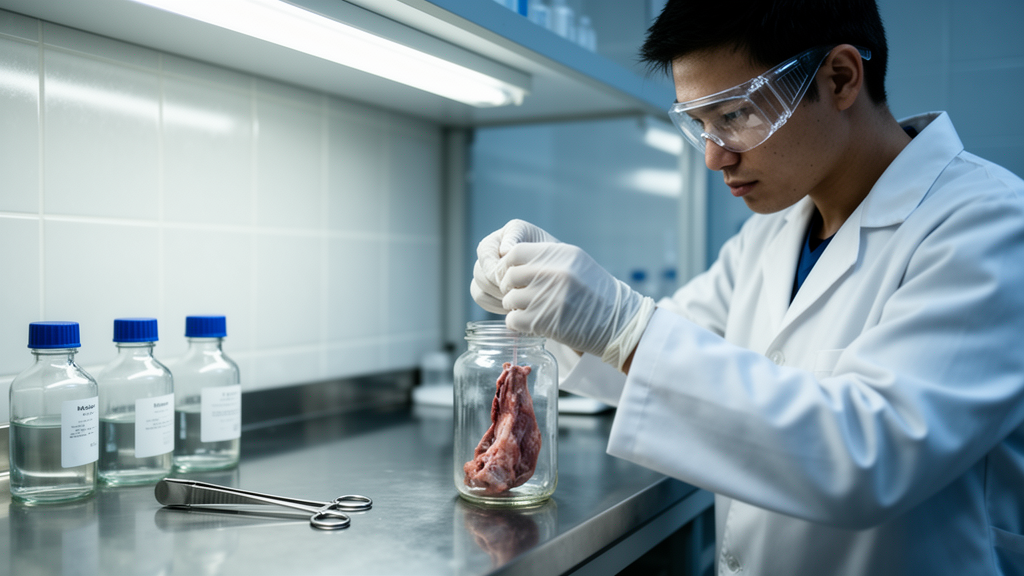
A study published in Frontiers in Public Health reveals that healthcare professionals in Spain significantly underestimate the chemical risks associated with formaldehyde exposure compared to biological hazards. The research, conducted by a team from the University of Zaragoza and the Aragon-Health Research Institute, combines a systematic scoping review of scientific and regulatory literature with a qualitative analysis of focus groups involving physicians and non-physician healthcare staff. The findings highlight a critical disconnect between the documented carcinogenic potential of formaldehyde and the subjective risk perceptions of the workers routinely exposed to it in pathology and anatomy laboratories.
Formaldehyde is classified as a Group 1 carcinogen by the International Agency for Research on Cancer, specifically linked to nasopharyngeal cancer caused by inhalation. In healthcare settings, it is widely used as a fixative for biological tissues, typically in the form of formalin, an aqueous solution containing approximately 37% formaldehyde.
The scoping review component of the study synthesized evidence from 30 documents, including 16 peer-reviewed scientific articles and 14 official regulatory documents. The analysis confirmed a strong association between occupational formaldehyde exposure and nasopharyngeal cancer, as well as low-dose genotoxicity. However, the evidence regarding myeloid leukemia remains inconsistent, with some studies showing elevated risks while others question direct causality due to confounding factors. The review also noted that findings on other systemic effects, such as reproductive toxicity and neurological health, are largely absent from the literature focused specifically on healthcare populations.
Exposure measurements in hospital settings presented a concerning picture. The review found that in 83.3% of the pathology laboratory evaluations analyzed, ambient formaldehyde concentrations exceeded the European 8-hour Time-Weighted Average limit of 0.3 ppm. Peak exposures during high-emission procedures, such as autopsies and embalming, reached up to 8.4 ppm. These exceedances suggest that current preventive measures may be insufficient to protect workers in these high-risk environments, particularly given the intermittent nature of exposure in clinical settings compared to continuous industrial exposure.
The qualitative component of the study involved two focus groups comprising 14 healthcare professionals from the public and private hospital sectors in Aragón, Spain. Participants included physicians, nurses, and technical staff who work in pathology, anatomy, and laboratory departments. The study used purposive sampling to ensure a diverse range of professional perspectives. Participants evaluated occupational hazards using a 5-point Likert scale, which revealed a clear hierarchy of perceived risks: biological risks were ranked highest, followed by physical and radiation risks, psychosocial risks, chemical risks, and ergonomic risks.
Chemical hazards were ranked fourth in perceived severity, indicating that healthcare workers view them as less immediate or hazardous than biological threats. This disparity was attributed to the latent and non-visible nature of chemical exposure. Participants noted that biological risks, such as infectious diseases, have immediate and well-known consequences, whereas the effects of formaldehyde are delayed and intangible. One participant described formaldehyde as “ethereal,” stating that unlike contracting HIV, the risk of chemical exposure is not clearly understood or felt in the moment.
Significant disparities in risk perception and protective behavior were observed between professional groups. Non-physician healthcare staff, including technicians and nurses, demonstrated higher awareness of chemical hazards and greater adherence to personal protective equipment (PPE) protocols. In contrast, non-prevention-specialist physicians exhibited lower risk perception and inconsistent use of respiratory protection. Some physicians reported viewing PPE as an impediment to patient care and clinical efficiency, prioritizing workflow over personal safety. This divergence suggests that professional identity and institutional culture play a crucial role in shaping safety behaviors.
Operational barriers to safety compliance were also identified. Participants cited inadequate formal training, with many institutions assuming that safety skills are acquired during undergraduate education. Additionally, productivity pressures and a lack of peer support contributed to non-compliance. Non-physician staff reported facing social stigma or mockery when adhering strictly to protective protocols, while physicians perceived this social pressure to a lesser extent. These cultural factors create an environment where voluntary compliance is insufficient, necessitating structural interventions to ensure safety.
The study also highlighted challenges in monitoring and assessing formaldehyde exposure. Participants expressed skepticism toward the use of urinary formic acid as a biomarker, noting the absence of established biological limit values for interpretation. Air sampling was described as sporadic, leaving clinicians uncertain about actual concentration levels during prolonged procedures. In some clinical autopsy suites, participants reported a total absence of exposure monitoring, creating a blind spot in clinical practice where personnel undergo unmonitored exposures during high-risk sessions.
Regulatory frameworks, while showing progress, remain heterogeneous in their application. The European Union reclassified formaldehyde as a Category 1B carcinogen and Category 2 mutagen, driving updates to national occupational exposure limits. However, differences in limits between agencies, such as OSHA, WHO, and INSST, reflect varying interpretations of scientific evidence and the precautionary principle. The study notes that established limits have changed little over the past two decades, potentially anchoring them in the prevention of acute effects rather than incorporating emerging evidence on low-dose genotoxicity.
Preventive measures such as spatial reorganization, forced ventilation, and the use of closed extraction hoods were identified as effective in reducing exposure. However, implementation challenges include high costs and a lack of standardized protocols. Substitution of formaldehyde with safer alternatives remains an ideal goal, but technical staff reported that trials with commercial non-formaldehyde fixatives were discontinued due to adverse health reactions and concerns regarding diagnostic preservation quality. These findings suggest that while engineering controls are effective, they require consistent application and adequate resources to be successful.
The study has several limitations, including the restriction of the scoping review to publications in English and Spanish from 2017 onwards, and the small, purposive sample size of the qualitative component. The findings from the focus groups are exploratory and context-dependent, reflecting the specific institutional and regional context of Aragón. Furthermore, the presence of concurrent chemical co-exposures, such as xylene or anesthetic gases, introduces confounding factors that are difficult to isolate when assessing formaldehyde-specific health outcomes. Despite these limitations, the study provides valuable insights into the behavioral and institutional barriers that hinder effective occupational safety in healthcare settings.
The authors conclude that addressing formaldehyde exposure requires moving beyond formal regulatory frameworks toward active risk governance. Health organizations must prioritize engineering controls, enforce standardized training programs, and establish uniform protection for vulnerable groups, including pregnant workers. Future research should focus on prospective multicenter cohort studies and the evaluation of non-neoplastic systemic effects to better understand the long-term health impacts of occupational formaldehyde exposure. Bridging the gap between technical risk data and real-world clinical practice is essential to safeguarding the health of healthcare professionals.
Beyond long-term cancer hazards, the evidence outlines acute, dose-dependent physiological harm caused by formaldehyde vapors. Inhalation causes immediate ocular and respiratory tract irritation as well as nausea. At concentrations exceeding 1.6 ppm, acute exposure triggers phlegm production, asthma, or laryngospasm, while concentrations surpassing 4 ppm risk inducing severe pulmonary edema. Direct contact or ingestion produces caustic tissue injury marked by coagulative necrosis. At the cellular level, the compound forms covalent bonds with DNA, causing mutations and clastogenic alterations. Molecular network analyses further demonstrate that formaldehyde induces reactive oxygen species, triggering oxidative stress and apoptotic dysregulation within hematopoietic stem cells.
The scoping review also synthesized biological markers of genotoxicity and cellular damage among hospital staff. Exposed personnel exhibited higher levels of oxidative stress biomarkers, including malondialdehyde and 15-F2t-isoprostane, as well as inflammatory tumor necrosis factor-alpha, compared to unexposed peers. Malondialdehyde levels correlated positively with airborne concentrations, and oxidative damage was elevated in individuals carrying GSTT1, GSTM1, or mutated CYP1A1 alleles. Furthermore, exposed pathologists showed higher frequencies of sister chromatid exchanges in blood lymphocytes, which correlated inversely with the replication index. Cytogenetic assays such as sister chromatid exchanges and micronucleus tests provide sensitive tools for detecting early DNA damage, though researchers emphasize that proper adjustment for confounding factors remains essential.
Regarding physical interventions, the review evaluated airflow mechanics and procedural emission dynamics in pathology departments. Overhead canopy hoods can draw volatile vapors upward across a technician’s breathing zone, whereas localized backdraft or downdraft exhaust tables capture emissions at table height before they disperse. Specimen handling also presents containment hurdles; although sealed formalin transport containers prevent evaporation during movement, opening them for gross dissection generates localized exposure spikes that require secondary controls. In assessed pathology facilities, the mean carcinogenic risk attributable to formaldehyde was estimated at 3.45 × 10⁻⁴, surpassing acceptable occupational standards in 81.7 percent of evaluated staff.
The review also documented variations among regulatory benchmarks. The World Health Organization specifies a 30-minute indoor air quality guideline of 0.08 ppm. In comparison, the United States Occupational Safety and Health Administration maintains an 8-hour permissible exposure limit of 0.75 ppm and a 2 ppm short-term limit, while Spain’s National Institute for Occupational Safety and Health sets an 8-hour limit of 0.3 ppm and a short-term limit of 0.6 ppm. Operational weaknesses were also noted regarding reproductive protections. While guidelines recommend reassigning pregnant or breastfeeding staff to unexposed tasks, participants reported delaying pregnancy disclosure over fears of career repercussions, remaining exposed during sensitive first-trimester embryonic development. Recognizing these ongoing hazards, international advisory committees have recommended formaldehyde as a high-priority agent for re-evaluation through 2029.
Subject of Research: Occupational formaldehyde exposure and risk perception among healthcare workers
Article Title: Chemical risk perception among healthcare workers: formaldehyde exposure as a model for occupational prevention challenges
Article References: García-Asún, L., Abecia, E. I., & Martínez-Jarreta, B. (2026). Chemical risk perception among healthcare workers: formaldehyde exposure as a model for occupational prevention challenges. Frontiers in Public Health, 14, Article 1944564. https://doi.org/10.3389/fpubh.2026.1944564
Image Credits: AI Generated
DOI: 10.3389/fpubh.2026.1944564
Keywords: formaldehyde, occupational health, healthcare workers, risk perception, pathology laboratories, carcinogen, personal protective equipment, exposure limits, qualitative research, scoping review, safety culture, genotoxicity, nasopharyngeal cancer, regulatory frameworks, biomonitoring, hospital settings, preventive measures, professional disparities, chemical hazards, workplace safety
News Source: Ophelia Keating. (November 12, 2026). Healthcare Workers Underestimate Formaldehyde Risks, Study Finds. Scienmag.