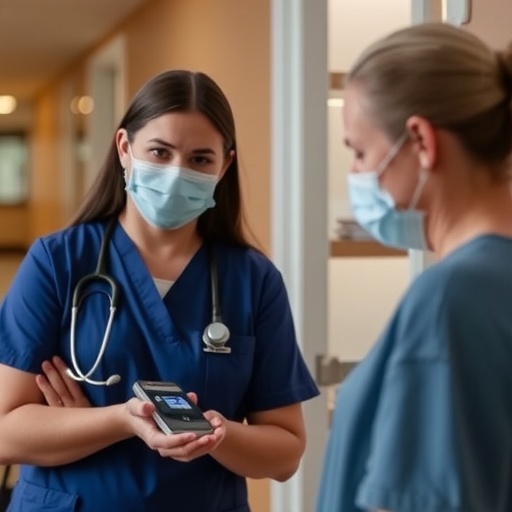
In a groundbreaking qualitative investigation, healthcare professionals working in nursing homes and home healthcare settings reveal the transformative potential and practical challenges of deploying continuous glucose monitoring (CGM) technology among elderly populations. This study delves deeply into the lived experiences of those on the frontlines, offering an unprecedented look at how real-time glucose tracking is reshaping diabetes management in geriatric care environments. As the prevalence of diabetes surges among aging societies worldwide, understanding how CGM devices integrate into routine care practices becomes a critical pursuit for optimizing patient outcomes.
Continuous glucose monitoring represents a significant technological advancement over traditional finger-prick blood glucose testing, offering continuous, real-time data on glucose levels through minimally invasive sensors. This technology enables healthcare providers to observe glucose trends and fluctuations across the entire day and night cycle, thereby facilitating proactive interventions to prevent hypoglycemia or hyperglycemia. For elderly patients, who often have complex comorbidities and varying degrees of cognitive function, CGM offers enhanced safety by mitigating the risks associated with unrecognized glucose excursions.
In nursing homes and home healthcare contexts, frontline staff typically bear responsibility not only for administering medications but also for monitoring metabolic parameters. This dual role can be challenging because traditional glucose monitoring methods require frequent manual testing and subjective interpretation. The study uncovered that CGM systems simplify this process by automating glucose readings and alerting staff to dangerous glucose values instantaneously, thus enabling timely clinical responses. Such responsiveness is especially vital for elderly individuals who may not reliably communicate symptoms of hypoglycemia.
The qualitative nature of the research involved in-depth interviews with a diverse cadre of nurses, caregivers, and other healthcare professionals, capturing nuanced perspectives on the integration of CGM into daily workflows. Participants universally recognized the technology’s capacity to enhance surveillance precision, yet they also voiced concerns regarding technical competence, data interpretation complexity, and alarm fatigue. Managing false positives and ensuring that alerts are appropriately contextualized emerged as significant themes, underscoring the need for comprehensive training and system customization.
One striking finding was the shift in clinical decision-making dynamics triggered by CGM data availability. Access to granular glucose profiles enabled professionals to personalize insulin regimens more effectively, balancing glycemic control with the minimization of hypoglycemia risk. Importantly, participants noted that consistent glucose data transparency fostered a collaborative atmosphere involving patients, families, and multidisciplinary teams, thereby improving adherence and trust.
Nonetheless, implementation challenges were not insignificant. Nursing homes and home healthcare agencies often grapple with budgetary constraints that limit acquisition of CGM devices and related infrastructure. Additionally, technological literacy varied widely among staff, necessitating ongoing education programs and technical support frameworks. These barriers illustrate that the promise of CGM can only be fully realized through investment in both hardware and human capital.
The study also drew attention to ethical and privacy considerations inherent in continuous monitoring. Professionals expressed vigilance regarding data security and consent, emphasizing that patient autonomy and dignity must remain paramount when integrating these systems. Transparent communication about CGM’s purposes and data usage helped foster acceptance among residents and their families, thereby alleviating apprehensions about surveillance.
From a clinical standpoint, the detailed glucose data that CGM facilitates is poised to revolutionize the characterization of glycemic variability in elderly individuals—information that was previously unattainable from sparse finger-stick measurements. This enhanced resolution aids in identifying previously under-recognized patterns such as nocturnal hypoglycemia or postprandial spikes, which can inform both pharmacological and nutritional interventions.
Furthermore, continuous glucose data support novel approaches to predictive analytics and artificial intelligence in diabetes care. Aggregated CGM datasets from geriatric populations could feed machine learning algorithms designed to anticipate acute glycemic events before onset, thus further reducing emergency incidents and hospitalizations. Such integration of technology and clinical insight marks the frontier of precision medicine in eldercare.
Importantly, the qualitative accounts highlight that while CGM technology inherently possesses sophisticated capabilities, its full benefits depend on human factors—the willingness and ability of healthcare workers to engage with and trust these systems. This involves cultural shifts within care settings towards valuing data-driven decision-making, supported by leadership advocacy and policy frameworks that endorse digital health innovations.
Another crucial dimension explored was the emotional and psychological impact of CGM use on both patients and providers. For elderly individuals, CGM can offer reassurance through constant oversight, reducing anxiety related to unpredictable glucose fluctuations. Healthcare workers, conversely, reported enhanced confidence in managing diabetes, yet sometimes felt an increased burden due to continuous data streams requiring interpretation, pointing to the balance needed between vigilance and alert fatigue.
This study’s implications extend beyond geriatric settings, offering lessons for broader chronic disease management initiatives where continuous monitoring technologies are emerging. The qualitative insights present a user-centric roadmap for optimizing device design, training curricula, and implementation strategies to facilitate smoother adoption in diverse care environments.
In summary, continuous glucose monitoring in nursing homes and home healthcare settings represents a paradigm shift towards proactive, data-informed diabetes management in some of the most vulnerable populations. While technological enhancements facilitate unprecedented glucose control capabilities, successful integration hinges on addressing challenges related to usability, education, resource availability, and ethical considerations. The voices of healthcare professionals captured in this research illuminate a path forward that harnesses CGM’s potential to improve quality of life and clinical outcomes, positioning continuous glucose monitoring as a cornerstone in the future landscape of geriatric care. As healthcare systems worldwide brace for aging populations and rising diabetes prevalence, embracing such innovations will be critical in managing the complex interplay of chronic diseases in elderly patients.
Article References:
Aslestad, A.M.V., Haugstvedt, A. & Hermann, M. Healthcare professionals’ experiences with the use of continuous glucose monitoring in nursing homes and home healthcare services: a qualitative study.
BMC Geriatr (2026). https://doi.org/10.1186/s12877-026-07414-w
Tags: CGM technology in nursing homeschallenges of CGM implementationcontinuous glucose monitoring in elderly carediabetes management for elderly patientsfrontline healthcare workers’ experiencesgeriatric diabetes care innovationshealthcare technology for aging populationshome healthcare glucose monitoringintegrating CGM into routine caremanaging diabetes with comorbiditiesminimizing hypoglycemia in elderlyreal-time glucose tracking benefits