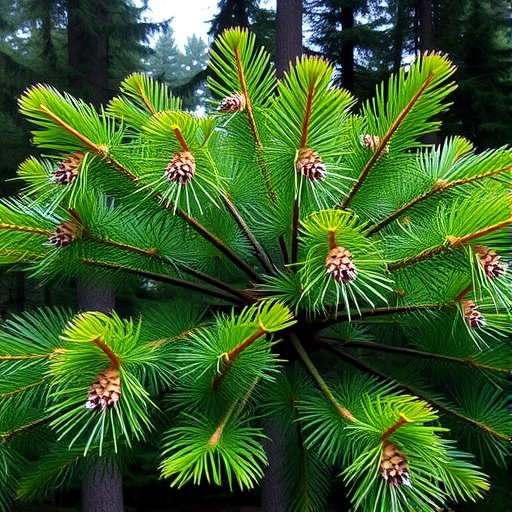
A groundbreaking study has emerged from the collaborative efforts of Javed, Zubair, Alghanem, and their team, shedding light on the promising potential of Araucaria excelsa extract in synthesizing silver nanoparticles. This innovative approach could herald a new era in cancer treatment, leveraging natural resources to create nanoparticles with significant therapeutic benefits.
Silver nanoparticles have been the subject of intense research due to their unique properties, including high surface area-to-volume ratio and enhanced reactivity. The drive towards using green chemistry principles has led scientists to seek biodegradable and non-toxic materials for the synthesis of these nanoparticles. The natural extract of Araucaria excelsa presents an optimal solution, as it is abundant, sustainable, and offers a wealth of bioactive compounds that can aid in the synthesis process.
The methodology of the study involved the extraction of phytochemicals from Araucaria excelsa, followed by the reduction of silver ions to form nanoparticles. This process is not only environmentally friendly but also capitalizes on the innate antioxidant and antimicrobial properties of the plant. The effectiveness of these phytochemicals in stabilizing silver nanoparticles is critical, ensuring they maintain their properties and do not aggregate, which is essential for their application in medical therapies.
The researchers conducted rigorous analyses to characterize the synthesized silver nanoparticles. Techniques such as UV-Vis spectroscopy, transmission electron microscopy (TEM), and dynamic light scattering (DLS) were employed to confirm the size, shape, and distribution of the nanoparticles. The results indicated that the nanoparticles exhibited a uniform size range, which is crucial for their interaction with biological systems and enhances their potential efficacy in therapeutic applications.
Moreover, when subjected to various in vitro assays, the silver nanoparticles revealed notable anticancer properties. Their cytotoxic effects were significant against various cancer cell lines, suggesting that these nanoparticles could be utilized as an effective treatment modality. The study underscores the potential of silver nanoparticles in inducing apoptosis in cancer cells, a mechanism that could be further explored for its implications in cancer therapy.
The utilization of biogenic silver nanoparticles like those synthesized from Araucaria excelsa not only showcases sustainable chemistry but also opens the door for novel therapeutic avenues. This reflects a broader trend in pharmaceutical research, emphasizing the shift towards harnessing nature’s resources for developing innovative treatments, thereby reducing reliance on synthetic chemicals that often come with a host of side effects.
One of the standout features of this research is its alignment with the principles of the circular economy. By valorizing a waste biomass source like Araucaria excelsa, the study contributes to waste reduction while simultaneously generating valuable biomedical resources. This approach also promotes ecological balance, making the research a model for future studies aiming at sustainability in nanotechnology.
Notably, the research highlights an essential aspect of nanomedicine: the importance of biocompatibility. The biocompatibility of the silver nanoparticles synthesized from Araucaria excelsa is a significant factor that researchers are keen on exploring further. Understanding the interaction between these nanoparticles and biological systems is critical for their eventual application in vivo, and the study serves as a stepping stone towards more advanced preclinical and clinical studies.
Furthermore, the potential applications of these nanoparticles extend beyond cancer therapy. Their antimicrobial properties gleaned from previous studies could enhance their utility in developing new antibacterial agents, addressing the global crisis of antibiotic resistance. The versatility of silver nanoparticles synthesized through green methods paves the way for innovations in various therapeutic areas, including dermatology and general wound care.
Future studies will be vital in delineating the pathways through which these biogenic silver nanoparticles exert their effects, as molecular mechanisms remain an area of interest. Understanding these pathways is paramount for refining their use in clinical settings and optimizing their efficacy for human health applications.
In conclusion, the research conducted by Javed and colleagues marks a significant milestone in the fields of nanotechnology and biomedical research. The valorization of Araucaria excelsa extract for synthesizing silver nanoparticles illustrates the innovative potential of natural resources in medical applications. As further investigations unfold, this groundbreaking study could lead us to sustainable and effective solutions for complex health issues, showcasing the profound impact a small evergreen tree could have on modern medicine.
Subject of Research: The valorization of Araucaria excelsa extract for the synthesis of silver nanoparticles and their potential anticancer properties.
Article Title: Valorization of Araucaria Excelsa Extract for Synthesis of Silver Nanoparticles and their Potential Anticancer Properties.
Article References:
Javed, E., Zubair, M., Alghanem, S.M.S. et al. Valorization of Araucaria Excelsa Extract for Synthesis of Silver Nanoparticles and their Potential Anticancer Properties.
Waste Biomass Valor (2025). https://doi.org/10.1007/s12649-025-03418-6
Image Credits: AI Generated
DOI: https://doi.org/10.1007/s12649-025-03418-6
Keywords: Silver nanoparticles, Araucaria excelsa, anticancer properties, biocompatibility, green chemistry.
Tags: antimicrobial properties of silver nanoparticlesantioxidant properties of plant extractsAraucaria excelsa extract for silver nanoparticlesbioactive compounds from Araucaria excelsacancer treatment innovations with nanoparticlescollaborative research in nanotechnologyenvironmentally friendly nanoparticle synthesisgreen chemistry in nanoparticle synthesishigh surface area-to-volume ratio of nanoparticlesphytochemicals in nanoparticle stabilizationsustainable methods for silver nanoparticle productiontherapeutic applications of silver nanoparticles