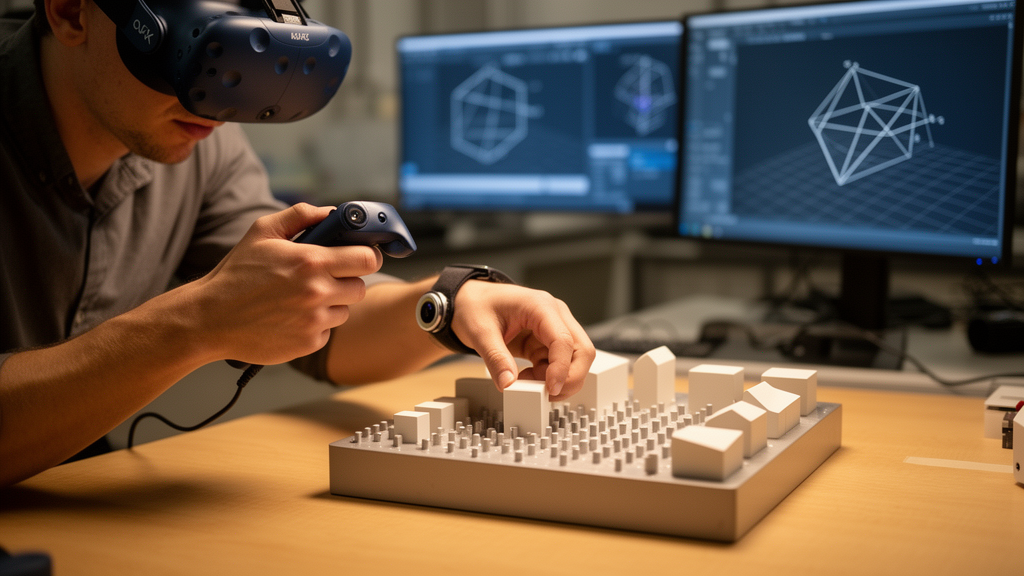
A comparative within-subject investigation evaluating virtual reality occupational therapy against physical tasks found that hand movement trajectory lengths match closely during simple constrained motions but diverge significantly during fine manipulation. Researchers compared hand trajectory length between corresponding virtual reality and physical occupational therapy tasks in participants with upper-limb motor impairments and healthy controls.
Occupational therapists increasingly deploy virtual reality as a complementary intervention, yet researchers have remained uncertain whether virtual tasks elicit the same spatial movement characteristics as conventional physical therapy. Evaluating spatial kinematic differences is clinically meaningful because motor strategies practiced in virtual environments could directly impact transfer to real-world functional activities.
To examine these kinematic profiles, researchers enrolled 39 participants, comprising 20 individuals with upper-limb motor impairments and 19 healthy control subjects. The protocol evaluated three established occupational therapy tasks across both physical and virtual formats: a range-of-motion arc, cone stacking, and peg transfer. Investigators counterbalanced the sequence of conditions and tasks across subjects using a Latin square design.
The experimental sessions were video-recorded and analyzed using a video-based three-dimensional body-tracking system. Investigators calculated overall trajectory length by tracking wrist coordinates throughout task execution, comparing trajectory lengths within each group across conditions as well as between the clinical and control cohorts. In addition, participants completed the standardized 10-item System Usability Scale to gauge overall system usability.
Kinematic analysis revealed that for participants with upper-limb motor impairments, trajectory lengths did not differ significantly between virtual reality and physical setups for the range-of-motion arc (p = .522) or the cone stacking exercise (p = .294). However, their hand trajectories were significantly longer during virtual peg transfers compared to physical peg transfers (p = .007). Healthy controls showed comparable trajectories in the range-of-motion arc (p = .381), but exhibited significantly longer paths in virtual reality for both cone stacking and peg transfer tasks (both p < .001).
In direct comparisons between the two participant groups, trajectory lengths showed no significant differences for the range-of-motion arc or cone stacking under either testing condition. By contrast, peg transfer trajectories differed significantly between impaired participants and healthy controls in both virtual reality (p = .032) and physical environments (p < .001). Usability evaluations also diverged between cohorts: healthy controls assigned the virtual system a mean System Usability Scale score of 76.6 ± 16.4, whereas participants with motor impairments reported a lower mean score of 65.4 ± 15.2.
The authors concluded that virtual reality closely approximates the spatial extent of hand movement during constrained range-of-motion tasks, but marked differences emerge when exercises demand more complex or precise object handling. Crucially, the researchers cautioned that matching trajectory length alone does not establish equivalent movement quality or identical motor strategies. Furthermore, the reduced usability scores among participants with physical impairments emphasize that successful clinical adoption will require improved device ergonomics, interface design, and interaction techniques.
Subject of Research: Spatial kinematics and usability of virtual reality versus physical occupational therapy
Article Title: Upper limb movement trajectories in virtual reality versus conventional occupational therapy: a within-subject study
Article References: Bok, J., Kim, J., Park, J., & Bae, H. (2026). Upper limb movement trajectories in virtual reality versus conventional occupational therapy: a within-subject study. Journal of NeuroEngineering and Rehabilitation. https://doi.org/10.1186/s12984-026-02186-1
Image Credits: AI Generated
DOI: 10.1186/s12984-026-02186-1
Keywords: virtual reality, occupational therapy, upper limb rehabilitation, movement trajectories, spatial kinematics, motor impairment, range-of-motion arc, cone stacking, peg transfer, wrist tracking, three-dimensional body tracking, system usability scale, within-subject study, rehabilitation engineering, hand trajectory length, motor control, Latin square design
News Source: Ophelia Keating. (November 19, 2026). Hand Trajectories Are Longer in Virtual Reality During Peg Transfer Tasks. Scienmag.