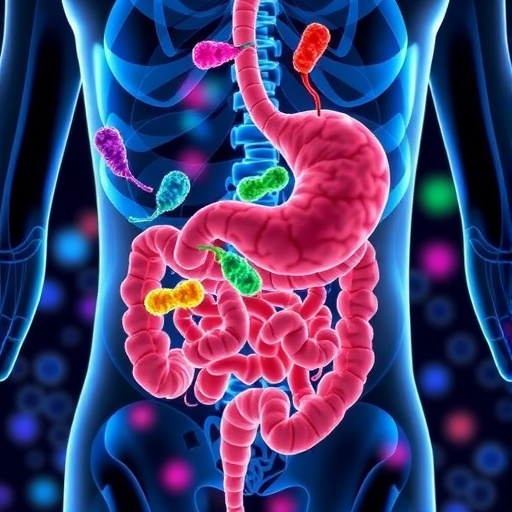
A groundbreaking study published in npj Parkinson’s Disease has unveiled compelling evidence linking gut microbiota and short-chain fatty acid (SCFA) biomarkers to the early diagnosis of Parkinson’s disease (PD) and the differentiation of its motor subtypes. This pioneering research conducted by Zhang, Du, Gao, and colleagues in 2026 promises to revolutionize the way clinicians detect and classify PD, offering new hope for patients battling this progressive neurodegenerative disorder.
The intricate relationship between the gut and brain, often referred to as the “gut-brain axis,” has been a topic of increasing scientific interest, especially in neurodegenerative diseases. Parkinson’s disease, traditionally characterized by motor symptoms such as tremors, rigidity, and bradykinesia, is now understood to also involve systemic alterations, including those in gut microbiota composition. The new findings underscore the significance of these microbial communities and their metabolic products, particularly SCFAs, as accessible biomarkers for PD.
This article explores the complex microbial ecosystems inhabiting the human gastrointestinal tract, comprising trillions of bacteria that influence host physiology through metabolic, immune, and neural pathways. Disruptions in these communities—known as dysbiosis—have been associated with various neurological conditions, suggesting that the gut microbiota may play a crucial role in the onset and progression of PD. In this context, the research team embarked on a comprehensive analysis of gut microbial profiles combined with SCFA quantification to identify distinct patterns correlated with early PD stages.
The study employed state-of-the-art metagenomic sequencing techniques to meticulously characterize the gut microbiota composition of PD patients at different disease stages and healthy controls. By integrating high-throughput sequencing data with robust bioinformatic analyses, the investigators mapped subtle shifts in bacterial taxa that precede overt motor symptoms. Notably, the abundance of beneficial SCFA-producing bacteria such as Faecalibacterium and Roseburia was markedly reduced in PD subjects, indicating a possible microbial fingerprint for early disease detection.
SCFAs, primarily acetate, propionate, and butyrate, are metabolites generated by microbial fermentation of dietary fibers and serve vital roles in maintaining intestinal integrity, modulating immune responses, and influencing brain function. The team discovered that the concentrations of these SCFAs differed significantly between PD patients and controls, with butyrate levels demonstrating the greatest potential as a diagnostic biomarker. These findings provide biochemical evidence supporting the hypothesis that alterations in gut-derived metabolites contribute to PD pathogenesis and symptomatology.
A particularly innovative aspect of the research was the ability to differentiate PD motor subtypes using gut microbiota and SCFA data. Parkinson’s disease manifests heterogeneously, with patients displaying varying symptoms such as tremor-dominant or postural instability-gait difficulty (PIGD) subtypes. Through sophisticated machine learning algorithms applied to microbiota and metabolite profiles, the study successfully classified motor phenotypes with impressive accuracy. This approach paves the way for personalized diagnostic tools and tailored therapeutic strategies.
Underlying these discoveries is the notion that gut microbiota influences alpha-synuclein aggregation, a pathological hallmark of PD. Previous studies indicate that gut-derived inflammatory signals and metabolites can trigger misfolding and propagation of alpha-synuclein from enteric neurons to the central nervous system. The current work strengthens this link by correlating microbial shifts with early PD biomarkers, suggesting that targeting the gut environment might delay or prevent neurodegeneration.
The therapeutic implications of these findings are profound. By utilizing gut microbiota signatures and SCFA profiles as non-invasive biomarkers, clinicians could diagnose PD at a prodromal stage—before irreversible neuronal loss occurs. Early diagnosis would enable timely interventions that might modify disease progression. Furthermore, modulating gut microbiota through diet, probiotics, or fecal microbiota transplantation could emerge as innovative strategies to restore SCFA levels and ameliorate PD symptoms.
Importantly, the study emphasizes the necessity of a multidisciplinary approach combining neurology, microbiology, metabolomics, and computational biology to unravel the complexities of PD’s pathophysiology. The integration of multi-omics datasets offers a holistic view of disease mechanisms and improves biomarker discovery. Zhang and colleagues demonstrate that leveraging advanced analytical frameworks can transform raw microbiome data into clinically actionable insights.
While the sample size and demographic diversity in this study represent a strength, ongoing research is required to validate these biomarkers across larger, multi-ethnic cohorts and longitudinal studies. Such efforts will ascertain the stability and predictive power of gut microbiota and SCFAs as diagnostic tools. Additionally, exploring interactions between genetic predispositions and gut ecology could further elucidate individual disease susceptibility and therapeutic responsiveness.
This study also raises intriguing questions about lifestyle factors that influence gut microbiota composition, including diet, medication, and environmental exposures. Understanding how these variables modulate SCFA production and PD risk may allow for preventive measures. Public health initiatives promoting gut health might become a cornerstone in mitigating neurodegenerative diseases.
Moreover, the role of gut microbiota extends beyond PD, with emerging links to other neurodegenerative disorders such as Alzheimer’s disease, multiple sclerosis, and amyotrophic lateral sclerosis. The methodologies and insights developed herein can serve as a blueprint for investigating microbiome-based diagnostics and interventions in diverse neurological contexts.
As this research gains widespread attention, it highlights the transformative potential of microbiome science in neurology. The paradigm shift from symptom-based to biomarker-driven diagnosis promises improved patient outcomes and reshapes our understanding of brain-gut interactions. Zhang et al.’s work stands as a landmark contribution, bridging fundamental microbiology with clinical neurology to confront one of the most challenging diseases of our time.
In summary, the identification of gut microbiota alterations and SCFA biomarkers heralds a new era in Parkinson’s disease research. The ability to detect PD early and classify its motor subtypes through non-invasive fecal profiling is an unprecedented leap forward. Harnessing the power of the gut microbiome offers a promising avenue toward personalized medicine, potentially transforming the landscape of neurodegenerative disease management and inspiring hope for millions worldwide.
Subject of Research:
The role of gut microbiota and short-chain fatty acid (SCFA) biomarkers in the early diagnosis of Parkinson’s disease and differentiation of its motor subtypes.
Article Title:
Gut microbiota and SCFA biomarkers for early diagnosis of PD patients and differentiation of its motor subtypes.
Article References:
Zhang, P., Du, J., Gao, C. et al. Gut microbiota and SCFA biomarkers for early diagnosis of PD patients and differentiation of its motor subtypes.
npj Parkinsons Dis. (2026). https://doi.org/10.1038/s41531-026-01332-9
Image Credits: AI Generated
Tags: early detection of Parkinson’s diseasegut microbiome alterations in neurological disordersgut microbiota and immune modulation in PDgut microbiota in Parkinson’s diseasegut-brain axis in neurodegenerationmetabolic biomarkers in neurodegenerative disease diagnosismicrobial dysbiosis and neurodegenerative diseasesnon-invasive biomarkers for Parkinson’sParkinson’s disease motor subtype differentiationrole of gut bacteria in Parkinson’s progressionSCFA metabolic pathways in PDshort-chain fatty acid biomarkers for PD diagnosis