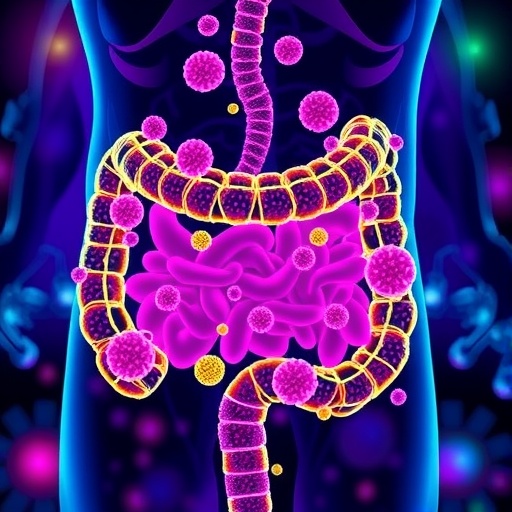
In a groundbreaking study set to alter the landscape of nutritional science and microbiome research, scientists have unveiled the intricate mechanisms by which the gut microbiome metabolizes dietary phytonutrients, translating these transformations into significant health outcomes. This comprehensive investigation has brought to light the molecular dialogues between our diet, gut bacteria, and systemic health, revealing that the microbiome’s role extends far beyond basic digestion to actively shaping the bioavailability and functionality of plant-derived nutrients.
Phytonutrients, naturally occurring compounds in fruits, vegetables, and other plant-based foods, have long been celebrated for their antioxidant, anti-inflammatory, and chemoprotective properties. Yet, their impact on human health has frequently been shrouded in uncertainty due to variable bioefficacy observed across individuals. The current study intricately links this variability to the metabolic activities of the gut microbiota, which function as biochemical factories transforming these raw dietary compounds into bioactive metabolites capable of modulating host physiology.
Employing state-of-the-art multi-omics approaches, including metagenomics, metabolomics, and transcriptomics, the research delineates the metabolic pathways engaged by specific gut bacteria in converting complex phytonutrients—such as flavonoids, carotenoids, and phenolic acids—into metabolite profiles that correlate with markers of metabolic health, immune function, and neurological well-being. The team succeeded in identifying key bacterial genera capable of enzymatically modifying these compounds, thus unmasking an underexplored axis of diet-host-microbiome interplay.
Notably, the study emphasizes the dual nature of these microbial transformations; while some metabolites enhance anti-inflammatory signaling and antioxidative capacity systemically, others may conversely be implicated in pro-inflammatory pathways depending on the microbial composition and host context. This highlights a previously underappreciated complexity in designing dietary interventions, advocating for personalized nutrition strategies tailored to an individual’s unique gut microbiota composition.
Their findings stem from analyzing large-scale human cohort data alongside controlled murine models, providing both correlative and causative insights. In human subjects, the abundance of phytonutrient-metabolizing bacteria showed strong associations with improved lipid profiles, reduced systemic inflammation, and enhanced cognitive function, as assessed through longitudinal biomarker assessments and neuropsychological testing.
Mechanistically, the research team mapped enzymatic cascades responsible for the biotransformation of key flavonoids like quercetin and catechins into smaller, more bioavailable molecules such as phenolic acids and urolithins. These metabolites demonstrated potent signaling capabilities, including activation of the Nrf2 pathway, modulation of gut barrier integrity through tight junction enhancement, and systemic immunomodulation by influencing regulatory T-cell populations.
The study also breaks new ground by utilizing cutting-edge synthetic biology tools to engineer bacterial strains capable of augmenting phytonutrient metabolism. These designer probiotics represent a promising therapeutic avenue, aiming to recalibrate the gut ecosystem towards health-promoting metabolic outputs, potentially revolutionizing approaches to treating metabolic syndrome, inflammatory bowel disease, and neurodegenerative pathologies.
Beyond the mechanistic intricacies, the investigators explored the dietary implications of their findings, advocating for dietary diversity and specific food pairings that optimally support beneficial microbiome functions. For instance, they demonstrate that prebiotic fibers synergistically enhance the microbial conversion efficiency of polyphenols, reinforcing the functional resilience of the gut microbiota.
Importantly, the research underscores the dynamic nature of the gut microbiome as a modifiable mediator of diet-health interactions, highlighting that microbial composition can be shaped not only by long-term dietary patterns but also by acute dietary interventions. This temporal plasticity opens exciting possibilities for targeted, short-term microbiome modulation in clinical settings.
The study’s data further suggest that disparities in gut microbial gene content, responsible for enzymatic capacities, contribute significantly to interindividual differences in phytonutrient metabolism. Such insights pave the way for microbiome profiling to predict individual responses to dietary components, marking a significant leap toward precision nutrition.
From a translational perspective, these discoveries carry profound implications for public health initiatives, encouraging the integration of microbiome considerations into dietary guidelines and informing the development of microbiome-based diagnostics and therapeutics.
While the researchers acknowledge the challenges ahead in unraveling the full spectrum of microbiota-diet-host interactions, including the role of the gut virome and fungal communities, the present work establishes a critical foundation for future multifaceted investigations.
In summary, this seminal study elucidates how the gut microbiome acts as a pivotal mediator in transforming otherwise inert dietary phytonutrients into biologically active compounds that substantially impact human health. It heralds a new era in which understanding and manipulating microbial metabolic networks could redefine nutritional paradigms and disease prevention strategies.
As the fields of microbiology, nutrition, and systems biology converge, the potential to harness the microbiome’s enzymatic repertoire offers a formidable tool in combating chronic diseases and enhancing human well-being. This research not only elevates our comprehension of diet-microbe-host crosstalk but also ignites hope for personalized nutrition plans grounded in microbial biochemistry.
Intriguingly, this study also brings to light the intricate feedback loops where host health status influences microbial composition, thereby affecting phytonutrient metabolism in a dynamic reciprocal relationship. These complex interdependencies emphasize the importance of viewing the gut ecosystem as an integrated organ system rather than a collection of microbes.
Moreover, future efforts inspired by these findings may identify novel biomarkers derived from microbial phytonutrient metabolites, facilitating earlier disease detection and monitoring responses to therapeutic interventions.
Ultimately, this study embodies the transformative power of interdisciplinary science, merging microbiology, chemistry, and clinical research to decode the molecular symphony occurring within our guts, which orchestrates profound effects on health. It challenges existing dogma, affirming that our microbial companions are not passive passengers but active contributors shaping the nutritional and health landscape.
The discovery that the gut microbiome is central to metabolizing dietary phytonutrients heralds an exciting chapter in the quest for optimizing human health through diet and microbiome-centered strategies. As research in this arena accelerates, the promise of tailored microbiome therapeutics and precision nutrition becomes strikingly tangible.
Subject of Research:
Gut microbiome-mediated metabolism of dietary phytonutrients and its impact on host health.
Article Title:
Gut microbiome-mediated transformation of dietary phytonutrients is associated with health outcomes.
Article References:
Zhang, L., Marfil-Sánchez, A., Kuo, TH. et al. Gut microbiome-mediated transformation of dietary phytonutrients is associated with health outcomes. Nat Microbiol (2025). https://doi.org/10.1038/s41564-025-02197-z
DOI:
https://doi.org/10.1038/s41564-025-02197-z
Tags: antioxidant properties of phytonutrientsbioavailability of plant nutrientscarotenoids metabolism and healthdietary phytonutrient metabolismflavonoids and gut healthgut microbiome and phytonutrientshealth outcomes of gut bacteriaimpact of gut microbiota on human healthmetabolic pathways of gut bacteriamicrobiome’s role in nutritionmulti-omics approaches in microbiome researchphenolic acids and immune function