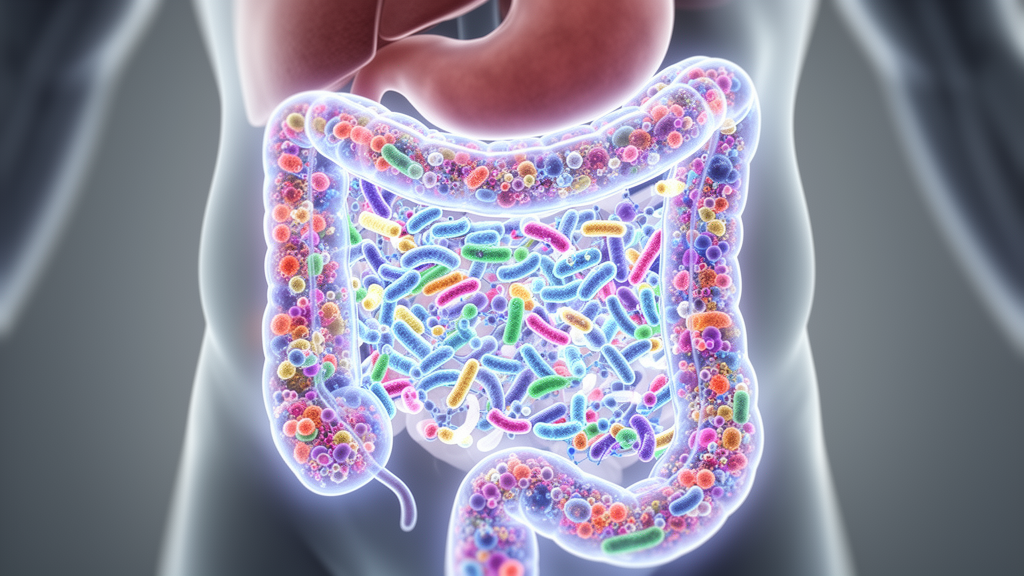
A cross-sectional investigation has identified specific gut microbiome taxonomic differences and inferred functional modules associated with major depressive disorder, illness severity, and inflammatory markers. Researchers analyzed gut microbial profiles to move beyond simple taxonomic catalogs toward systems-biology-informed dysbiosis patterns in clinical depression.
The study evaluated 102 inpatients diagnosed with major depressive disorder alongside 38 healthy control participants. Researchers profiled the gut microbiome composition of all subjects using 16S rRNA amplicon sequencing, establishing baseline microbial community structures across the cohort.
To evaluate taxonomic variation, the team employed ANCOM-BC alongside machine-learning methodologies. Inferred functional potential was subsequently modeled using Tax4Fun and PICRUSt computational pipelines, allowing researchers to group selected microbial genera into biologically annotated functional modules.
Significant differences in beta diversity emerged between patients with major depressive disorder and healthy controls, accompanied by selective shifts at the genus and species levels. Feature selection identified nine distinct microbial modules capable of discriminating between the two cohorts.
Patients with major depressive disorder exhibited higher abundance-based scores for modules representing putative proinflammatory dysbiosis, lipopolysaccharide-related host–microbial interactions, oral pathobionts, and Actinobacteria-associated host–metabolite transformation. Conversely, the clinical cohort demonstrated lower scores for lactobacilli and lactate cross-feeding modules.
Statistical modeling indicated that selected microbial genera accounted for substantial in-sample variance across key clinical dimensions. These genera explained 75.7 percent of the variance in overall depressive symptom severity, 64.8 percent in physiosomatic symptoms, 36.7 percent in illness recurrence, and 27.2 percent in suicidal ideation.
Measurements of the acute-phase inflammatory response, assessed via monomeric C-reactive protein, albumin, and transferrin, correlated with microbial modules comprising genera previously linked to endotoxin exposure and mucosal immunity. Furthermore, inferred microbiome profiles in depression demonstrated greater predicted representation of microbial stress-response, host–microbial interaction, and biofilm-formation pathways.
The authors concluded that major depressive disorder is characterized by selective taxonomic differences alongside altered inferred functional potential of the gut microbiome. In their assessment, abundance based modules enriched in bacterial genera previously linked to inflammatory signaling and barrier dysfunction collectively define systems biology informed individualized dysbiosis profiles. These functional groupings provide a structured framework to examine how collective bacterial actions correspond to mucosal integrity and systemic inflammatory activity.
This approach directly addresses documented disruptions across neuroimmune, metabolic, and oxidative stress pathways in clinical depression, designated collectively as NIMETOX. The researchers noted that these underlying biological disruptions are potentially influenced by leaky gut mechanisms. Whereas most previous investigations into the depressive microbiome focused narrowly on isolated taxonomic differences, the current analysis emphasized multi genus systems biology relationships.
Methodological parameters define the interpretative scope of the published findings. Because the investigation utilized a cross sectional design involving hospitalized patients, the observed patterns establish statistical correlations rather than causal directions over time. Additionally, the reported clinical variance explained across illness severity, recurrence, and suicidal ideation reflects in sample statistical estimates. Functional pathway representations also rely on computational modeling derived from amplicon sequencing rather than direct physical measurements of bacterial activity.
Subject of Research: Gut microbiome systems biology in major depressive disorder
Article Title: Systems biology of gut microbiome dysbiosis in major depressive disorder: functional microbial modules associated with inflammation, illness severity, recurrence, and suicidal behavior
Article References: Meng, C., Li, J., Niu, M., Almulla, A. F., Luo, Y., Carvalho, A. F., Maes, A., Zhang, Y., & Maes, M. (2026). Systems biology of gut microbiome dysbiosis in major depressive disorder: functional microbial modules associated with inflammation, illness severity, recurrence, and suicidal behavior. Molecular Medicine. https://doi.org/10.1186/s10020-026-01703-1
Image Credits: AI Generated
DOI: 10.1186/s10020-026-01703-1
Keywords: Major Depressive Disorder, Gut Microbiome, Systems Biology, Dysbiosis, 16S rRNA Sequencing, Inflammation, C-Reactive Protein, Suicidal Ideation, Microbial Modules, Lactobacillus, Host-Microbial Interactions, PICRUSt, Tax4Fun, Endotoxin Exposure, Physiosomatic Symptoms
News Source: Morgan Morrow. (November 20, 2026). Gut Microbiome Functional Modules Link to Major Depressive Disorder and Symptom Severity. Scienmag.