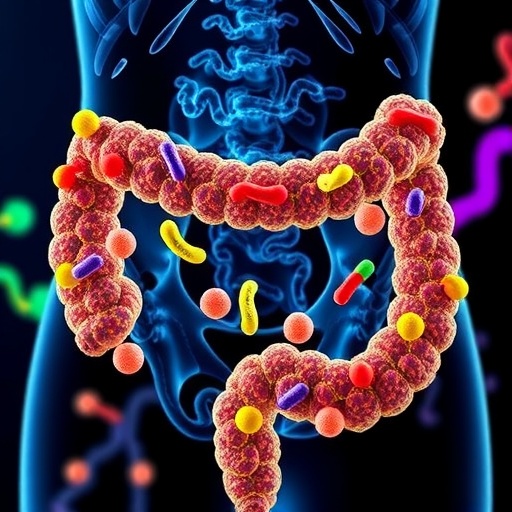
Revolutionizing Our Understanding of Celiac Disease: How Small Intestinal Microbial Fiber Metabolism Dysfunction May Unlock New Therapeutic Avenues
In a groundbreaking study recently published in Nature Communications, researchers have unveiled a critical link between impaired microbial fiber metabolism in the small intestine and the pathophysiology of celiac disease. This discovery not only enriches our understanding of this complex autoimmune condition but also opens the door to novel microbiome-targeted interventions that could transform patient care. By delving deep into the intricate interactions between dietary fiber, gut microbiota, and host immune responses, the study challenges established paradigms and sets a new research frontier.
Celiac disease, a chronic autoimmune disorder triggered by gluten ingestion in genetically predisposed individuals, has traditionally been understood through the lens of intestinal epithelial damage and immune-mediated inflammation. Yet, the microbial ecology and metabolism within the small intestine—a key site of nutrient absorption—have remained relatively underexplored in this context. The study, led by Wulczynski et al., systematically dissects the dysfunction in microbial fiber metabolism, providing a mechanistic framework that could explain some of the persistent symptoms and complications observed even among patients adhering strictly to gluten-free diets.
Central to this investigation is the role of dietary fiber, a complex carbohydrate indigestible by human enzymes but readily fermented by gut microbes. These fermentation processes yield short-chain fatty acids (SCFAs), such as butyrate, propionate, and acetate, which are known to exert profound regulatory effects on the mucosal immune system, epithelial barrier integrity, and overall gut homeostasis. Surprisingly, the authors reveal that in celiac disease, the capacity for microbial fiber metabolism is significantly compromised, particularly in the small intestine’s luminal and mucosal compartments.
Utilizing advanced metagenomic sequencing and metabolomics analyses of biopsy samples and luminal aspirates, the research team characterized the functional and compositional profiles of the small intestinal microbiome. Patient cohorts with active celiac disease were compared to healthy controls and patients in remission, revealing a consistent depletion in bacterial taxa that harbor fiber-degrading enzymatic pathways. This depletion correlated with marked reductions in SCFA levels, highlighting a critical disruption in metabolic cross-feeding networks essential for intestinal homeostasis.
Notably, the diminished microbial fermentation capacity was linked with altered expression of host genes governing epithelial barrier function and immune tolerance mechanisms. Transcriptomic profiling indicated downregulation of tight junction proteins, alongside upregulated inflammatory cytokines, underscoring the interplay between microbial dysbiosis and mucosal immune activation. The findings suggest that the lack of adequate microbial metabolites derived from fiber not only exacerbates mucosal permeability but perpetuates the chronic inflammatory milieu characteristic of celiac enteropathy.
The study also extends its focus to the dynamic interactions between microbiota and host immune cells, particularly regulatory T cells (Tregs) that play a critical role in maintaining immune tolerance. Experimental data demonstrated that SCFAs, especially butyrate, facilitate Treg differentiation and function in the small intestine. The observed microbial metabolic dysfunction thus potentially undermines mucosal immunoregulation, tipping the balance toward pathological immune responses triggered by gluten peptides.
Furthermore, the authors conducted longitudinal analyses in a prospective cohort undergoing gluten-free dietary intervention. These observations revealed partial microbiome recovery and restoration of fiber metabolizing capacity in remission phases, albeit incomplete in many patients. This incomplete recovery could explain residual symptoms and increased risk of complications like refractory celiac disease—a stubborn, treatment-resistant form of the illness.
Importantly, Wulczynski et al. evaluated the therapeutic potential of dietary supplementation with specific fermentable fibers and SCFA analogs in murine models of celiac disease. Their data demonstrate that targeted restoration of microbial fiber metabolism ameliorates intestinal inflammation, strengthens epithelial barrier function, and modulates immune responses. These preclinical findings carry promising translational implications for designing microbiome-focused adjuvant therapies that complement gluten avoidance.
From a broader perspective, this study emphasizes the crucial role of the small intestinal microbiome in shaping the course of immune-mediated gastrointestinal disorders. The precise characterization of microbial metabolic dysfunction in celiac disease bridges a critical knowledge gap and may recalibrate therapeutic approaches beyond mere gluten exclusion. The authors advocate for integrative strategies combining microbiome modulation, dietary interventions, and immune modulation to achieve sustained remission and mucosal healing.
While the current study provides compelling evidence linking small intestinal microbial fiber metabolism disruption to celiac disease pathogenesis, future research will be necessary to unravel causality fully and to optimize microbiome-targeted therapies. Longitudinal clinical trials incorporating multi-omics profiling and immune phenotyping will be pivotal in translating these insights into precision medicine paradigms for celiac patients.
Moreover, the implications of this work extend beyond celiac disease, providing a conceptual framework applicable to other autoimmune and inflammatory disorders where gut microbiome-immune interactions play a critical etiological role. The fine-tuning of microbial metabolic functions may become a cornerstone of personalized interventions aimed at restoring immune homeostasis across a spectrum of chronic conditions.
In conclusion, this landmark study redefines how we comprehend celiac disease through the lens of microbial metabolism in the small intestine. It highlights the indispensable role of fiber-fermenting bacteria and their metabolites in preserving gut integrity and immune balance. By elucidating the mechanistic underpinnings of microbial fiber metabolism dysfunction, Wulczynski and colleagues have paved the way for exciting new avenues in diagnosis, management, and treatment, promising a future where gut microbiota are harnessed for therapeutic benefit in autoimmune diseases.
As the research community continues to unravel the complexities of host-microbiome interactions, studies like this underscore the transformative potential of microbiome science in improving human health. The integration of microbial ecology with immunology and gastroenterology promises to revolutionize our approach to celiac disease and beyond, ultimately fostering more effective, personalized, and durable therapies.
Subject of Research: Small intestinal microbial fiber metabolism dysfunction in celiac disease
Article Title: Small intestinal microbial fiber metabolism dysfunction in celiac disease
Article References:
Wulczynski, M., Constante, M., Galipeau, H.J. et al. Small intestinal microbial fiber metabolism dysfunction in celiac disease. Nat Commun 17, 2698 (2026). https://doi.org/10.1038/s41467-026-70644-4
Image Credits: AI Generated
DOI: https://doi.org/10.1038/s41467-026-70644-4
Tags: celiac disease and gut microbiotadietary fiber and autoimmune disordersfiber metabolism disruption in autoimmune diseasesgluten-triggered autoimmune responsegut microbiome fiber metabolismgut microbiota and nutrient absorptionimmune response and gut microbiome interactionintestinal epithelial damage in celiac diseasemicrobiome-targeted therapies for celiac diseasenovel therapeutic approaches for celiac diseasepersistent celiac disease symptomssmall intestine microbial dysfunction