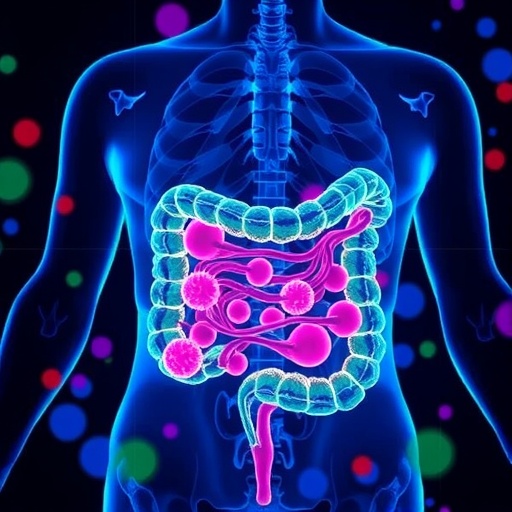
A groundbreaking study published in Nature Microbiology has unveiled a sophisticated map of interactions between microbial effectors and host cells within the human gut, dramatically advancing our understanding of how bacterial type III secretion systems (T3SSs) contribute to immune modulation. This comprehensive research sheds light on the elusive mechanisms by which complex microbial communities maintain gut health while orchestrating subtle immune responses, a revelation with profound implications for microbiome-based therapeutics and immune-related diseases.
The human gut microbiome, a dense and dynamic ecosystem composed of trillions of microorganisms, is known not only for its role in digestion but also for its intricate symbiotic relationship with the host immune system. Earlier research had hinted at the presence of secretion systems in certain gut bacteria, yet the precise nature of their interaction with host cellular machinery remained largely speculative. This new report bridges that gap by constructing an effector–host interactome, charting the molecular dialogue between bacterial T3SS effectors and human proteins, and elucidating their contributions to immune regulation.
Central to this investigation is the type III secretion system, a needle-like apparatus used by Gram-negative bacteria to inject effector proteins directly into host cells. While traditionally associated with pathogenicity, this system’s presence in commensal gut bacteria challenges existing paradigms. By leveraging advanced proteomic techniques alongside high-throughput interaction screening, the researchers successfully cataloged a wide array of T3SS effectors across a diverse range of healthy gut microbiomes, pinpointing their specific human immunomodulatory targets.
The team employed a multifaceted approach to decipher these molecular interactions. Using metagenomic sequencing data from healthy individuals, they identified T3SS gene clusters prevalent within non-pathogenic gut bacterial species. Subsequent cloning and expression of these effectors allowed for systematic interaction assays against a diverse human protein library. This approach revealed a complex network wherein bacterial effectors engage with critical components of host immune signaling pathways, including those governing innate and adaptive responses.
One striking finding is the preferential targeting of immune signaling hubs by bacterial effectors, suggesting an evolved mechanism for fine-tuning immune activity rather than outright suppression seen in pathogen infections. This nuanced modulation may contribute to immune homeostasis, preventing overactive inflammatory responses that are implicated in autoimmune conditions and inflammatory bowel disease. The study’s interactome map highlights several host proteins involved in cytokine signaling and antigen presentation as key nodes in this microbial-host communication.
Mechanistically, the effectors appear to mimic or alter host protein functions by post-translational modifications or steric interference, subtly steering immune signaling cascades. This functional mimicry underscores a sophisticated evolutionary adaptation enabling gut microbes to coexist peacefully within the host environment. Importantly, these interactions do not compromise gut barrier integrity, reaffirming the beneficial role that T3SS-bearing microbiota can play in maintaining gut health.
The implications of these findings extend far beyond basic microbiology. By elucidating specific effector-host interaction pathways, the research paves the way for novel microbiome-targeted therapies. For instance, manipulating the presence or activity of certain T3SS effectors could offer innovative strategies for modulating immune responses in autoimmune diseases, allergies, or even cancer immunotherapy. The demonstrated linkage between commensal bacterial secretion systems and immune regulation opens a fertile ground for translational research.
Moreover, this effector–host interactome offers a valuable framework for deciphering microbiome-immune interactions across various health states and demographic populations. Future investigations can build upon this atlas to explore how alterations in T3SS effector profiles might correlate with disease progression or treatment outcomes, potentially providing diagnostic biomarkers or therapeutic targets.
The study also challenges the classical binary view of bacterial effectors as mere virulence factors. Instead, it supports a paradigm wherein effector proteins represent a versatile toolkit used by gut microbes not only to interact defensively or antagonistically but to establish a mutually beneficial crosstalk with the host immune network. This reconceptualization could spur reevaluation of effector functions across other microbiomes and host organisms.
From a technical perspective, the integration of metagenomics with proteomics and interaction network analysis exemplifies the power of interdisciplinary methodologies in microbiome research. Such comprehensive datasets enable unprecedented resolution in mapping microbial functional contributions, overcoming limitations of traditional cultivation or single-method studies. The development and refinement of these analytical pipelines will be crucial for future microbiome-host interactome explorations.
This research also raises compelling questions regarding the evolutionary pressures shaping T3SS effectors in commensal bacteria. It remains to be clarified how these systems originated and diverged from pathogenic prototypes to assume immunomodulatory roles. Comparative genomics and functional studies across bacterial taxa may illuminate the evolutionary trajectory and molecular determinants of these fascinating secretion systems.
Given the complexity of gut microbiota and host immune interactions, the study authors emphasize the importance of contextualizing findings within the broader environmental and physiological milieu. Factors such as diet, genetics, and microbial community composition undoubtedly influence effector expression and host responses, suggesting a dynamic and context-dependent interplay. Longitudinal and interventional studies will be instrumental in capturing this variability.
In conclusion, the publication represents a landmark advancement in our understanding of gut microbiome functionality. By mapping the effector-host interactome centered on type III secretion systems, the study unveils a new dimension of microbial influence on immune homeostasis. These insights hold transformative potential for therapeutic innovation, heralding an era where microbial secretion systems can be harnessed to tailor immune responses beneficially.
The path ahead involves translating these discoveries into clinical applications, deciphering the in vivo relevance of identified interactions, and expanding the interactome framework to other secretion systems and microbial communities. As the boundaries between microbiology and immunology continue to blur, integrative efforts like this study will be at the forefront of unlocking the therapeutic potential resident within our microbial partners.
This pioneering research not only shifts scientific perspectives but also captures the imagination regarding the intricate dialogue between humans and their microbiota. It showcases how microscopic protein exchanges can orchestrate complex physiological outcomes, emphasizing the importance of holistic approaches in biomedical research.
As the scientific community digests these findings, anticipation grows for follow-up studies that might illuminate personalized microbiome interventions targeting T3SS effectors. Such advances could revolutionize precision medicine by leveraging the microbiome’s stealthy communication channels to engineer immune resilience and health.
Subject of Research: Interaction between bacterial type III secretion system effectors and host immune modulation in the healthy human gut microbiome
Article Title: Effector–host interactome map links type III secretion systems in healthy gut microbiomes to immune modulation
Article References:
Young, V., Dohai, B., Halder, H. et al. Effector–host interactome map links type III secretion systems in healthy gut microbiomes to immune modulation. Nat Microbiol (2026). https://doi.org/10.1038/s41564-025-02241-y
Image Credits: AI Generated
DOI: https://doi.org/10.1038/s41564-025-02241-y
Tags: bacterial type III secretion systemseffector-host interactome mappingGram-negative bacteria immune regulationgut bacteria secretion systemsgut health microbial communitiesgut microbiome immune modulationimmune-related diseases microbiomemicrobial contributions to immune responsesmicrobial effectors host interactionsmicrobiome-based therapeutics researchNature Microbiology study findingssymbiotic relationship gut immunity