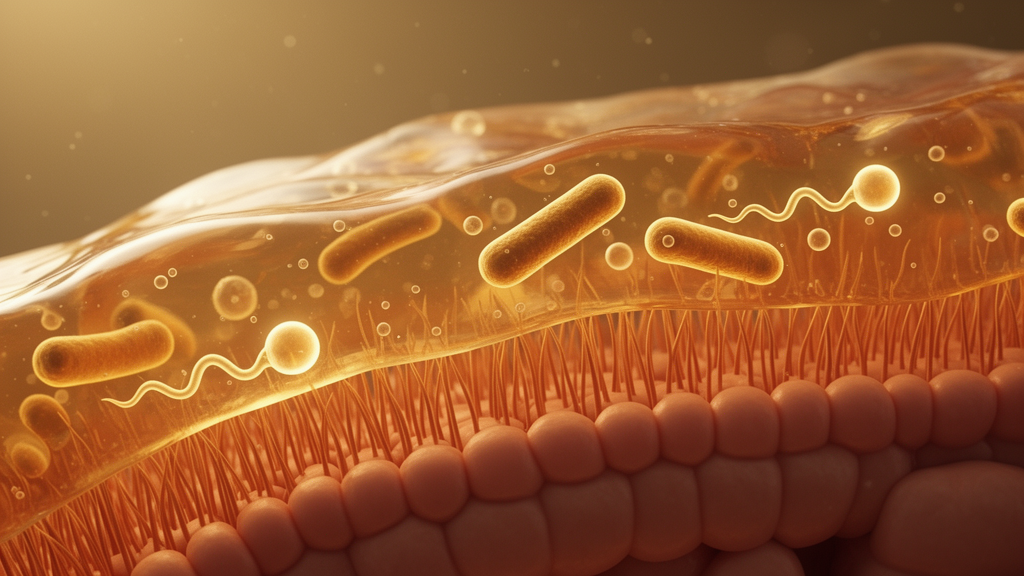
In an experimental investigation into the determinants of mucosal chemistry, researchers evaluated how the gut microbiome modulates the lipid architecture of intestinal mucus across mouse strains and gut regions. By comparing four-week-old female non-obese diabetic mice, C57BL/6J mice, and BALB/cAnNTac mice subjected to antibiotic depletion, germ-free derivation, or conventional barrier housing, the team demonstrated that microbiota perturbation does not exert a uniform effect on the mucus lipidome. Instead, microbial disruption selectively reduced the overall quantity of the phosphatidylcholine lipid class in colonic mucus while leaving jejunal phosphatidylcholine concentrations unchanged. Concurrently, the richness of detected lipid species in jejunal mucus decreased significantly in specific depleted cohorts, demonstrating that microbial influence on host mucosal lipids is governed by anatomical compartmentalization and host genetic background. These findings provide direct evidence that intestinal bacteria selectively regulate mucosal lipid composition rather than determining the entire biochemical profile.
The mammalian intestinal mucus layer serves as the primary barrier shielding the underlying intestinal epithelium from luminal macromolecules, antigens, and microorganisms. Composed of mucins, water, electrolytes, and complex lipids, this protective matrix relies heavily on phosphatidylcholine, an abundant glycerophospholipid recognized for imparting hydrophobic and anti-inflammatory properties to the mucosal surface. Prior investigations into type 1 diabetes pathogenesis revealed that pre-diabetic and diabetic non-obese diabetic mice display compromised gut barrier function, accompanied by decreased numbers of goblet cells and lower expression of Muc2 in intestinal tissues. Earlier work showed that jejunal phosphatidylcholine concentrations were depressed in pre-diabetic non-obese diabetic mice relative to age-matched C57BL/6 controls, alongside reductions in specific colonic phosphatidylcholine species. Because roughly ten percent of all bacterial species possess the enzymatic capacity to biosynthesize phosphatidylcholine, the researchers hypothesized that perturbing the gut microbiome directly modifies host-derived phosphatidylcholine composition in intestinal mucus.
To evaluate this hypothesis, the experimental framework was carried out in compliance with European Union Directive 2010/63/EU and the Danish Animal Experimentation Act under licence 2017-15-0201-01263 from the Danish Animal Experiments Inspectorate. The study utilized three distinct inbred mouse strains procured from Taconic in Denmark: NOD/MrkTac, C57BL/6J, and BALB/cAnNTac. Conventionally housed animals were maintained in open cages within a barrier-protected facility at the University of Copenhagen under a twelve-hour light cycle, ambient temperature of twenty-two degrees Celsius, and relative humidity of fifty-five percent. All conventional mice had free access to bottled tap water and Altromin 1324 chow. To minimize litter-specific variation, female offspring derived from a minimum of two independent litters were assigned to each group, and the entire investigative protocol focused exclusively on female animals. This rigorous design ensured that environmental conditions remained constant while isolating genetic background and microbial status as primary experimental variables.
Microbiota depletion was achieved through two distinct approaches tailored to the mouse strains. For non-obese diabetic and C57BL/6 cohorts, pregnant dams received a broad-spectrum antibiotic cocktail in tap water containing one gram per liter ampicillin, half a gram per liter vancomycin, and one gram per liter neomycin. Treatment started around two weeks of gestation and continued until offspring reached four weeks of age, with water renewed twice weekly. Germ-free BALB/c mice were bred and reared in flexible film isolators in an accredited facility at twenty-three degrees Celsius, one hundred and ten pascals of pressure, and a twelve-hour light cycle, receiving sterile water and irradiated Altromin 1324 chow without weaning before four weeks. At four weeks, body weights were significantly reduced in antibiotic-treated non-obese diabetic mice and germ-free BALB/c mice compared to colonized controls, whereas C57BL/6 weights showed no difference. Non-fasting tail-blood glucose was lower in BALB/c mice than in the other strains, unaffected by microbial depletion.
Following physiological assessments, mice were placed into clean cages for fecal collection, fasted for four hours, and euthanized by cervical dislocation. Anatomical demarcation between the duodenum and proximal jejunum was established using the duodenojejunal flexure. Feces were gently removed from proximal jejunum and colon until macroscopically clean, after which longitudinal incisions allowed mucus collection using a metal spatula to minimize epithelial contamination. Fecal DNA was extracted with Bead-Beat Micro AXE Gravity kits and quantified on a NanoDrop ND-1000 spectrophotometer. Quantitative real-time PCR targeting the V3 region of the 16S ribosomal RNA gene using primers PRBA388F and PRUN518R confirmed significant microbial depletion across treated cohorts, though the antibiotic cocktail did not lower bacterial copy numbers to the level achieved in germ-free BALB/c mice. Furthermore, untreated non-obese diabetic mice showed lower baseline fecal 16S copy numbers than untreated C57BL/6 or BALB/c mice. These molecular validations verified that bacterial abundance was substantially suppressed prior to subsequent lipidomic assessments.
Lipid profiling of harvested mucus homogenates was performed using shotgun mass spectrometry following a modified Bligh and Dyer extraction. Samples standardized to thirty-five micrograms of total protein in ammonium bicarbonate buffer were spiked with internal lipid standards and extracted with chloroform and methanol. The lower organic lipid phase was isolated, evaporated, and analyzed on a Q-Exactive Quadrupole-Orbitrap spectrometer coupled to a TriVersa NanoMate robotic sample infuser. Data processing with LipidXplorer and LipidQ excluded cardiolipin and triacylglycerols from the dataset. Lipids were annotated by class, acyl carbon count, double bonds, and hydroxyl groups, with ether-linked species designated by an O- prefix. Two mucus samples were excluded due to mismarked labels. Statistical analyses in GraphPad Prism utilized two-way analysis of variance with Šidák post hoc correction, residual normality transformations, and principal component analysis validated by parallel analysis simulations at the ninety-fifth percentile. Multiple testing corrections were conducted with a five percent false discovery rate using the two-stage step-up method.
Principal component analysis demonstrated that mucosal lipid composition segregated unequivocally according to anatomical location, forming distinct clusters for jejunal and colonic tissues regardless of mouse strain or microbial status. Across all animals, researchers detected an average of 226 ± 16 distinct lipid species within jejunal mucus and an average of 288 ± 14 species within colonic mucus, establishing greater lipid species diversity in the large intestine. Notably, the depletion of intestinal microbes significantly reduced the total number of detected lipid species in jejunal mucus of antibiotic-treated C57BL/6 mice and germ-free BALB/c mice compared to colonized controls, whereas antibiotic administration had no effect on species counts in non-obese diabetic mice. In colonic mucus, however, total lipid species counts remained stable without significant differences across any experimental groups. Marked anatomical divergence was particularly prominent across several structural lipid classes, including alkyl-phosphatidylcholine, phosphatidylethanolamine, alkyl-phosphatidylethanolamine, lysophosphatidylcholine, and sphingomyelin, confirming that mucosal lipid profiles are primarily organized along the longitudinal axis of the gut.
When quantitative evaluations examined the phosphatidylcholine class, distinct segment-dependent responses emerged. In jejunal mucus, total phosphatidylcholine class quantity remained unaffected by microbial status or mouse strain, with consistent molar distributions dominated by PC 34:2 (17.9 ± 2.7 mol%), PC 36:2 (14.1 ± 3.0 mol%), PC 36:4 (5.4 ± 0.7 mol%), PC 38:4 (3.2 ± 0.6 mol%), and PC 36:3 (2.3 ± 0.5 mol%). In marked contrast, colonic mucus exhibited a significant decline in total phosphatidylcholine abundance following antibiotic treatment in both non-obese diabetic and C57BL/6 mice. However, germ-free housing caused no further reduction in BALB/c mice because conventionally housed BALB/c controls already displayed lower baseline colonic phosphatidylcholine levels matching depleted animals. Predominant colonic species included PC 34:2 (6.9 ± 1.2 mol%), PC 34:1 (6.0 ± 1.6 mol%), PC 36:2 (4.5 ± 1.1 mol%), PC 36:3 (4.1 ± 0.6 mol%), PC 36:4 (3.4 ± 0.7 mol%), and PC 38:4 (1.9 ± 0.4 mol%). Antibiotic treatment did not alter individual species distributions, whereas germ-free BALB/c mice exhibited significant microbiota-dependent shifts in individual phosphatidylcholine species.
To explore potential microbial mechanisms, untreated barrier-housed mice were evaluated using nanopore sequencing of near-full 16S ribosomal RNA amplicons on an Oxford Nanopore GridIONx5 instrument, analyzed with the Laca pipeline and Qiime2. Permutational multivariate analysis of variance revealed significant taxonomic differences among mouse strains across Bray-Curtis distances (pseudo-F = 6.213, p = 0.001) and Jaccard matrices (pseudo-F = 2.987, p = 0.001). Taxonomic profiling showed Firmicutes was the dominant phylum across all cohorts (48.5% to 80.6% relative abundance), followed by Bacteroidetes (17.7% to 34.2%), with remainder distributed across Actinobacteria, Candidatus Saccharibacteria, Proteobacteria, and Verrucomicrobia. Analysis of composition of microbiomes identified distinct signatures: C57BL/6 mice exhibited enrichment of Parasutterella and Muribaculaceae, non-obese diabetic mice harbored higher abundances of Clostridium, Streptococcus, and Coriobacteriaceae, while BALB/c mice displayed elevated Eubacterium. Notably, fully colonized BALB/c mice had the lowest colon phosphatidylcholine levels, an altered Bacteroidetes-to-Firmicutes ratio, and reduced Muribaculaceae. Because members of Bacteroidetes include bacteria capable of synthesizing phosphatidylcholine, these taxonomic variations offer a plausible explanation for baseline colonic phosphatidylcholine differences across strains.
Synthesizing these findings, the authors emphasized that while microbial perturbation selectively reduces colonic phosphatidylcholine and alters jejunal lipid species richness, the overall mucosal lipidome remains largely determined by anatomical segment and host genetics. The study could not replicate the previously observed baseline decrease in jejunal phosphatidylcholine in pre-diabetic non-obese diabetic mice relative to C57BL/6 controls, a discrepancy likely explained by differences in animal vendors and facility environments known to shift gut microbiomes. Crucial methodological boundaries must also be maintained: mucus collection via spatula scraping carries potential for minor epithelial cell contamination, though identical processing across groups ensures this cannot explain observed treatment differences. Furthermore, the experimental design did not measure gut barrier permeability, nutrient absorption, or drug uptake directly, nor could it isolate whether colonic phosphatidylcholine suppression stemmed from specific bacterial losses, overall bacterial load depletion, or secondary host responses. Given phosphatidylcholine’s established role in mucosal barrier function and drug transport, the researchers concluded that segment-specific mucosal lipid profiles represent vital considerations for understanding gut physiology and engineering colon-targeted pharmaceutical delivery systems.
Subject of Research: Microbial regulation of intestinal mucus phosphatidylcholine in distinct mouse strains and gut segments
Article Title: Microbiota Regulates Phosphatidylcholine in the Intestinal Mucus Lipidome of Mice in a Strain‐ and Segment‐Dependent Manner
Article References: Mønsted, M. Ø., Bilgin, M., Krych, L., Wiedenbein, E. S., Hansen, C. H. F., & Haupt‐Jorgensen, M. (2026). Microbiota Regulates Phosphatidylcholine in the Intestinal Mucus Lipidome of Mice in a Strain‐ and Segment‐Dependent Manner. Endocrinology, Diabetes & Metabolism, 9(6), Article e70380. https://doi.org/10.1002/edm2.70380
Image Credits: AI Generated
DOI: 10.1002/edm2.70380
Keywords: Phosphatidylcholine, Intestinal Mucus, Gut Microbiota, Lipidomics, Jejunum, Colon, Non-Obese Diabetic Mice, C57BL/6 Mice, BALB/c Mice, Antibiotic Depletion, Germ-Free Mice, 16S rRNA Sequencing, Intestinal Barrier Function, Mass Spectrometry, Muribaculaceae, Bacterial Taxa, Glycerophospholipids, Epithelial Lining
News Source: Ophelia Keating. (November 12, 2026). Gut Microbes Regulate Mouse Mucus Phosphatidylcholine by Strain and Intestinal Segment. Scienmag.