Recent groundbreaking research has illuminated a pivotal role played by the gut microbiome in orchestrating region-specific functions within the colon, revealing molecular mechanisms underlying tissue protection and injury susceptibility. Investigators from Cedars-Sinai Health Sciences University, collaborating with several institutions, have uncovered that the gut microbiota produce nicotinic acid, a metabolite critical for maintaining the functional identity of different colon segments. This discovery not only advances fundamental understanding of gastrointestinal biology but also holds promise for innovative therapeutic approaches targeting intestinal disorders, including Crohn’s disease.
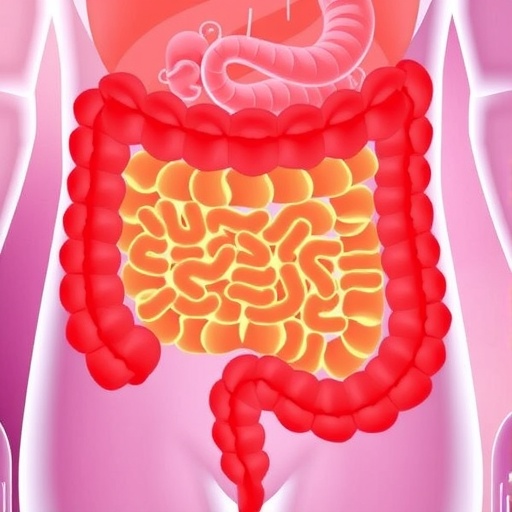
The colon, a complex organ responsible for waste processing and water absorption, is traditionally segmented into the ascending, transverse, descending, and sigmoid regions. Despite known differences in disease susceptibility and physiological function across these segments, the molecular drivers orchestrating these regional distinctions remained poorly understood. This study bridges that knowledge gap by demonstrating that microbial metabolites directly influence regional cellular identity in the colon, thereby modulating tissue resilience against damage.
Central to the findings is nicotinic acid, also known as niacin, part of the vitamin B3 family, long recognized for its metabolic importance in energy extraction and cellular health. The team identified nicotinic acid as a key microbiome-derived molecule preferentially produced in the upper colon. This metabolite activates a protective signaling cascade within colonic epithelial cells, enhancing their capacity to resist inflammatory and oxidative injury. The regional production and action of nicotinic acid thus emerge as essential determinants of colon segment-specific health.
Using germ-free mouse models devoid of gut microbiota, researchers revealed a striking lack of nicotinic acid synthesis in the upper colon, resulting in heightened vulnerability of colonocytes to damage and injury. These models underscored the indispensable role of microbiota in generating protective molecular environments critical for colonic tissue homeostasis. Conversely, the presence of a healthy microbiome restored nicotinic acid levels and conferred resilience, elucidating a direct causal link between microbial metabolism and host tissue protection.
Extending their investigation to human samples, the scientists observed conserved patterns of regional colon identity correlating with nicotinic acid expression, mirroring the murine models. Importantly, tissue specimens from patients diagnosed with Crohn’s disease exhibited significantly diminished nicotinic acid-mediated protective signaling. This reduction potentially contributes to the excessive inflammatory damage characteristic of the disease, offering a new biological explanation for regional disparities in disease severity and progression.
These insights compel a paradigm shift in approaching colon health and disease. Recognizing the colon as a heterogeneous organ with microbiome-driven compartmentalization opens avenues for precision medicine strategies. Interventions aiming to restore or mimic microbiome-produced metabolites like nicotinic acid could selectively fortify vulnerable colon regions, reducing susceptibility to injury, and fostering recovery in chronic inflammatory conditions.
Underlying the observed protective mechanisms, nicotinic acid modulates cellular pathways involved in anti-inflammatory responses and tissue repair. Specifically, it may engage niacin receptors on colon cells, triggering downstream signaling that enhances barrier integrity, regulates immune tolerance, and suppresses pro-inflammatory cytokine release. These molecular cascade components present actionable targets for drug development, potentially harnessing endogenous microbial metabolites for therapeutic benefit.
The research employed cutting-edge techniques, including comparative transcriptomic profiling, biochemical assays of vitamin derivatives, and advanced imaging of colon tissue architecture, to comprehensively delineate microbiome-host interactions along the colon axis. The interdisciplinary approach synergized microbiology, immunology, and molecular biology, exemplifying modern systems biology in elucidating complex physiological phenomena.
Importantly, the study underscores the dynamic interplay between host genetics, microbial ecology, and environmental factors shaping intestinal health. The microbiome’s capacity to generate bioactive molecules like nicotinic acid is influenced by diet, antibiotic exposure, and inflammation, highlighting the modifiable nature of this symbiotic relationship. Therapeutic modulation of the microbiome composition or function could thus recalibrate nicotinic acid levels and reinforce colon integrity.
Looking ahead, the authors emphasize the necessity for further research to unravel precise molecular effectors downstream of nicotinic acid signaling and to validate these pathways in diverse patient populations. Clinical trials assessing niacin supplementation or microbiome-targeted therapies may reveal novel treatment modalities, especially for disorders marked by disrupted regional colon function and inflammation.
In summary, this seminal work elevates our comprehension of gut microbiome-driven regulation of colon regional identity and establishes nicotinic acid as a linchpin molecule in tissue protection against injury. The findings pivot the focus toward tailored, region-specific interventions in gastrointestinal medicine, potentially transforming management paradigms for a range of intestinal diseases.
Subject of Research: Gut microbiome influence on colon regional identity and tissue protection mechanisms
Article Title: Microbiome-produced nicotinic acid controls colon regional identity and injury susceptibility
News Publication Date: 10-Mar-2026
Web References: https://www.cell.com/cell/fulltext/S0092-8674(26)00172-8
References: Institutional study funded by NIH grants U01DK103147, RC2-DK140862, R01DK103831, and others, involving authors from Cedars-Sinai Health Sciences University and collaborators.
Keywords: Gut microbiome, colon regional identity, nicotinic acid, niacin, intestinal disorders, Crohn’s disease, tissue injury, microbiome-host interactions, microbiome-derived metabolites, colon protection, inflammation, epithelial resilience
Tags: Cedars-Sinai gut microbiome researchcolon segment-specific microbiome effectsgut bacteria influence on intestinal disordersgut microbiome and colon tissue protectiongut microbiota and colon injury susceptibilitymicrobial metabolites and Crohn’s disease therapymicrobiota-produced metabolites in intestinemolecular mechanisms of colon tissue resiliencenicotinic acid and vitamin B3 in gut biologynicotinic acid role in colon healthregional functions of colon segmentstherapeutic targets for gastrointestinal diseases