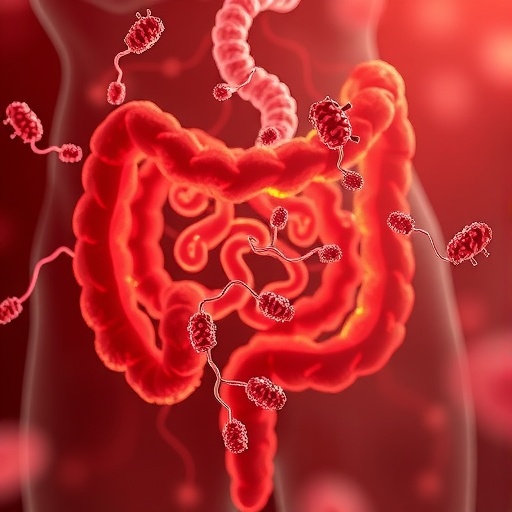
In an era where understanding the complexities of microbial life is becoming increasingly vital, research led by K. Pick and T.L. Raivio has recently shed light on the intricate interaction between a commensal strain of Escherichia coli and its viral components. Their investigation focused on the transcriptomic profiling of a lysogenic strain of this ubiquitous bacterium, revealing significant changes to its genetics within the confines of simulated intestinal fluid. This study stands as a testament to the dynamic nature of microbial genomes and their responses to environmental conditions, particularly within a human-relevant biological context.
The researchers utilized advanced transcriptomic techniques to explore how the presence of viral DNA influences the gene expression profiles of the bacterial host. Lysogeny, the process where a bacteriophage integrates its genome into that of its bacterial host, can drastically alter the latter’s behavior, informing not only its survival but also its interactions with the host organism. By mimicking intestinal conditions, the researchers effectively replicated a natural environment where these interactions frequently occur.
Central to their findings was the discovery that viral genomes could lead to profound modifications in both core and accessory genomic regions. Core regions of the genome are crucial for the basic cellular functions of the bacterium, while accessory regions can encode for traits that may enhance survival under specific environmental conditions. The study unveiled that not only were genes associated with virulence factors expressed differently, but there were notable shifts in genes involved in metabolic pathways as well. This is particularly intriguing, given that such changes may influence how E. coli interacts with the human gut microbiome.
One of the remarkable aspects of this research was its emphasis on the dual nature of E. coli as both a commensal organism and a potential pathogen. While many strains of E. coli are harmless and even beneficial, the presence of viral elements may shift their behavior, potentially granting them new capabilities. This challenges the long-standing view of E. coli as merely a model organism, revealing its potential adaptability in response to viral infections.
As the researchers delved deeper into the transcriptomic data, they identified a variety of stress-response genes that were modulated in the presence of the lysogenic state. Stress responses in bacteria are critical for their survival in dynamic environments like the gastrointestinal tract, where they face a myriad of challenges, from competing microbes to fluctuating nutrient levels. This adaptability underscores the potential impact of viral interactions on bacterial fitness and ecological roles.
Furthermore, this research has implications for understanding the evolution of microbial communities, particularly within the human gut. As these researchers observed, changes driven by viral factors can lead to a fundamental transformation of bacterial populations, affecting not only the bacteria themselves but also their entire ecological niche. The interplay of bacteriophages and bacteria lends complexity to microbial dynamics and offers a potential explanation for the variability observed in microbiome compositions among individuals.
The study also highlights the importance of using simulated environments to examine microbial behavior, providing an invaluable tool for researchers. By recreating the conditions found in the human gut, the researchers were able to observe genetic changes in real-time, granting insights that would be difficult to obtain through in vivo studies. This method paves the way for future research endeavors aimed at unraveling the complexities of host-microbe interactions.
In considering the clinical implications of this research, one cannot overlook the potential for the evolution of pathogenic traits in previously harmless strains of bacteria. Understanding how lysogenic conversion can lead to increased virulence is pivotal in developing strategies for preventing bacterial infections that are resistant to current antibiotics. The findings of this study may contribute to a more nuanced approach in addressing infectious diseases linked to opportunistic pathogens.
Moreover, the study’s outcomes provoke further inquiries into the role of phages in therapeutic applications. Engineered bacteriophages have emerged as a possible strategy to control bacterial populations, specifically targeting harmful strains while leaving beneficial ones intact. The nuances highlighted by Pick and Raivio in their transcriptomic findings may influence how such therapies are designed, ensuring targeted interventions are both effective and safe for human health.
As we consider the broader implications of the study, it is essential to recognize that the interaction between viruses and bacteria is a double-edged sword. While on one hand it can foster diversity and adaptability within microbial communities, it potentially catalyzes pathogenicity on the other. The delicate balance maintained by these interactions requires continuous exploration to ensure the health of microorganisms that inhabit our bodies—the microflora.
The emerging understanding of E. coli‘s genomic plasticity underscores the need for an integrative approach in microbiological research. By combining genomics with environmental simulations, we obtain unparalleled insight into the life cycles of these microorganisms, setting a solid foundation for future investigations. As these relationships are further elucidated, the potential exists to innovate strategies that harness microbial capabilities for beneficial applications, such as bioremediation and health monitoring.
In conclusion, the research conducted by K. Pick and T.L. Raivio represents a significant leap toward comprehending the intricate tapestry of bacterial behavior in relation to viral interactions. As we unravel the complexities of E. coli and its lysogenic partners, the possibilities for impacting health, disease prevention, and therapeutic interventions continue to expand. The field stands at the precipice of discovery, where each finding paves the path toward a more integrated understanding of microbial life and its manifold effects on human health.
As researchers delve deeper into these findings, it will be crucial to address potential ramifications for public health and antibiotic resistance. The evolving landscape of microbial genomics opens new avenues for preventive medicine, guiding future policies that may transform how we approach bacterial infections mitigation. Ultimately, such investigations could reshape our understanding of gut ecology and pave the way for innovative treatments that leverage microbial interactions to our advantage.
Subject of Research: Investigation of the transcriptomic changes in Escherichia coli due to lysogenic effects in simulated intestinal fluid.
Article Title: Transcriptomic profiling of a commensal Escherichia coli lysogen in simulated intestinal fluid reveals broad changes in both core and accessory regions of the genome.
Article References:
Pick, K., Raivio, T.L. Transcriptomic profiling of a commensal Escherichia coli lysogen in simulated intestinal fluid reveals broad changes in both core and accessory regions of the genome.
BMC Genomics (2026). https://doi.org/10.1186/s12864-026-12562-9
Image Credits: AI Generated
DOI: 10.1186/s12864-026-12562-9
Keywords: Escherichia coli, lysogeny, transcriptomics, intestinal fluid, microbial interactions, bacterial evolution, virulence factors, gut microbiome, bacteriophages.
Tags: bacterial host-virus relationshipscommensal bacteria behaviorenvironmental impacts on microbial lifeEscherichia coli geneticsgene expression alterationsgut microbiome researchhuman health microbiome studiesintestinal fluid simulationslysogenic bacteriophage interactionsmicrobial genome dynamicstranscriptomic profiling techniquesviral DNA influence on bacteria