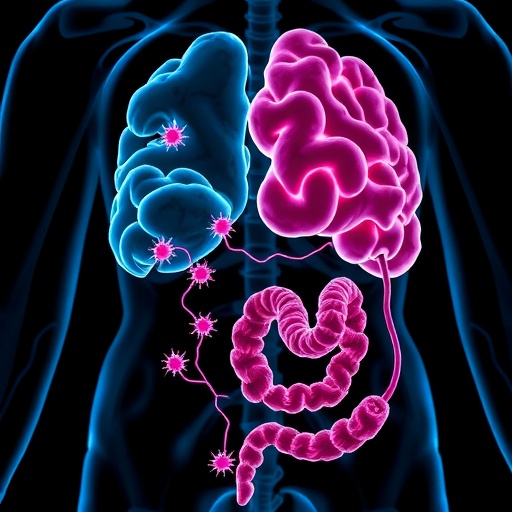

In a groundbreaking study that may reshape the future of Parkinson’s disease research, scientists have delved deep into the intricate relationship between gut bacteria and neurodegenerative disorders. The comprehensive systematic review and meta-analysis published by Elford, Heesbeen, van der Plaats, and colleagues in the latest edition of npj Parkinson’s Disease uncovers a crucial narrative linking the microbial ecosystem within the gastrointestinal tract to the pathophysiology of Parkinson’s disease (PD) using animal models. This study offers unprecedented insights into the multi-faceted gut-brain axis, a bidirectional communication pathway that has garnered increasing attention as a potential therapeutic target in neurodegenerative diseases.
Parkinson’s disease is traditionally characterized by the progressive loss of dopaminergic neurons in the substantia nigra and the presence of Lewy bodies composed of aggregated alpha-synuclein protein. However, decades of research have shown that PD is not confined solely to the central nervous system. Instead, accumulating evidence suggests that pathological changes begin much earlier within the enteric nervous system and that gut-related factors might significantly influence disease onset and progression. This meta-analysis provides a critical synthesis of existing animal model data, demonstrating that shifts in gut microbiota composition are more than peripheral phenomena; they may be intrinsic to PD pathogenesis.
The gut microbiome — an ecosystem comprising trillions of bacteria, viruses, fungi, and other microorganisms — plays a foundational role in host metabolism, immune modulation, and neural signaling. Researchers have hypothesized that dysbiosis, an imbalance in microbial populations, could instigate systemic inflammation and neuroinflammation, both key contributors to neurodegeneration. Elford and colleagues meticulously curated and analyzed datasets from multiple preclinical studies involving various rodent models of Parkinson’s, including alpha-synuclein overexpression models and toxin-induced paradigms such as MPTP and rotenone treatments. Their rigorous statistical approach allowed them to extract consistent patterns in microbial shifts correlating with disease phenotypes.
One of the most compelling outcomes highlighted in this study is the consistent depletion of specific bacterial taxa known for their anti-inflammatory and neuroprotective properties. For instance, genera within the families Lachnospiraceae and Ruminococcaceae, which are pivotal producers of short-chain fatty acids (SCFAs) like butyrate, were significantly reduced across models exhibiting PD-like symptoms. SCFAs serve as critical signaling molecules that maintain the integrity of the blood-brain barrier and modulate microglial activation states, the resident immune cells of the brain. Loss of these beneficial microbes potentially unleashes a cascade of immune dysregulation, favoring a pro-inflammatory milieu that exacerbates alpha-synuclein aggregation and neuronal death.
Conversely, the analysis also identified an overrepresentation of pro-inflammatory taxa. For example, an increase in Enterobacteriaceae, a family implicated in endotoxin production, was strongly associated with worsened motor deficits and heightened neuroinflammation. Elevated levels of lipopolysaccharide (LPS), a potent endotoxin, were hypothesized to breach the intestinal barrier, resulting in systemic immune activation and microglia-mediated neurotoxicity. This aligns with the emerging “gut-to-brain” hypothesis that posits microbial metabolites and components can travel via the vagus nerve or circulatory system to trigger or amplify neurodegenerative processes.
Beyond identifying specific bacterial players, the study sheds light on the dynamic interplay between gut microbes and host genetic susceptibilities. For instance, in transgenic models expressing human alpha-synuclein mutations, microbial alterations amplified by environmental toxin exposure created a feedback loop driving accelerated neurodegeneration. This synergy underscores the complexity of PD as a multi-factorial disorder, where microbiota-host interactions can modulate genetic predispositions through epigenetic mechanisms and altered metabolic pathways, including dopamine biosynthesis.
Importantly, Elford et al. address the translational implications of their findings by discussing potential avenues for microbiota-targeted therapeutics. In animal models, interventions such as probiotics, prebiotics, and fecal microbiota transplantation (FMT) showed promising results in partially restoring microbial balance and mitigating neuroinflammatory markers. These interventions improved motor function and delayed neuronal loss, suggesting future clinical trials targeting gut dysbiosis in PD patients could revolutionize treatment paradigms. However, the authors caution against premature extrapolation, emphasizing the necessity for standardized protocols and comprehensive understanding of microbial-host interactions.
The methodology of this meta-analysis itself stands as a notable advancement. The authors implemented stringent inclusion criteria, ensuring the reliability of pooled data despite inherent heterogeneity in animal species, PD induction methods, and microbiome sequencing techniques. Utilizing advanced bioinformatics pipelines and sensitivity analyses, they navigated the common pitfalls of microbiome research such as batch effects and sampling biases. This level of rigor sets a new benchmark for future investigations assessing the gut-brain axis in neurodegeneration.
Moreover, the study highlights unresolved questions that pave the way for the next wave of research. The causal relationship between microbiota changes and PD remains elusive; does dysbiosis initiate neurodegeneration, or is it a consequence of disease progression? Future studies designed with longitudinal designs and mechanistic interventions in germ-free or humanized animal models are essential to disentangle these complexities. Integrating multi-omics approaches including metabolomics and transcriptomics will further elucidate the functional impact of microbial shifts on host physiology.
The systemic review provides a solid foundation for understanding how lifestyle factors such as diet, antibiotic exposure, and environmental toxins influence the gut microbiome’s contribution to PD. Nutritional components notably shape microbial diversity and functional potential, positioning dietary interventions as practical, non-invasive strategies to complement pharmacological treatments. This holistic view supports a precision medicine framework where individual microbiome profiles could inform personalized therapy.
Elford and colleagues also emphasize the critical need to bridge animal model findings with human clinical data. Variability in human microbiomes, influenced by genetics, geography, and lifestyle, complicates direct comparisons. However, convergent evidence from both domains strengthens the hypothesis that microbial manipulation could serve as a disease-modifying strategy. Collaborative consortia and large-scale longitudinal cohort studies capturing detailed microbial, clinical, and environmental information will accelerate this translation.
Additionally, the meta-analysis presents a nuanced discussion about the regional specificity of gut microbial alterations. While most studies focus on fecal samples reflecting distal colon populations, emerging evidence suggests that changes in small intestinal and mucosal-associated microbiota might have distinct roles in PD pathology. Advances in minimally invasive sampling techniques and spatially resolved omics technologies will enrich our understanding of these micro-niches and their neuroimmune crosstalk.
This seminal work also touches on the implications of gut microbiota in non-motor symptoms of Parkinson’s disease, such as gastrointestinal dysfunction, mood disorders, and cognitive impairment. These symptoms can precede motor manifestations by years, indicating that gut microbial imbalance might serve as an early biomarker for diagnosis. Identifying microbial signatures predictive of disease risk or progression could redefine the therapeutic window and enable interventions at preclinical stages.
In conclusion, the extensive meta-analysis by Elford, Heesbeen, van der Plaats, et al. marks a pivotal milestone in Parkinson’s disease research, emphasizing the integral role of gut bacterial communities within the neurodegenerative landscape. By unraveling the complex interactions between microbiota, immune responses, and neural integrity in animal models, this work lays the groundwork for innovative diagnostic tools and microbiome-centered therapies. As we stand at the cusp of a new era in neurobiology, the gut microbiome’s hidden influence offers a promising frontier in the quest to understand and ultimately conquer Parkinson’s disease.
Subject of Research: Gut microbiota composition and its role in animal models of Parkinson’s disease.
Article Title: Gut bacteria composition in animal models of Parkinson’s disease: a systematic review and meta-analysis.
Article References:
Elford, J.D., Heesbeen, E.J., van der Plaats, N.A. et al. Gut bacteria composition in animal models of Parkinson’s disease: a systematic review and meta-analysis. npj Parkinsons Dis. (2026). https://doi.org/10.1038/s41531-025-01236-0
Image Credits: AI Generated
Tags: alpha-synuclein and gut microbiome interactionsanimal models of neurodegenerative disordersenteric nervous system and PDgut bacteria and Parkinson’s diseasegut-brain axis communicationimpact of gut microbiota on neurodegenerationmeta-analysis of Parkinson’s diseasemicrobiome’s role in disease progressionneurobiology of gut health and brain diseasespathological changes in gut related to Parkinson’ssystemic review of gut health and PDtherapeutic targets in Parkinson’s research