• HOME
  • NEWS
  • EXPLORE
    • CAREER
      • Companies
      • Jobs
    • EVENTS
    • iGEM
      • News
      • Team
    • PHOTOS
    • VIDEO
    • WIKI
  • BLOG
  • COMMUNITY
    • FACEBOOK
    • INSTAGRAM
    • TWITTER
Saturday, February 7, 2026
BIOENGINEER.ORG
No Result
View All Result
  • Login
  • HOME
  • NEWS
  • EXPLORE
    • CAREER
      • Companies
      • Jobs
        • Lecturer
        • PhD Studentship
        • Postdoc
        • Research Assistant
    • EVENTS
    • iGEM
      • News
      • Team
    • PHOTOS
    • VIDEO
    • WIKI
  • BLOG
  • COMMUNITY
    • FACEBOOK
    • INSTAGRAM
    • TWITTER
  • HOME
  • NEWS
  • EXPLORE
    • CAREER
      • Companies
      • Jobs
        • Lecturer
        • PhD Studentship
        • Postdoc
        • Research Assistant
    • EVENTS
    • iGEM
      • News
      • Team
    • PHOTOS
    • VIDEO
    • WIKI
  • BLOG
  • COMMUNITY
    • FACEBOOK
    • INSTAGRAM
    • TWITTER
No Result
View All Result
Bioengineer.org
No Result
View All Result
Home NEWS Science News Biology

Grown-up gannets find favorite fishing grounds

Bioengineer by Bioengineer
July 27, 2017
in Biology
Reading Time: 2 mins read
0
Share on FacebookShare on TwitterShare on LinkedinShare on RedditShare on Telegram
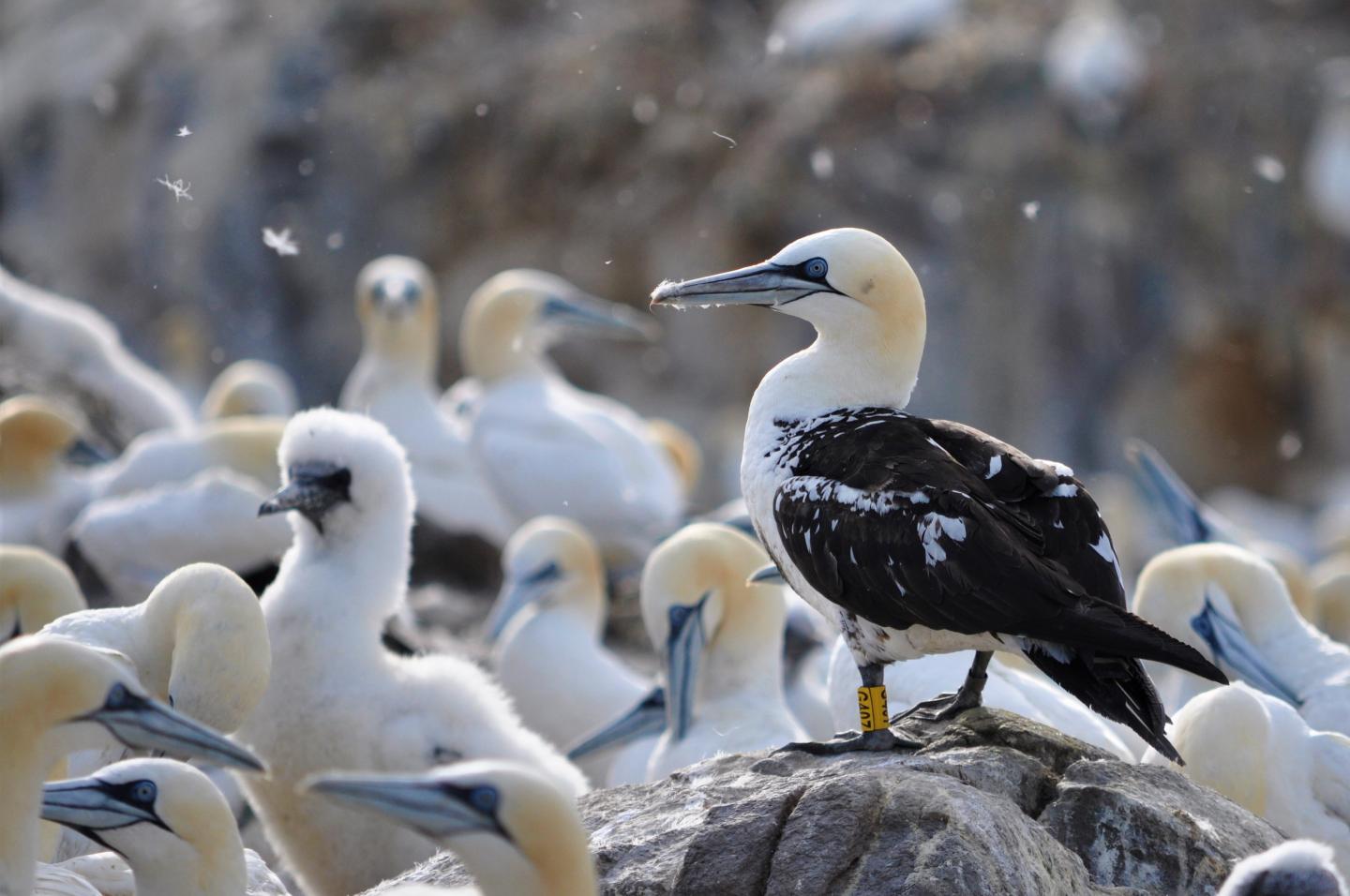
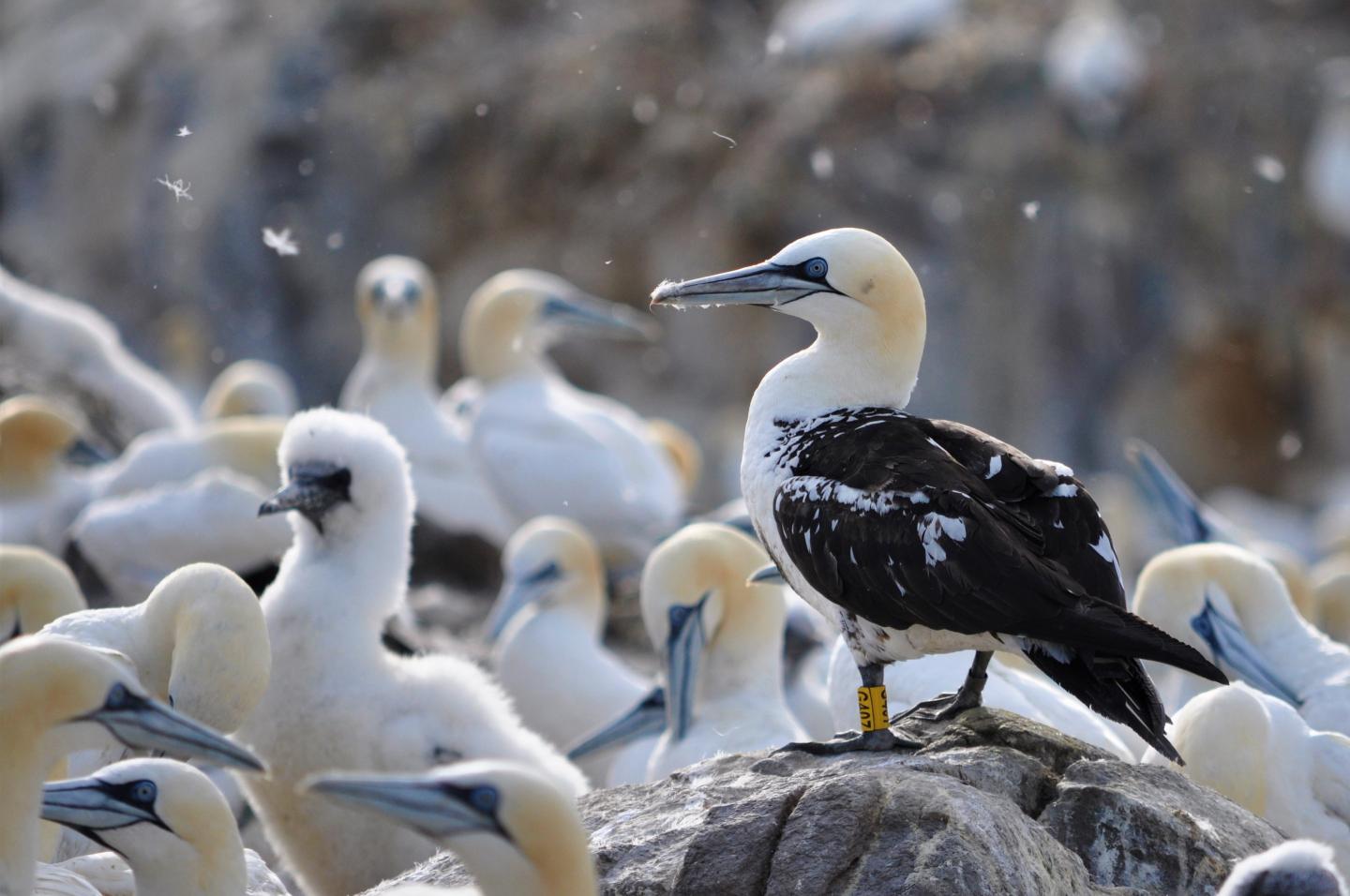
IMAGE

Credit: Beth Clark

Like humans, some birds can spend years learning and exploring before developing more settled habits.

A study of northern gannets has shown adults return to the same patch of sea over and over again to find food.

But younger gannets search far and wide and tend not to return to the same places – even if they find good hunting grounds, University of Exeter researchers found.

The study also compared successful breeding adults with those which failed to breed, and found successful breeders stuck to their feeding grounds more reliably.

"It's common for birds like gannets to return to the same foraging grounds year after year," said Dr Stephen Votier, of the Environment and Sustainability Institute on Exeter's Penryn Campus in Cornwall.

"They disperse widely at sea, and the fact that they return to specific areas is presumably linked to finding good foraging conditions.

"However, gannets don't breed until they're four or five years old, and our research shows that this tendency to return to favoured foraging grounds is lacking in birds younger than this.

"This finding suggests that such behaviours are probably learned, and that gannets use their long period of immaturity finding good sites and remembering where they are.

"However, foraging sites in adults are not absolute – when experienced birds had more time on their hands after a failed breeding attempt, some became more exploratory. This suggests that refinement occurs throughout an animal's lifetime."

The research team studied gannets on the Welsh island of Grassholm, supported by the RSPB, and used precision global positioning system (GPS) loggers to find out whether individual birds returned to the same foraging grounds time after time.

Successful breeders showed strong attachment to certain areas and took similar routes when travelling to and from them.

Immature birds (aged two or three years) were much more varied both in foraging sites and routes taken.

The results support the "exploration-refinement foraging hypothesis" – that birds explore and slowly improve their foraging with age and experience.

The paper, published in the journal Proceedings of the Royal Society B, is entitled: "Effects of age and reproductive status on individual foraging site fidelity in a long-lived marine predator."

###

Media Contact

Alex Morrison
[email protected]
01-392-724-828
@uniofexeter

http://www.exeter.ac.uk

Related Journal Article

http://dx.doi.org/10.1098/rspb.2017.1068

Share12Tweet8Share2ShareShareShare2

Related Posts

New Study Uncovers Mechanism Behind Burn Pit Particulate Matter–Induced Lung Inflammation

New Study Uncovers Mechanism Behind Burn Pit Particulate Matter–Induced Lung Inflammation

February 6, 2026

DeepBlastoid: Advancing Automated and Efficient Evaluation of Human Blastoids with Deep Learning

February 6, 2026

Navigating the Gut: The Role of Formic Acid in the Microbiome

February 6, 2026

AI-Enhanced Optical Coherence Photoacoustic Microscopy Revolutionizes 3D Cancer Model Imaging

February 6, 2026
Please login to join discussion

POPULAR NEWS

  • Robotic Ureteral Reconstruction: A Novel Approach

    Robotic Ureteral Reconstruction: A Novel Approach

    82 shares
    Share 33 Tweet 21
  • Digital Privacy: Health Data Control in Incarceration

    63 shares
    Share 25 Tweet 16
  • Study Reveals Lipid Accumulation in ME/CFS Cells

    57 shares
    Share 23 Tweet 14
  • Breakthrough in RNA Research Accelerates Medical Innovations Timeline

    53 shares
    Share 21 Tweet 13

About

We bring you the latest biotechnology news from best research centers and universities around the world. Check our website.

Follow us

Recent News

Scientists Identify SARS-CoV-2 PLpro and RIPK1 Inhibitors Showing Potent Synergistic Antiviral Effects in Mouse COVID-19 Model

Neg-Entropy: The Key Therapeutic Target for Chronic Diseases

Multidisciplinary Evidence-Based Guidelines for Therapeutic Drug Monitoring of Biologics in Inflammatory Bowel Disease

Subscribe to Blog via Email

Enter your email address to subscribe to this blog and receive notifications of new posts by email.

Join 73 other subscribers
  • Contact Us

Bioengineer.org © Copyright 2023 All Rights Reserved.

Welcome Back!

Login to your account below

Forgotten Password?

Retrieve your password

Please enter your username or email address to reset your password.

Log In
No Result
View All Result
  • Homepages
    • Home Page 1
    • Home Page 2
  • News
  • National
  • Business
  • Health
  • Lifestyle
  • Science

Bioengineer.org © Copyright 2023 All Rights Reserved.