A groundbreaking phase 1 clinical trial published in The Lancet has unveiled a pioneering approach to treating myelomeningocele, the most severe form of spina bifida, by integrating stem cell therapy with conventional fetal surgery. This innovative technique marks the first-ever application of live stem cells directly onto the damaged spinal cord of a fetus, promising a transformative leap in prenatal medical intervention. By harnessing the regenerative capabilities of stem cells, this method aims not only to repair physical defects but also to enhance neurological outcomes, potentially reducing the lifelong disabilities associated with this congenital condition.
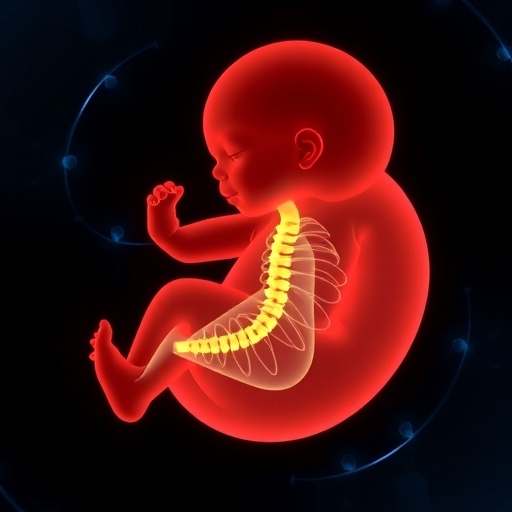
Spina bifida manifests as an incomplete closure of the neural tube during early embryonic development, resulting in an exposed spinal cord vulnerable to damage. This defect often leads to severe complications such as paralysis, impaired motor function, and compromised bladder and bowel control. Traditional fetal surgery, while effective in closing the exposed area to mitigate some adverse effects, frequently falls short of restoring full neurological function or preventing all secondary complications stemming from nerve tissue injury.
In this remarkable clinical trial, six pregnant individuals carrying fetuses diagnosed prenatally with myelomeningocele underwent the standard surgical procedure to close the spinal defect. What sets this study apart is the adjunctive application of placenta-derived mesenchymal stem cells (PMSCs) administered directly onto the exposed spinal cord during the surgery. These PMSCs are uniquely adept at modulating inflammatory responses, secreting neuroprotective factors, and fostering tissue repair, thereby offering a multi-faceted approach to spinal cord preservation and regeneration in utero.
The procedural intricacies involved carefully harvesting stem cells from placentae, ensuring their viability and sterility, followed by precise transplantation onto the fetal spinal lesion. This delicate intervention leverages the immunomodulatory properties of PMSCs, which help to attenuate the inflammatory milieu that exacerbates neural injury after exposure. By providing a nurturing environment for residual nerve tissue, these stem cells may encourage endogenous repair mechanisms that traditional surgical closure alone cannot achieve.
The outcomes reported are exceptionally promising. All six infants born between mid-2021 and late 2022 demonstrated successful spinal defect repair with no incidences of infection, abnormal tissue growth such as fibrosis or tumourigenesis, or other adverse effects related to the stem cell treatment. Magnetic resonance imaging (MRI) conducted postnatally revealed a reversal of hindbrain herniation—a brain malformation associated with spina bifida—an encouraging indicator of improved neurological integrity following combined treatment.
Throughout the trial duration and subsequent follow-up care, the research team observed no serious complications attributable to the cellular therapy. This safety profile is critically important given the vulnerable population and in-utero application context. With monitoring extending until the children reach six years of age, longitudinal data collection will be instrumental in confirming sustained safety, functional improvements in mobility, and enhanced quality of life driven by this dual therapeutic modality.
The scientific implications of integrating stem cell therapy with fetal surgery are profound. This approach targets the root cause of the neurological sequelae of spina bifida by preserving and promoting integrity of nerve structures before irreversible damage ensues. It exemplifies a paradigm shift from purely mechanical repair to bioactive tissue regeneration, leveraging advances in regenerative medicine that were hitherto limited to postnatal or adult treatment settings.
Building upon these initial findings, extensive large-scale and long-term clinical trials are underway. These studies aim to refine surgical techniques and establish standardized treatment regimens capable of maximizing clinical outcomes. Regulatory agencies are closely collaborating with researchers to institute rigorous safety monitoring and efficacy validation, underscoring the cautious yet hopeful trajectory toward widespread clinical adoption.
Should these subsequent trials substantiate the preliminary success, stem cell augmentation of fetal surgery may become a new gold standard for prenatally diagnosed neural tube defects. Beyond spina bifida, this innovation paves the way for future applications in other congenital malformations where early cellular interventions might mitigate or correct developmental anomalies before birth, profoundly altering lifelong prognoses.
This novel therapeutic strategy also underscores the critical role of placenta-derived stem cells, which offer accessible, ethically acceptable, and potent agents for regenerative therapies. Their multifunctional capacities—ranging from immune modulation and neuroprotection to facilitation of local tissue regeneration—highlight the placenta’s potential as a vital resource in fetal medicine and beyond.
Researchers involved in this first-in-human trial emphasize the milestone reached in safe in-utero stem cell application, which lays the foundation for transformative advances in prenatal treatment paradigms. This success narrative blends surgical expertise with cellular biology innovation, inaugurating a new era in which congenital anomalies can be addressed with unprecedented precision and therapeutic efficacy during the earliest stages of life.
Ultimately, the integration of cellular therapies with fetal surgery heralds a future where congenital disorders like spina bifida are no longer unavoidable lifelong burdens. Such breakthroughs hold immense promise not only to affected families worldwide but also to the medical community striving to push the boundaries of regenerative medicine and prenatal care.
Subject of Research: People
Article Title: Feasibility and safety of cellular therapy for in-utero repair of myelomeningocele (CuRe Trial): a first-in-human, phase 1, single-arm study
News Publication Date: 26-Feb-2026
Web References: https://www.thelancet.com/journals/lancet/article/PIIS0140-6736(25)02466-3/fulltext
References: DOI: 10.1016/S0140-6736(25)02466-3
Keywords: Health and medicine; Spina bifida; Congenital disorders; Birth defects; Neural tube defects
Tags: congenital disability preventionfetal spinal cord repairfetal surgery for myelomeningocelein-utero stem cell therapy for spina bifidainnovative treatments for spina bifidaneural tube defect repairneurological outcomes in spina bifidaphase 1 clinical trial stem cellsprenatal stem cell treatmentprenatal surgical interventionsregenerative medicine for congenital disordersstem cell application in fetal surgery