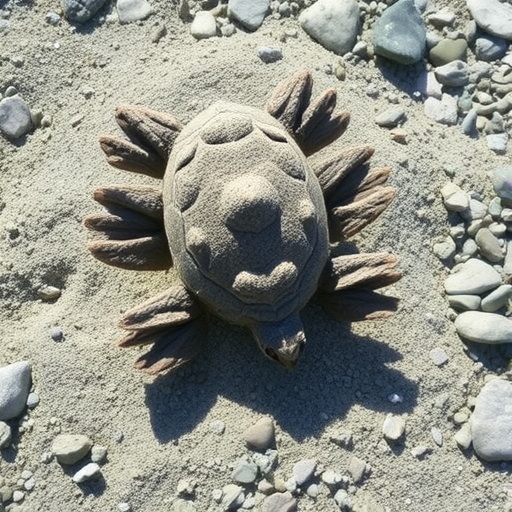
In an alarming revelation that underscores the pervasive reach of plastic pollution, researchers from São Paulo State University (UNESP) have identified the presence of plastic rocks on Trindade Island, a remote and protected oceanic island that marks the easternmost point of South America. Despite the island’s isolation—approximately 1,100 kilometers off the Brazilian coast in the Atlantic Ocean—it is far from immune to the assault of human-made debris. This pioneering study, recently published in the prestigious journal Marine Pollution Bulletin, unveils critical insights on the geological embedding of plastics in sea turtle nesting sites, highlighting the unsettling permanence of anthropogenic materials within natural ecosystems.
Plastic rocks, an intriguing yet disconcerting phenomenon, are conglomerates formed from a fusion of synthetic polymers and natural sediments. Such formations on Trindade Island primarily originate from human activities, notably beach bonfires that inadvertently incorporate plastic debris into sediment matrices. This fusion creates a new class of geological artifacts that blur the line between natural and artificial substrates. Initially detected in 2019 on Parcel das Tartarugas beach—a key nesting ground for the endangered green turtle (Chelonia mydas)—these plastic rocks have since undergone significant erosion, fragmenting and dispersing microplastic material across additional shorelines on the island.
The study’s longitudinal monitoring over five years offers rigorous evidence that these plastic agglomerates are dynamic components within the island’s sedimentary environment. Approximately 40% of the original mass of these plastic rocks has disintegrated, with fragmented microplastics infiltrating the depressions where turtles consistently return to nest each reproductive season. This process transforms turtle nesting sites into hotspots of plastic accumulation, potentially increasing both ecological risk and the geological persistence of plastics. The embedded plastics lie beneath the surface, sometimes as deep as 10 centimeters, entombed within the nests themselves—suggesting an unprecedented intermixing of synthetic material into the natural sedimentary record.
Such findings have profound implications for our understanding of the Anthropocene, a proposed geological epoch characterized by significant human impact on Earth’s geology and ecosystems. The burial of synthetic debris, like these plastic rocks within marine turtle nests, serves as a compelling marker of anthropogenic influence archived in sediment layers. As noted by study lead Dr. Fernanda Avelar Santos, this intersection of human pollutants and natural geological processes may constitute a defining signature of human-induced stratigraphic change, potentially enduring for millions of years. The inert-like behavior of plastics embedded in sediments offers an unprecedented geological timeline of human impact.
Utilizing advanced spectroscopy techniques, the researchers meticulously analyzed the polymeric composition of the debris. The results highlighted high-density polyethylene (HDPE) ropes, commonly used in maritime industries, along with copper-based dyes giving the plastics their characteristic green hue. This chemical fingerprint implicates fishing and shipping activities as primary contributors to marine debris pollution on the island, reflecting broader global trends wherein marine ropes and netting significantly pollute oceanic environments. The presence of these trace metals also introduces additional toxicological risks to the surrounding marine biota, compounding the ecological threat.
Furthermore, morphological analysis of the plastic fragments revealed distinctive patterns correlating to their transport and depositional history. Rounded plastic pieces were primarily found near the shoreline, indicative of prolonged exposure to wave action and mechanical abrasion by the sea. In contrast, angular fragments were predominantly buried within turtle nests, suggesting limited post-depositional movement and direct sediment entrapment. This differentiation demonstrates how plastics effectively integrate into the local geological cycle, mirroring the behavior of natural sand and rock grains, and emphasizes the environmental stability—and thus longevity—of plastics in these microhabitats.
Trindade Island itself is a volcanic archipelago rich in biodiversity, designated as part of Brazil’s National Monument of the Islands of Trindade and Martim Vaz, and Mount Columbia. The island maintains no permanent population, inhabited only by a rotating contingent of Brazilian Navy personnel tasked with conservation and protection duties. Despite its isolation and protected status, the detection of plastic rocks signifies a broader, unsettling reality: even the most remote natural refuges are vulnerable to pollution influences originating from distant human activities, carried by oceanic currents and maritime operations.
The ecological ramifications of this contamination extend beyond mere presence. The integration of plastic debris within turtle nesting sites raises pressing conservation concerns. Plastic ingestion by wildlife—including endangered turtles, local fish species, avian seabirds, and crustaceans—is highly probable, potentially leading to physical harm, toxic exposure, and reproductive failure. The accumulation of plastics within reproductive habitats jeopardizes the survival of species particularly sensitive to environmental pressures, making the cleanup and preventive measures an urgent priority for conservationists and policymakers.
Highlighting these concerns, the research team underscores the need for robust, targeted public policies aimed at controlling marine plastic pollution—especially concerning the management and reduction of plastic fishing gear and ropes. Coordinated, sustained beach cleaning efforts should prioritize ecologically critical areas such as Parcel das Tartarugas, where wildlife interaction with plastic debris is direct and profound. Institutional support from environmental bodies and international cooperation will be necessary to mitigate the transport and deposition of plastics in vulnerable marine ecosystems.
Beyond pure research, this investigation exemplifies the critical role interdisciplinary scientific endeavors play in addressing global environmental crises. By combining field observations, chemical analysis, and geological study, the team provides a comprehensive portrait of how anthropogenic materials are reshaping Earth’s geological and ecological landscapes. This case study from Trindade Island offers a crucial lens through which to evaluate the long-term consequences of plastic pollution—a pollutant that transcends geographical boundaries and demands urgent global action.
As the public and scientific communities grapple with the scale of plastic contamination, such discoveries challenge us to rethink our relationship with synthetic materials and their legacy. The formation of plastic rocks on isolated beaches, mute witnesses buried beneath endangered turtle nests, serves as a stark reminder that the Anthropocene epoch is not only about current environmental degradation but also about the indelible geological footprint humanity is leaving behind. The preservation of biodiversity, geological integrity, and marine ecosystem health now hinges on systemic change in waste management and marine conservation policies worldwide.
Subject of Research: Marine plastic pollution and its geological and ecological impacts on remote oceanic islands, focusing on the formation and burial of plastic rocks in sea turtle nesting beaches.
Article Title: Anthropogenic stones on a remote oceanic island: formation, transport, and burial in a sea turtle nesting beach
News Publication Date: 13-Dec-2025
Web References:
Marine Pollution Bulletin article DOI
FAPESP News Release
Revista Pesquisa article
References:
São Paulo State University (UNESP) research team, Marine Pollution Bulletin, DOI: 10.1016/j.marpolbul.2025.119101
Keywords: Pollution, Synthetic Polymers, Wildlife Refuges
Tags: anthropogenic debris in oceanic islandsbeach bonfires contributing to plastic pollutionendangered green turtle conservation challengesgeological embedding of plasticsgreen turtle nesting site contaminationlong-term effects of plastic debris on wildlifemarine ecosystem plastic contaminationmicroplastic dispersal on Trindade Islandplastic pollution impact on sea turtlesplastic rocks formation in marine environmentsremote island environmental threatssynthetic polymers in natural sediments