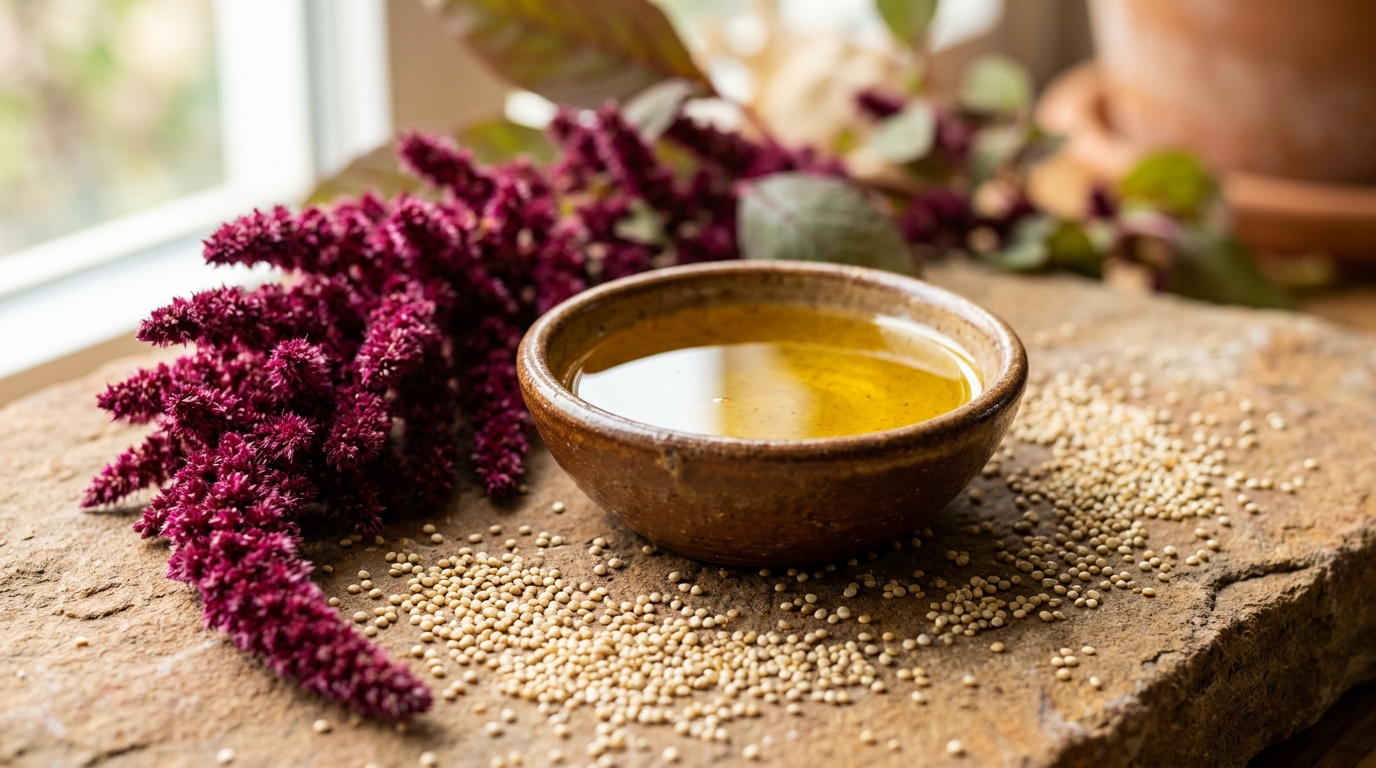
Researchers published a study in BMC Chemistry describing a rapid and environmentally friendly high-performance liquid chromatography method for quantifying squalene in amaranth oil. The article was published on September 29, 2026, and is available as an open access research paper. The primary objective was to develop a reversed-phase high-performance liquid chromatographic (RP-HPLC) method that allows for the accurate and precise determination of squalene levels in amaranth oil samples.
The development process involved a systematic evaluation of chromatographic separation capabilities across eight different columns. These columns featured various bonded stationary phases, including C8, phenyl, pentafluorophenyl (PFP), and polar-embedded phases. The team selected a Supelcosil LC-ABZ column, measuring 150 by 4.6 millimeters with a 5 micrometer particle size, as the optimal choice. This column contains an embedded polar group, which proved to be critical for achieving the desired separation efficiency and speed in the final method.
Optimization of the mobile phase was a key component of the method development. The researchers varied the ethanol content to find the composition that yielded the most efficient separation of squalene. The final optimized mobile phase consisted of 91% ethanol. This composition allowed for a rapid analysis, with squalene exhibiting a retention time of approximately five minutes.
Selectivity was rigorously confirmed to ensure that the method could distinguish squalene from other components in the oil matrix. The separation of squalene from α-tocopherol acetate was evaluated, yielding a resolution factor (Rs) of 5.7. Additionally, the method demonstrated satisfactory resolution from oil triglycerides, with a resolution factor of 9.3.
Validation studies were conducted to assess the reliability and precision of the developed RP-HPLC procedure. The results demonstrated satisfactory repeatability and intermediate precision, with relative standard deviations not exceeding 1.0%. Solution stability was also tested, confirming that the analyte remained stable in solution for up to 20 hours.
To evaluate potential matrix effects, corn oil was used as a validation matrix. This choice was based on the similar fatty acid composition of corn oil to that of amaranth oil, making it a relevant surrogate for assessing how the oil matrix might interfere with the measurement. This approach helps to confirm that the method is suitable for accurate, precise, and reliable determination of squalene in its native oil environment.
The developed method offers a fast and environmentally friendly analytical approach for squalene determination. The combination of a polar-embedded stationary phase and an ethanol-based mobile phase reduces the use of non-green solvents and shortens analysis time.
The study contributes to the field of analytical chemistry by providing a validated, green method for the analysis of amaranth oil. The use of ethanol as the mobile phase and the selection of a specific polar-embedded column represent practical steps toward sustainable analytical practices. The findings are supported by detailed validation data, including precision, stability, and selectivity metrics.
Subject of Research: Development and validation of a green HPLC method for squalene analysis in amaranth oil
Article Title: A rapid and green HPLC method for squalene determination in amaranth oil using a polar-embedded stationary phase and ethanol mobile phase
Article References: Syrotchuk, O., Glushachenko, O., Stukalo, M., Didukh, I., & Nizhenkovska, I. (2026). A rapid and green HPLC method for squalene determination in amaranth oil using a polar-embedded stationary phase and ethanol mobile phase. BMC Chemistry. https://doi.org/10.1186/s13065-026-01933-8
Image Credits: AI Generated
DOI: 10.1186/s13065-026-01933-8
Keywords: HPLC, Squalene, Amaranth Oil, Green Chemistry, Analytical Chemistry, Ethanol, Chromatography, Method Validation, rapid, green, method, determination
News Source: Bethany Barker. (November 8, 2026). Green HPLC Method Measures Squalene in Amaranth Oil. Scienmag.