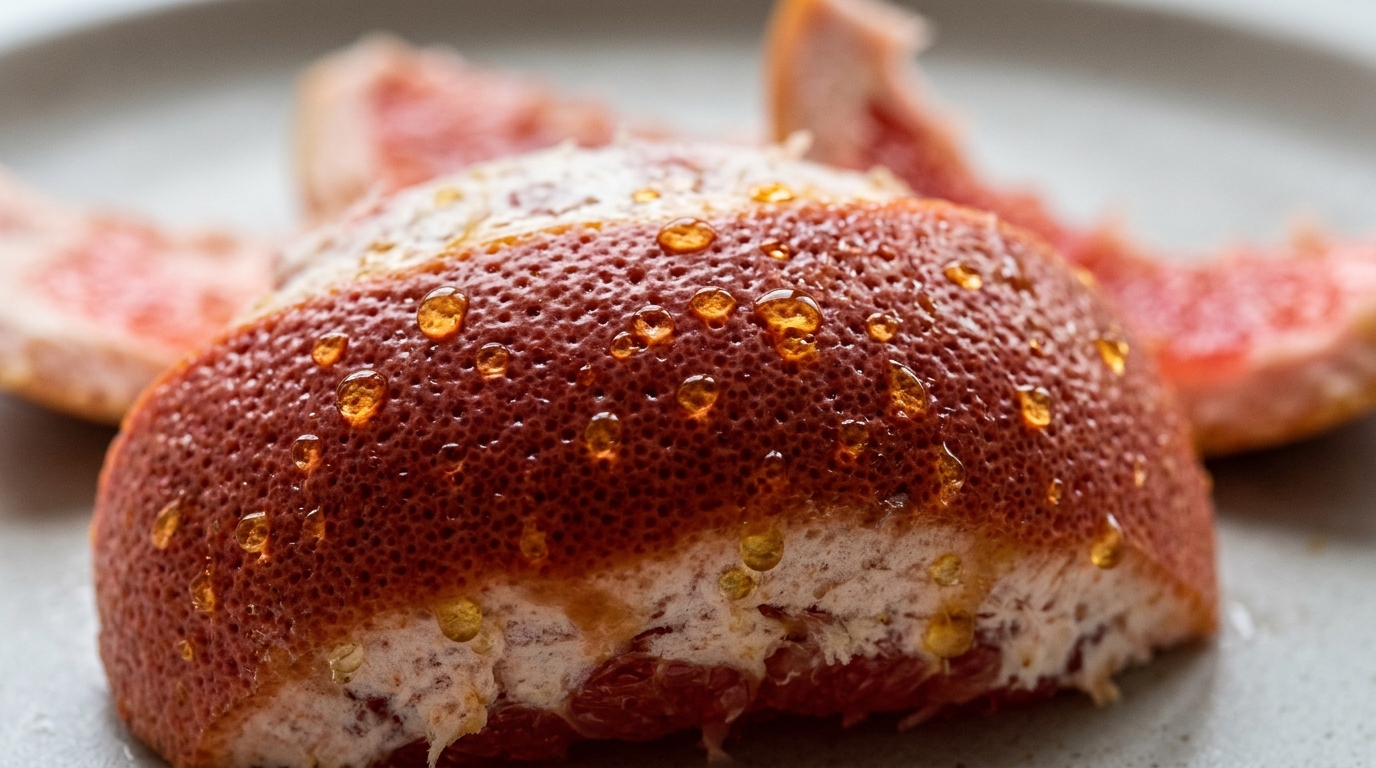
Agro-industrial processing of grapefruit, scientifically designated as Citrus paradisi, routinely generates substantial quantities of peel waste that are discarded despite remaining exceptionally rich in biologically active polyphenols, flavonoids, and phenolic acids. Seeking a sustainable pathway to valorize this abundant byproduct without relying on hazardous, volatile organic solvents, a team of researchers investigated an advanced green extraction methodology coupling microwave pretreatment with ultrasound-assisted extraction. The extraction process utilized a synthesized natural deep eutectic solvent composed of natural metabolites, specifically glucose and glycerol. By integrating rapid physical disintegration through thermal microwave stress with acoustic cavitation from ultrasonic irradiation, the experimental strategy successfully maximized the recovery of functional phytochemicals from dried grapefruit peel powder while maintaining an environmentally benign processing framework aligned with circular economy principles.
The green solvent system was synthesized by combining density-corrected glycerol and analytical-grade glucose at a precise molar ratio of one part glucose to two parts glycerol, corresponding to 180.16 grams of glucose and 146.3 milliliters of glycerol. This mixture was continuously stirred and heated at 80 degrees Celsius until a clear, homogeneous, and stable liquid was formed, after which it was allowed to equilibrate at room temperature for 24 hours prior to experimental application. Deep eutectic solvents of this class feature melting temperatures markedly lower than those of their isolated constituent compounds, mediated by intensive intermolecular hydrogen bonding established between the hydrogen-bond donor and the hydrogen-bond acceptor. Because glycerol and glucose are natural, biocompatible, non-toxic metabolites recognized as safe food ingredients, their resulting eutectic mixture possesses low volatility, high biodegradability, and structural flexibility, thereby presenting negligible residual chemical hazards compared to conventional petrochemical media such as methanol, ethanol, and acetone.
To confirm the chemical formation and structural integrity of the glucose-glycerol natural deep eutectic solvent, the researchers conducted detailed spectroscopic investigations across ultraviolet-visible and Fourier-transform infrared wavelength ranges. In the ultraviolet-visible absorption analysis spanning 150 to 800 nanometers, isolated glucose exhibited characteristic absorption shoulders in the 200 to 230 nanometer region associated with n-to-sigma-star electronic transitions of its hydroxyl moieties and open-chain aldehyde conformations, while pure glycerol displayed intense absorbance below 220 nanometers. When synthesized into the eutectic solvent, the spectrum ceased to be an additive mathematical sum of the individual components; instead, it showed noticeable band broadening and a distinct shoulder shift between 220 and 240 nanometers without producing novel absorption peaks at higher wavelengths. This absence of newly generated chromophores confirmed that the solvent mixture was formed via physical complexation rather than irreversible covalent alteration.
Fourier-transform infrared spectroscopy spanning 400 to 4500 reciprocal centimeters further corroborated the structural configuration of the eutectic hydrogen-bonded network. In pure glycerol, broad oxygen-hydrogen stretching vibrations appeared between 3200 and 3500 reciprocal centimeters, accompanied by aliphatic carbon-hydrogen stretching near 2900 reciprocal centimeters and carbon-oxygen stretching bands within 1000 to 1150 reciprocal centimeters. Pure glucose presented similar oxygen-hydrogen stretching between 3200 and 3400 reciprocal centimeters and carbon-oxygen-carbon stretching in its fingerprint domain. Following the synthesis of the glucose-glycerol eutectic complex, significant spectral alterations manifested in the oxygen-hydrogen stretching region, marked by extensive band broadening and frequency shifts, alongside observable conformational displacements in the fingerprint carbon-oxygen stretching zone. These spectral modifications directly substantiated the restructuring of hydroxyl interactions and confirmed the formation of a dense, stable hydrogen-bonded supramolecular matrix capable of solubilizing polar phytochemicals.
Prior to broad statistical optimization, the researchers conducted preliminary screening using plant material derived from fresh grapefruit purchased at a local market. The collected peels initially weighed 1.86 kilograms in their fresh state and were shade-dried for four to eight days until reaching a stable, constant weight of 1.01 kilograms, after which they were pulverized into a uniform fine powder. For preliminary testing, an aqueous eutectic solvent containing 70 percent water by volume was combined with the powdered peel at a solid-to-solvent ratio of one gram of biomass per 25 milliliters of solvent. The slurry was exposed to microwave pretreatment for one minute at 480 watts in a domestic microwave oven, followed immediately by 30 minutes of ultrasonic bath treatment. Quantitative colorimetric evaluation revealed an initial total phenolic content of 82.997 milligrams of gallic acid equivalents per gram of dry weight and a total flavonoid content of 18.563 milligrams of rutin equivalents per gram of dry weight, demonstrating the viability of the glucose-glycerol system for recovery.
To evaluate complex factor interactions and optimize the extraction procedure, the investigators employed response surface methodology coupled with a seventeen-run Box-Behnken experimental design. Three continuous independent process variables were evaluated across predetermined operational intervals: aqueous solvent water content ranging from 50 to 90 percent by volume, ultrasonic sonication duration evaluated at 20, 30, and 40 minutes, and the solvent-to-solid ratio adjusted between 15 and 35 milliliters per gram. Across all seventeen runs, a fixed one-minute microwave irradiation at 480 watts was maintained before sonication. In this system, higher percentage designations represented increased water dilution; for example, a 90 percent aqueous solvent comprised 90 milliliters of water and 10 milliliters of eutectic solvent, whereas a 50 percent solution contained equal volumes of water and eutectic solvent. All resulting filtrates were systematically collected after vacuum filtration for analytical determination of phenolics, flavonoids, and free radical scavenging capabilities.
Empirical responses obtained across the experimental matrix revealed substantial variation depending on processing conditions. Similarly, the highest total flavonoid content of 7.63 plus or minus 0.55 milligrams of rutin equivalents per gram of dry weight was achieved at 70 percent water content, a 35 milliliter per gram ratio, and 40 minutes of sonication, while the minimum recovery registered at 4.39 plus or minus 0.12 milligrams of rutin equivalents per gram under 50 percent solvent water content and a 25 milliliter per gram ratio.
Analysis of the underlying extraction physics demonstrated that solvent dilution decisively governed mass transfer and compound solubility. At low water dilution of 50 percent, the high intrinsic viscosity of the dense eutectic network restricted molecular diffusion and solvent penetration into the grapefruit peel matrix, depressing overall recovery. Conversely, excessive dilution at 90 percent water content impaired extraction performance by disrupting the specific hydrogen-bonding affinity between the solvent molecules and the target phenolic structures. Thus, an intermediate water content around 70 percent established an optimal hydrodynamic balance between low viscosity and high hydrogen-bonding capability. Concurrently, increasing the solvent-to-solid ratio from 15 to 35 milliliters per gram consistently enhanced mass transfer driving forces, whereas extending sonication past 30 to 40 minutes caused slight declines in antioxidant yields, indicative of degradation or oxidative decay of heat-sensitive polyphenolic structures under extended acoustic cavitation.
Statistical modeling via Design-Expert software verified the robust predictive reliability of the generated mathematical equations. Total phenolic content, total flavonoid content, and DPPH radical scavenging followed significant linear regression models with coefficients of determination of 0.9013, 0.9089, and 0.9658, respectively, while ABTS radical scavenging was fitted by a quadratic model achieving a determination coefficient of 0.9593. All mathematical models demonstrated high statistical significance with p-values below 0.0001 and non-significant lack-of-fit values spanning from 0.0755 to 0.8486, proving excellent congruence between predicted and empirical data. Subsequent multi-response numerical optimization targeting balanced compound recovery and radical scavenging identified the global optimum extraction parameters as a 74 percent water-content aqueous solvent, an ultrasonic sonication time of 20 minutes, and a solvent-to-solid ratio of 35 milliliters per gram, corresponding to an overall desirability index of 0.974.
Experimental validation conducted at these numerically optimized parameters produced extract yields closely matching mathematical forecasts, delivering a total phenolic content of 86.33 milligrams of gallic acid equivalents per gram of dry weight, a total flavonoid content of 5.93 milligrams of rutin equivalents per gram of dry weight, an 87.36 percent inhibition of DPPH radicals, and a 55.09 percent scavenging of ABTS radicals. Notably, while an isolated 40-minute extraction produced slightly higher single-endpoint phenolic recovery in Run 10, the multi-response approach favored 20 minutes because the longer duration substantially impaired radical scavenging efficiency, reducing DPPH inhibition to 57.16 percent due to compound degradation. Mechanistically, initial one-minute microwave heating generated rapid internal thermal and vapor pressure stresses within the moist cellular matrix, weakening cell walls and permeating tissue structures, which allowed subsequent acoustic cavitation from ultrasound waves to rapidly shear cellular debris and accelerate solute diffusion into the surrounding solvent medium.
Beyond in vitro antioxidant activity, the antimicrobial potential of the extracts was verified against pathogenic bacterial strains using agar well diffusion assays on blood agar medium incubated for 24 hours at 37 degrees Celsius. Testing evaluated both Gram-positive Staphylococcus aureus and Gram-negative Salmonella typhi alongside standard pharmaceutical controls vancomycin and ciprofloxacin. Undiluted extract prepared using a 70 percent aqueous solvent at a 25 milliliter per gram solid ratio generated pronounced clear inhibition zones measuring 21 millimeters against Staphylococcus aureus and 20 millimeters against Salmonella typhi. In comparison, disc diffusion of vancomycin yielded a 13-millimeter inhibition zone against Staphylococcus aureus, while ciprofloxacin produced a 19-millimeter zone against Salmonella typhi. Diluting the extract at 1-to-1 and 1-to-2 ratios caused progressive reductions in inhibition zones, and the pure solvent blank produced an autonomous 17-millimeter zone against Staphylococcus aureus, suggesting that the eutectic vehicle contributes complementary baseline antibacterial action that synergizes with the extracted citrus bioactives.
While these experimental findings demonstrate that combining microwave pretreatment and ultrasound-assisted extraction with green eutectic solvents represents an effective approach for converting grapefruit peel residues into high-value functional ingredients, several scientific boundaries must be acknowledged. The research team noted that individual phenolic and flavonoid metabolites were not separated, identified, or quantified through chromatographic techniques such as high-performance liquid chromatography or liquid chromatography-mass spectrometry. Furthermore, the empirical evaluations were conducted on a single commercial batch of Citrus paradisi peel rather than across multi-origin agricultural samples, and minimum inhibitory concentration assays were not performed. Future investigations incorporating detailed chromatographic profiling and multi-batch validation will be essential to establish chemical reproducibility and advance this sustainable bioprocess toward commercial utilization in food and pharmaceutical sectors.
Subject of Research: Microwave and ultrasound-assisted deep eutectic solvent extraction of Citrus paradisi peel bioactives
Article Title: Optimized microwave pretreatment and ultrasound-assisted deep eutectic solvent extraction for efficient valorization of Citrus paradisi peel bioactives
Article References: Zumar, S., Imtiaz, F., Almehizia, A. A., Assiri, A. A., Sajid, A., Manzoor, Q., & Saeed, S. T. (2026). Optimized microwave pretreatment and ultrasound-assisted deep eutectic solvent extraction for efficient valorization of Citrus paradisi peel bioactives. Bioresources and Bioprocessing, 13(1), Article 138. https://doi.org/10.1186/s40643-026-01137-x
Image Credits: AI Generated
DOI: 10.1186/s40643-026-01137-x
Keywords: Citrus paradisi, grapefruit peel valorization, deep eutectic solvents, natural deep eutectic solvents, microwave pretreatment, ultrasound-assisted extraction, response surface methodology, Box-Behnken design, total phenolic content, total flavonoid content, DPPH radical scavenging, ABTS radical scavenging, Staphylococcus aureus, Salmonella typhi, green chemistry, circular economy, glycerol-glucose solvent, agro-industrial waste valorization
News Source: Gregory Coleman. (November 14, 2026). Green Deep Eutectic Solvent Extraction Recovers Antioxidants From Grapefruit Peels. Scienmag.