• HOME
  • NEWS
  • EXPLORE
    • CAREER
      • Companies
      • Jobs
    • EVENTS
    • iGEM
      • News
      • Team
    • PHOTOS
    • VIDEO
    • WIKI
  • BLOG
  • COMMUNITY
    • FACEBOOK
    • INSTAGRAM
    • TWITTER
Wednesday, April 1, 2026
BIOENGINEER.ORG
No Result
View All Result
  • Login
  • HOME
  • NEWS
  • EXPLORE
    • CAREER
      • Companies
      • Jobs
        • Lecturer
        • PhD Studentship
        • Postdoc
        • Research Assistant
    • EVENTS
    • iGEM
      • News
      • Team
    • PHOTOS
    • VIDEO
    • WIKI
  • BLOG
  • COMMUNITY
    • FACEBOOK
    • INSTAGRAM
    • TWITTER
  • HOME
  • NEWS
  • EXPLORE
    • CAREER
      • Companies
      • Jobs
        • Lecturer
        • PhD Studentship
        • Postdoc
        • Research Assistant
    • EVENTS
    • iGEM
      • News
      • Team
    • PHOTOS
    • VIDEO
    • WIKI
  • BLOG
  • COMMUNITY
    • FACEBOOK
    • INSTAGRAM
    • TWITTER
No Result
View All Result
Bioengineer.org
No Result
View All Result
Home NEWS Science News Biology

Great apes communicate cooperatively

Bioengineer by Bioengineer
January 25, 2018
in Biology, Science News
Reading Time: 2 mins read
0
Share on FacebookShare on TwitterShare on LinkedinShare on RedditShare on Telegram
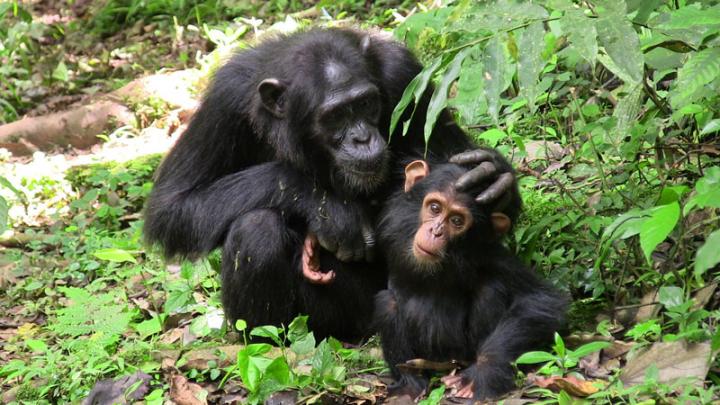
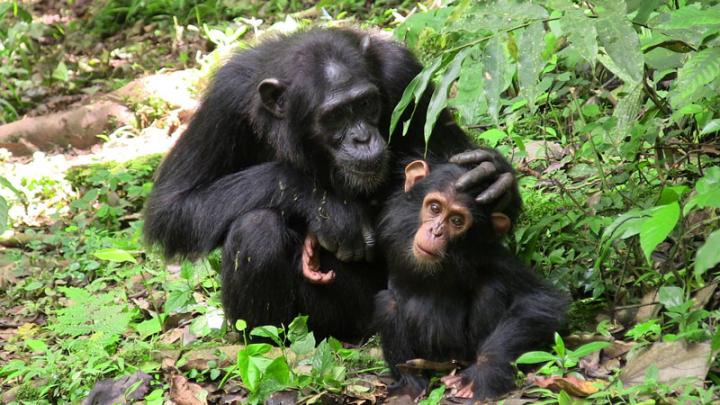
IMAGE

Credit: M. Froehlich / Max Planck Institute for Ornithology

Human communication is one of the most sophisticated signalling systems, being highly cooperative and including fast interactions. The first step into this collective endeavour can already be observed in early infancy, well before the use of first words, when children start to engage in turn-taking interactional practices embodying gestures to communicate with other individuals. One of the predominant theories of language evolution thus suggested that the first fundamental steps towards human communication were gestures alone.

The research team of Marlen Fröhlich and Simone Pika of the Humboldt Research Group at the Max Planck Institute for Ornithology together with colleagues from the Max Planck Institute for Evolutionary Anthropology in Leipzig, the Ludwig- Maximilians-University in Munich and the Kyoto University in Japan, conducted the first systematic comparison of communicative interactions in mother-infant dyads of two different bonobo and two different chimpanzee communities in their natural environments.

The bonobos were studied over the duration of two years in the Salonga National Park and Luo Scientific Reserve in the Democratic Rebublic of Congo. The chimpanzees were observed in the Taï National Park, Côte D'Ivoire, and Kibale National Park in Uganda.

The results showed that communicative exchanges in both species resemble cooperative turn-taking sequences in human conversation. However, bonobos and chimpanzees differ in their communication styles. "For bonobos, gaze plays a more important role and they seem to anticipate signals before they have been fully articulated" says Marlen Froehlich, first author of the study.

In contrast, chimpanzees engage in more time-consuming communicative negotiations and use clearly recognizable units such as signal, pause and response. Bonobos may therefore represent the most representative model for understanding the prerequisites of human communication. "Communicative interactions of great apes thus show the hallmarks of human social action during conversation and suggest that cooperative communication arose as a way of coordinating collaborative activities more efficiently," says Simone Pika, head of the study.

###

Original publication:
Marlen Fröhlich, Paul Kuchenbuch, Gudrun Müller, Barbara Fruth, Takeshi Furuichi, Roman M. Wittig, Simone Pika
Unpeeling the layers of language: Bonobos and chimpanzees engage in cooperative turn-taking sequences.
Scientific Reports; 23 May, 2016

Media Contact

Dr. Simone Pika
[email protected]
49-172-887-2270
@maxplanckpress

http://www.mpg.de

Share12Tweet7Share2ShareShareShare1

Related Posts

blank

Robotic Gripper Using Magnetic Tensegrity and Adaptive Energy Barrier for Enhanced UAV Perching

April 1, 2026

AI Model Predicts Depression Risk in Elderly China

April 1, 2026

Boosting Protein Folding with 2D Geometric Diffusion

April 1, 2026

ASH Releases New Clinical Practice Guidelines for Diagnosing and Managing Severe Acquired Aplastic Anemia

April 1, 2026
Please login to join discussion

POPULAR NEWS

  • blank

    Revolutionary AI Model Enhances Precision in Detecting Food Contamination

    96 shares
    Share 38 Tweet 24
  • Imagine a Social Media Feed That Challenges Your Views Instead of Reinforcing Them

    1006 shares
    Share 398 Tweet 249
  • Promising Outcomes from First Clinical Trials of Gene Regulation in Epilepsy

    51 shares
    Share 20 Tweet 13
  • Popular Anti-Aging Compound Linked to Damage in Corpus Callosum, Study Finds

    43 shares
    Share 17 Tweet 11

About

We bring you the latest biotechnology news from best research centers and universities around the world. Check our website.

Follow us

Recent News

Robotic Gripper Using Magnetic Tensegrity and Adaptive Energy Barrier for Enhanced UAV Perching

AI Model Predicts Depression Risk in Elderly China

Boosting Protein Folding with 2D Geometric Diffusion

Subscribe to Blog via Email

Enter your email address to subscribe to this blog and receive notifications of new posts by email.

Join 78 other subscribers
  • Contact Us

Bioengineer.org © Copyright 2023 All Rights Reserved.

Welcome Back!

Login to your account below

Forgotten Password?

Retrieve your password

Please enter your username or email address to reset your password.

Log In
No Result
View All Result
  • Homepages
    • Home Page 1
    • Home Page 2
  • News
  • National
  • Business
  • Health
  • Lifestyle
  • Science

Bioengineer.org © Copyright 2023 All Rights Reserved.