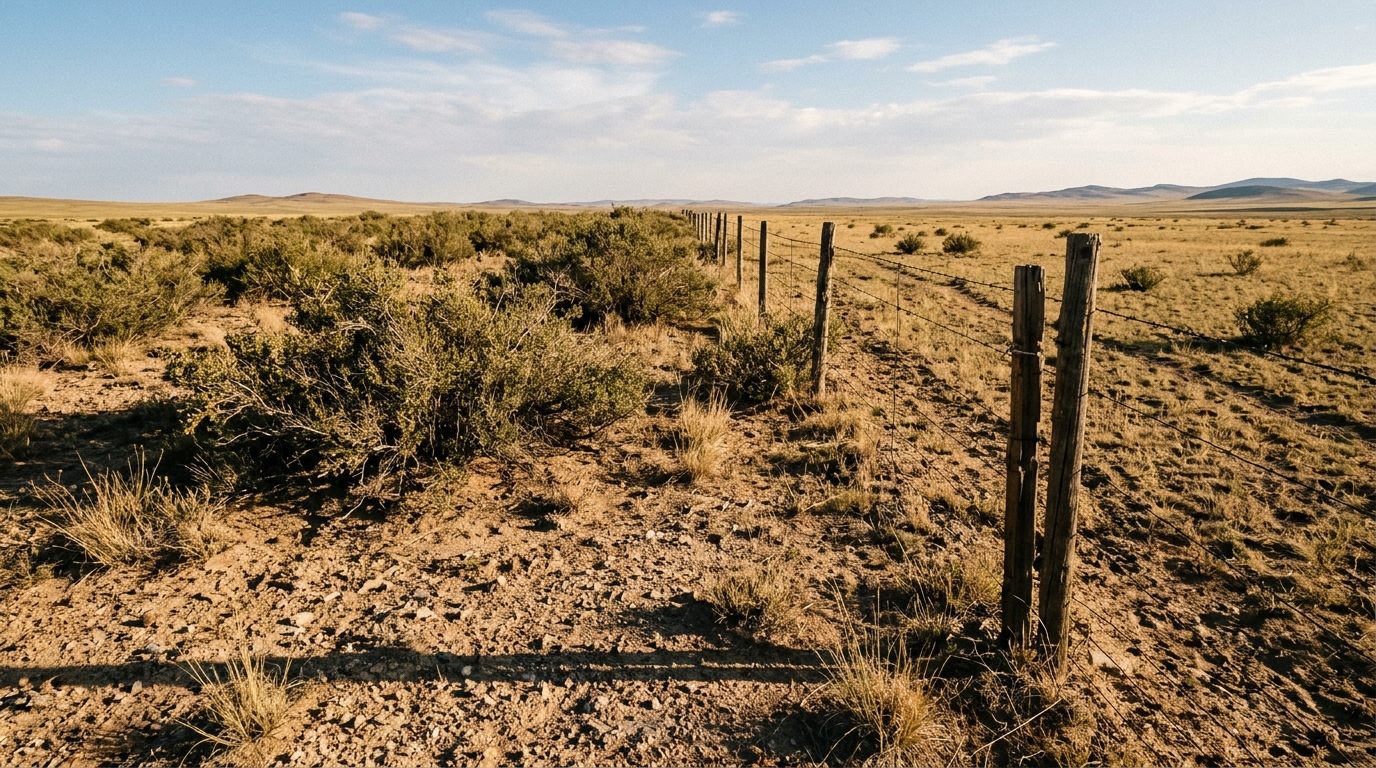
A recent experimental study conducted in Inner Mongolia, China, demonstrates that protecting grassland from livestock grazing leads to a significant increase in surface soil sand content, which subsequently creates favorable conditions for shrub proliferation. These findings highlight a critical link between management practices and geomorphological processes in dryland regions.
Researchers compared vegetation characteristics and soil substrate properties inside fenced exclosures against those in adjacent grazed areas. The goal was to quantify how grazing pressure influences shrub expansion and determine the specific soil-mediated pathways regulating these vegetation shifts.
Observations revealed that the fenced exclosure treatment resulted in a substantial increase in total shrub crown area, which rose from an average of 4.50 ± 1.87 square meters to 11.90 ± 4.79 square meters. Detailed analysis indicated that this expansion was primarily driven by higher shrub density, which contributed 60.8% of the total observed increase, rather than the growth of individual established plants.
Beyond changes in plant metrics, the investigation identified a significant increase in surface soil sand content within the fenced areas, recording a z-score of 0.659 with a p-value of less than 0.01. The shift toward a sandier substrate creates an abiotic environment that promotes the density and crown coverage of encroaching shrubs.
Statistical evaluation using linear mixed models and dual-layer partial least squares path modeling confirmed that sand content positively influenced both shrub density and total crown area. The path model further showed that these sand-mediated effects accounted for approximately half of the estimated fencing effect on shrub vegetation, with an indirect effect of +0.863 (p < 0.001).
Conversely, soil chemical properties including pH, total potassium, and total phosphorus showed no significant response to the fencing treatment. This lack of change in nutrient availability suggests that substrate texture, rather than shifts in soil fertility, is the dominant driver of shrub expansion in this desert steppe system. The research underscores the necessity of incorporating aeolian sediment dynamics into ecosystem management frameworks to better predict and control shrub encroachment in dryland grasslands.
Subject of Research: Shrub encroachment in desert steppe ecosystems
Article Title: Grazing exclusion promotes shrub encroachment via increased sand content in the desert steppe of Inner Mongolia, China
Article References: Dong, L., Tian, X., Wang, J., Lu, S., Zhang, H., Gao, R., Tang, Z., Zheng, Y., & Mi, W. (2026). Grazing exclusion promotes shrub encroachment via increased sand content in the desert steppe of Inner Mongolia, China. BMC Plant Biology. https://doi.org/10.1186/s12870-026-10403-1
Image Credits: AI Generated
DOI: 10.1186/s12870-026-10403-1
Keywords: Shrub encroachment, Grazing exclusion, Desert steppe, Inner Mongolia, Aeolian processes, Sand content, Soil texture, Vegetation transition, Rangeland management, Ecosystem dynamics, Fencing experiment, Shrub density, Dryland ecology, Geomorphology, Soil properties, Plant-soil interactions, Ecological research, China, Dryland grasslands, Vegetation management
News Source: Gavin Prescott. (November 18, 2026). Grazing Exclusion Promotes Shrub Encroachment by Increasing Surface Soil Sand Content. Scienmag.