• HOME
  • NEWS
  • EXPLORE
    • CAREER
      • Companies
      • Jobs
    • EVENTS
    • iGEM
      • News
      • Team
    • PHOTOS
    • VIDEO
    • WIKI
  • BLOG
  • COMMUNITY
    • FACEBOOK
    • INSTAGRAM
    • TWITTER
Friday, November 20, 2026
BIOENGINEER.ORG
No Result
View All Result
  • Login
  • HOME
  • NEWS
  • EXPLORE
    • CAREER
      • Companies
      • Jobs
        • Lecturer
        • PhD Studentship
        • Postdoc
        • Research Assistant
    • EVENTS
    • iGEM
      • News
      • Team
    • PHOTOS
    • VIDEO
    • WIKI
  • BLOG
  • COMMUNITY
    • FACEBOOK
    • INSTAGRAM
    • TWITTER
No Result
View All Result
Bioengineer.org
No Result
View All Result
Home NEWS Science News Technology

Graph Neural Network Framework Detects Cyberattacks in Connected Hospital Networks

by
November 20, 2026
in Technology
Reading Time: 2 mins read
0
Graph Neural Network Framework Detects Cyberattacks in Connected Hospital Networks

Graph Neural Network Framework Detects Cyberattacks in Connected Hospital Networks

Share on FacebookShare on TwitterShare on LinkedinShare on RedditShare on Telegram

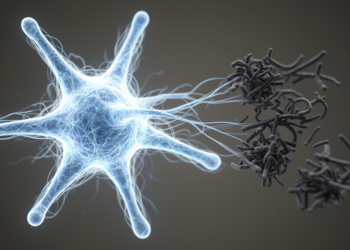
A research team has introduced HospGNN-IDS, a scalable intrusion detection framework based on graph neural networks designed specifically to protect IoT-enabled hospital network environments from complex cyberattacks. The proliferation of connected medical equipment and integrated clinical infrastructure has expanded the attack surface across healthcare facilities, leaving systems vulnerable to coordinated and multi-stage security intrusions. According to the researchers, conventional intrusion detection mechanisms frequently fail to capture the complex structural dependencies and temporal associations inherent in healthcare network communication.

To overcome these architectural constraints, HospGNN-IDS models network traffic as a continuous sequence of dynamic time graphs. Within this analytical representation, individual networked devices function as nodes, while their ongoing communication exchanges serve as connecting edges. This graph-structured perspective enables the system to continuously monitor and capture relational dependencies and shifting communication patterns across interconnected medical infrastructure.

The underlying framework integrates a hybrid deep learning architecture that combines Graph Attention Networks with Long Short-Term Memory networks. The Graph Attention Networks are deployed to learn and evaluate spatial dependencies among the connected devices, while the Long Short-Term Memory recurrent layers handle temporal modeling across consecutive time intervals. This dual analytical configuration allows the detection engine to identify both isolated security anomalies and synchronized, multi-stage intrusions across the network topology.

The researchers evaluated HospGNN-IDS through extensive comparative experiments using two standardized evaluation benchmarks: the IoT Healthcare dataset and the TON-IoT dataset. Performance assessments demonstrated that the proposed hybrid architecture outperformed traditional machine learning algorithms, deep learning models, and baseline graph-based intrusion detection methods. In empirical testing, the framework achieved an overall classification accuracy of up to 99.2 percent alongside a high F1-score across evaluated attack scenarios.

The authors reported that these experimental findings confirm the practical effectiveness, scalability, and operational timeliness of the HospGNN-IDS framework for securing modern hospital IT ecosystems.

Subject of Research: Graph neural network intrusion detection for IoT-enabled hospital networks

Article Title: HospGNN-IDS: scalable graph neural network-based intrusion detection for IoT-enabled hospital networks

Article References: Btoush, M. H., Amin, R., Costanzo, A., & Zakaria, M. D. (2026). HospGNN-IDS: scalable graph neural network-based intrusion detection for IoT-enabled hospital networks. Journal of Cloud Computing, 15(1), Article 155. https://doi.org/10.1186/s13677-026-00965-8

Image Credits: AI Generated

DOI: 10.1186/s13677-026-00965-8

Keywords: HospGNN-IDS, intrusion detection system, graph neural networks, IoT healthcare, hospital networks, cybersecurity, graph attention networks, long short-term memory, focal loss, class imbalance, TON-IoT dataset, temporal modeling, spatial dependency, multi-stage cyberattacks, network traffic analysis, connected medical devices

News Source: Cassandra Pierce. (November 20, 2026). Graph Neural Network Framework Detects Cyberattacks in Connected Hospital Networks. Scienmag.


Tags: class imbalanceconnected medical devicescybersecurityfocal lossgraph attention networksgraph neural networksHospGNN-IDShospital networksintrusion detection systemIoT healthcarelong short-term memorymulti-stage cyberattacksnetwork traffic analysisspatial dependencytemporal modelingTON-IoT dataset
Share12Tweet7Share2ShareShareShare1

Related Posts

Recycled Carbon Fibers Boost Concrete Axial Compressive Strength by 18.8 Percent

Recycled Carbon Fibers Boost Concrete Axial Compressive Strength by 18.8 Percent

November 20, 2026
Hybrid Signal Decomposition and Denoising Accurately Forecasts Weekly Nature Tourism Demand

Hybrid Signal Decomposition and Denoising Accurately Forecasts Weekly Nature Tourism Demand

November 20, 2026

Deep Learning Hybrid Model Accurately Identifies Young Children by Their Gait

November 20, 2026

Flight Tests Validate Control Barrier Functions for Drone Collision Avoidance

November 20, 2026

POPULAR NEWS

  • Astrocytic GFAP Upregulation Reduces Tau Pathology in Mouse Model of Tauopathy

    Astrocytic GFAP Upregulation Reduces Tau Pathology in Mouse Model of Tauopathy

    29 shares
    Share 12 Tweet 7
  • Acidic Ponds Link to Lower Pathogen Prevalence in Palmate Newts

    29 shares
    Share 12 Tweet 7
  • Early YAP and Beta-Catenin Signaling Links Stomach Infection to Liver Colonization

    29 shares
    Share 12 Tweet 7
  • Cold Storage Preserves Peach Firmness by Triggering RNA Degradation of Expansin Transcripts

    29 shares
    Share 12 Tweet 7

About

We bring you the latest biotechnology news from best research centers and universities around the world. Check our website.

Follow us

Recent News

Severe COVID-19 Alters Hepatic Autophagy Markers Despite Absent Hepatocyte ACE2 Receptors

Review Finds Limited Evidence That Decontamination Restores Bone-to-Implant Contact

Computational Screening and Cell Tests Link Rhodiola Compound to Lung Cancer Suppression

Subscribe to Blog via Email

Enter your email address to subscribe to this blog and receive notifications of new posts by email.

Join 89 other subscribers
  • Contact Us

Bioengineer.org © Copyright 2023 All Rights Reserved.

Welcome Back!

Login to your account below

Forgotten Password?

Retrieve your password

Please enter your username or email address to reset your password.

Log In
No Result
View All Result
  • Homepages
    • Home Page 1
    • Home Page 2
  • News
  • National
  • Business
  • Health
  • Lifestyle
  • Science

Bioengineer.org © Copyright 2023 All Rights Reserved.