• HOME
  • NEWS
  • EXPLORE
    • CAREER
      • Companies
      • Jobs
    • EVENTS
    • iGEM
      • News
      • Team
    • PHOTOS
    • VIDEO
    • WIKI
  • BLOG
  • COMMUNITY
    • FACEBOOK
    • INSTAGRAM
    • TWITTER
Wednesday, January 7, 2026
BIOENGINEER.ORG
No Result
View All Result
  • Login
  • HOME
  • NEWS
  • EXPLORE
    • CAREER
      • Companies
      • Jobs
        • Lecturer
        • PhD Studentship
        • Postdoc
        • Research Assistant
    • EVENTS
    • iGEM
      • News
      • Team
    • PHOTOS
    • VIDEO
    • WIKI
  • BLOG
  • COMMUNITY
    • FACEBOOK
    • INSTAGRAM
    • TWITTER
  • HOME
  • NEWS
  • EXPLORE
    • CAREER
      • Companies
      • Jobs
        • Lecturer
        • PhD Studentship
        • Postdoc
        • Research Assistant
    • EVENTS
    • iGEM
      • News
      • Team
    • PHOTOS
    • VIDEO
    • WIKI
  • BLOG
  • COMMUNITY
    • FACEBOOK
    • INSTAGRAM
    • TWITTER
No Result
View All Result
Bioengineer.org
No Result
View All Result
Home NEWS Science News Biology

Grant to explore genome editing and stem cell potential for cardiac treatment

Bioengineer by Bioengineer
July 2, 2018
in Biology
Reading Time: 2 mins read
0
Share on FacebookShare on TwitterShare on LinkedinShare on RedditShare on Telegram
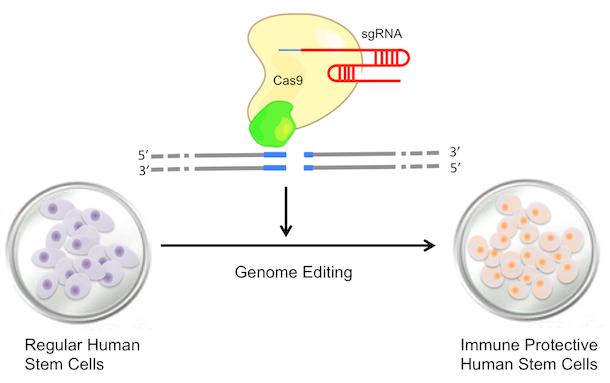
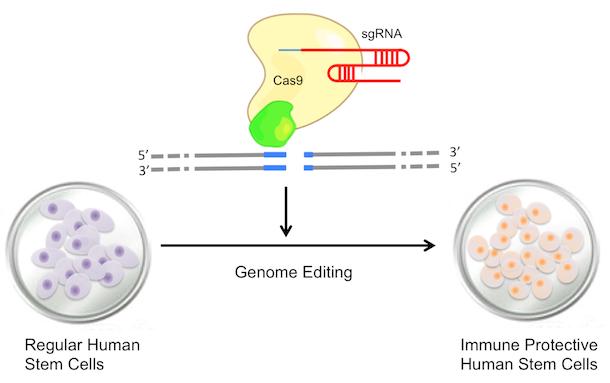
IMAGE

Credit: Xiaojun Lance Lian/Penn State

Examining the treatment potential of cardiac cells derived from human pluripotent stem cells (hPSCs) may lead to dramatically altering the care of cardiac disease and heart injuries, thanks to a grant from the National Institutes of Health.

The focus of a three-year, $567,000 Trailblazer Award grant from NIH's National Institute of Biomedical Imaging and Bioengineering, this research has the potential to open up new avenues for heart disease treatment.

"Because human pluripotent stem cells have unlimited proliferation capacity, we can make unlimited amounts of cardiac cells in the lab for therapy," said Xiaojun Lance Lian, assistant professor of biomedical engineering and biology, the recipient of the grant and principal investigator. "Current treatments rely on the donation of human hearts which is, as many know, very limited. Many heart attack patients are on the waiting list for a heart for transplantation."

Transplanting stem cell-derived cardiac cells to treat heart disease patients would cut down on the need for heart donors. However, this is not without complications, and Lian's research team is working to solve a life-threatening issue that arises during this type of treatment.

When transplanting stem cell-derived cardiac cells to treat heart disease patients, often the patient's own immune cells will attack these transplanted cells.

This project will use a genome editing approach to modify the stem cells. By harnessing recent advances in genome editing to program universal immune protective hPSC clones, the stem cells will be more readily accepted by the patient.

Using this new technique, the universal donor stem cells can then differentiate into human ventricular progenitors, which are cells that can differentiate to ventricular muscle cells after transplantation. Once modified, the stem cell-derived cardiac cells will not be recognized by T cells and NK immune cells.

"Our modified stem cells can then be used in the clinic for treating a variety of patients without immune rejection problems," Lian said.

The Trailblazer Award grant that Lian received is an opportunity for new and early-stage investigators to pursue research programs of high interest to the NIBIB. A Trailblazer project may be exploratory, developmental, proof of concept, or high-risk, high-yield impact and may be technology design-directed, discovery-driven, or hypothesis-driven. Applicants are expected to propose research approaches that have minimal or no preliminary data.

Jianxun Song, formerly associate professor of microbiology and immunology with the College of Medicine and now professor of microbial pathogenesis and immunology with Texas A&M, is working with Lian on this project.

###

Media Contact

A'ndrea Elyse Messer
[email protected]
814-865-9481
@penn_state

http://live.psu.edu

Share20Tweet8Share2ShareShareShare2

Related Posts

New Arabidopsis BIK1 Alleles Confirm Immunity Role

New Arabidopsis BIK1 Alleles Confirm Immunity Role

January 7, 2026
Machine Learning Unveils Bacillus anthracis Adaptability and Virulence

Machine Learning Unveils Bacillus anthracis Adaptability and Virulence

January 7, 2026

Genetic Insights Boost Catalpa huangxin Conservation Efforts

January 7, 2026

Decadal Observations Reveal Plant Diversity Stabilizes Ecosystems

January 7, 2026
Please login to join discussion

POPULAR NEWS

  • Enhancing Spiritual Care Education in Nursing Programs

    153 shares
    Share 61 Tweet 38
  • PTSD, Depression, Anxiety in Childhood Cancer Survivors, Parents

    143 shares
    Share 57 Tweet 36
  • Impact of Vegan Diet and Resistance Exercise on Muscle Volume

    45 shares
    Share 18 Tweet 11
  • SARS-CoV-2 Subvariants Affect Outcomes in Elderly Hip Fractures

    44 shares
    Share 18 Tweet 11

About

We bring you the latest biotechnology news from best research centers and universities around the world. Check our website.

Follow us

Recent News

Cladosporium Fungi Reduce Inflammation in Crohn’s Disease

Enhancing EEG Analysis in Language Learning through Feature Selection

Decoding PCOS: Insights from Transcriptomics and AI

Subscribe to Blog via Email

Enter your email address to subscribe to this blog and receive notifications of new posts by email.

Join 71 other subscribers
  • Contact Us

Bioengineer.org © Copyright 2023 All Rights Reserved.

Welcome Back!

Login to your account below

Forgotten Password?

Retrieve your password

Please enter your username or email address to reset your password.

Log In
No Result
View All Result
  • Homepages
    • Home Page 1
    • Home Page 2
  • News
  • National
  • Business
  • Health
  • Lifestyle
  • Science

Bioengineer.org © Copyright 2023 All Rights Reserved.