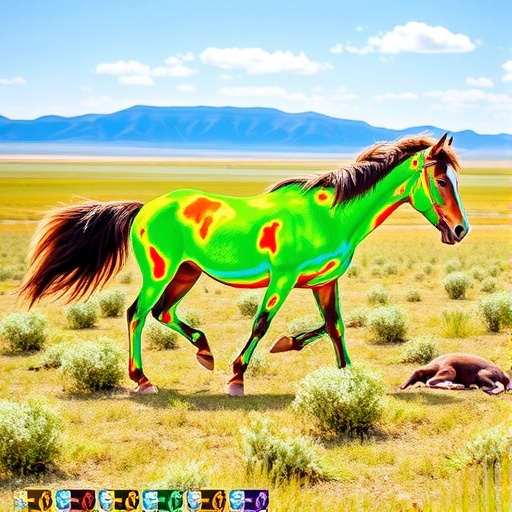
Across the verdant landscapes of Europe, protected natural areas are undergoing a profound transformation. The intensified effects of climate change—manifested in rising temperatures and increased episodes of heavy rainfall—are accelerating the growth of woody shrubs and trees. This accelerated vegetation growth threatens the delicate ecological balance, as dense shrubbery increasingly overshadows the open spaces that countless flowers, insects, and smaller organisms rely upon for sunlight and warmth. Historically, conservationists have combated this encroachment by employing chainsaws and brush cutters to maintain these habitats, but a groundbreaking study from Aarhus University and the Natural History Museum Aarhus in Denmark challenges this traditional approach. The researchers propose that rewilding using large herbivores, particularly feral horses and cattle, offers a more sustainable and ecologically nuanced solution to managing landscape dynamics.
This innovative strategy, termed “trophic rewilding,” leverages the natural behaviors of large herbivores to promote biodiversity and maintain ecosystem health. At the Mols Laboratory field station situated in Eastern Jutland, Denmark, a team of scientists observed herds of up to seventy feral horses and cattle over five years, spanning from 2017 to 2022. These animals were allowed to live autonomously without supplementary feeding throughout the year. Such an experimental design enabled researchers to meticulously document how the free-roaming herbivores utilized different segments of the landscape and how their movements and grazing patterns influenced vegetation structure and development. By deploying state-of-the-art GPS tracking devices affixed to individual animals and integrating satellite-derived vegetation indices, the study offers unprecedented insights into the animals’ nuanced roles in shaping their habitat.
The findings underscore that these feral herbivores do not randomly disperse across the landscape. Instead, they exhibit clear preferences, favoring open grasslands over closed forests and shrublands. Jeppe Aagaard Kristensen, assistant professor of biology and the lead author of the study, elaborates on this phenomenon by contrasting traditional nature management with trophic rewilding. “Where conventional methods attempt to freeze the landscape in a fixed state through uniform interventions, the animals enact their own autonomous patterns,” he explains. These natural distributions of grazing pressure result in a dynamic heterogeneity—the formation of a varied mosaic of habitats across the terrain. This inherent variability is crucial for supporting diverse ecosystems and ensuring the resilience of these natural areas in a changing climate.
Arguably the most pioneering aspect of this research resides in its integration of two massive and complementary data streams: GPS tracking data from individual cattle and horses and longitudinal vegetation data captured via satellite sensors using the Normalized Difference Vegetation Index (NDVI). This combination allows researchers to quantify not only where animals are spending their time but also how their presence correlates with changes in plant biomass and vegetation types. Biomass suppression was evident in areas with intense grazing, predominantly open grasslands, while areas less frequented by the herbivores experienced the unchecked growth of woody plants. Such spatially variable grazing pressure promotes a patchwork landscape where shrubs and trees proliferate in some zones, whereas grasslands remain open and vibrant in others. This emergent heterogeneity has highly positive implications for ecosystem functioning and biodiversity conservation.
Interestingly, the study also reveals key behavioral differences between horses and cattle, which are often conflated as a single ecological group of large grazing herbivores. The data elucidates that although these two species select similar pastures when resources are abundant during summer months, they diverge during resource-scarce periods. Horses and cattle explore distinct habitats and forage on different vegetation types, thus broadening the ecological niches utilized. Jens-Christian Svenning, a professor of biology and co-author of the study, highlights the significance of this finding: “Assuming all large grazers behave uniformly oversimplifies the animals’ real ecological functions. This functional diversity among herbivores drives landscape heterogeneity and enhances biodiversity by ensuring a varied impact on plant communities.”
The researchers’ investigation extended beyond normal climatic variation to encompass the extreme pan-European drought event of 2018. They observed that areas subjected to intensive use by the herbivores were paradoxically the most vulnerable to drought stress, yet these same regions exhibited the most rapid “greening” or recovery following the drought. This resilience underscores the critical role herbivores play in ecosystem recovery after climatic disturbances. “In an era of increasing climate extremes,” Kristensen remarks, “these animals foster a dynamic system where small open patches coexist alongside denser vegetation, creating habitats with staggered responses to climatic fluctuations. This dynamic buffering capacity simply cannot be replicated by passive approaches like land abandonment.”
However, the study also points to the delicate balance required when managing such rewilding projects. Following a deliberate reduction in herbivore populations by approximately two-thirds, the landscape experienced a noticeable overall increase in vegetation cover or ‘greening.’ Crucially, this greening was not spatially correlated with the animals’ prior patterns of habitat use, underscoring that the beneficial effects of herbivory on maintaining open grasslands are contingent on the sustained presence of these mega-herbivores within the landscape. Removing them disrupts the dynamic equilibrium that fosters habitat heterogeneity and reduces ecosystem resilience.
Another unexpected observation was the strong attraction of horses to man-made infrastructure, in particular a wooden shelter situated within the study area. This infrastructure acted as a behavioral magnet, drawing horses disproportionately compared to cattle or wild areas without such constructs. This finding has important consequences for future rewilding strategies, as Kristensen emphasizes: “We must be cautious not to inadvertently dictate animal movement and habitat use through the placement of artificial structures. A shelter or water trough can steer where animals congregate, thereby unintentionally shaping the landscape’s vegetation pattern.” This insight encourages wildlife managers and conservationists to thoughtfully design intervention elements in a manner that respects and aligns with the animals’ natural behavioral tendencies.
Kent Olsen, senior researcher and project leader at Mols Laboratory, adds further nuance to this discussion, noting that while water troughs are often necessary in environments lacking natural water sources, shelters are not a biological imperative for these hardy species. He points out that the feral horses and cattle possess adaptations to withstand diverse weather conditions and regularly seek informal shelter under tree canopies or terrain depressions. Their use of constructed shelters, therefore, should not be interpreted as distress but rather as an element of behavioral plasticity to be factored into management decisions that seek to minimize undue influence on natural movement patterns.
Animal welfare remains a core commitment within this rewilding framework. While the fundamental goal is to allow natural processes to play out with minimal human interference, the research team maintains ongoing monitoring protocols to ensure ethical standards. Individual animals are tracked and assessed daily, with interventions made only when survival without human assistance appears unlikely during harsh winter months. Olsen clarifies that the goal is to emulate natural population dynamics in which numbers fluctuate relative to available resources, but within a controlled setting where overpopulation and resource depletion are actively prevented. This dual commitment to ecology and ethics exemplifies a thoughtful approach to rewilding in the Anthropocene.
Collectively, this landmark study reaffirms the power of trophic rewilding as a nature management paradigm well-suited to the challenges posed by climate change. By facilitating autonomous behaviors of feral horses and cattle, protected areas like the Mols Laboratory exhibit enhanced structural diversity, ecosystem resilience, and biological complexity. This contrasts sharply with the static landscapes generated by mechanical interventions and passive land abandonment. The research further elucidates the fine-scale spatial interactions between herbivore movement and vegetation dynamics, highlighting the complexity underlying ecological management decisions. As Europe continues to confront the ecological impacts of a warming planet, such evidence-based rewilding strategies promise to play a pivotal role in conserving, restoring, and enhancing natural landscapes for future generations.
Subject of Research: Animals
Article Title: Space-use by feral cattle and horses shapes vegetation structure in a trophic rewilding area
News Publication Date: 4-Feb-2026
Web References: DOI 10.1002/eap.70170
References: Published in Ecological Applications
Keywords: trophic rewilding, feral horses, feral cattle, biodiversity, ecosystem resilience, climate change, vegetation dynamics, GPS tracking, NDVI, grazing behavior, landscape heterogeneity, conservation management
Tags: autonomous grazing in protected areasbiodiversity benefits of feral grazingclimate change effects on European landscapesecological balance and grazing dynamicsfield studies on herbivore-driven ecosystem restorationGPS tracking of feral horses and cattleimpact of large herbivores on vegetationmanaging shrub encroachment naturallyrewilding strategies in Europerole of feral animals in conservationsustainable habitat management techniquestrophic rewilding for ecosystem resilience