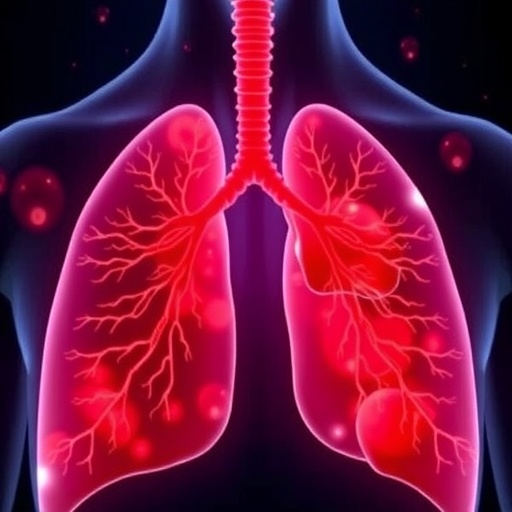
In a groundbreaking study published in Nature Metabolism, researchers unveil a critical link between glucose deprivation and lung cancer progression driven by the cytokine Leukemia Inhibitory Factor (LIF). This discovery sheds light on how cancer cells adapt to a harsh metabolic environment, revealing new potential therapeutic avenues to disrupt tumor growth and rewire the immune landscape in lung cancer.
Tumors often face fluctuating microenvironments, with limited nutrient availability posing a substantial challenge to cancer cell survival and proliferation. Among nutrients, glucose plays a pivotal role as a primary energy source and metabolic substrate. When glucose supply is restricted, cancer cells activate survival mechanisms, including the secretion of signaling molecules capable of reshaping their surrounding milieu. This study rigorously explores the molecular consequences of glucose deprivation in non-small-cell lung cancer (NSCLC) cells and identifies LIF, an interleukin-6 family cytokine, as a key player induced under these conditions.
The authors demonstrate that glucose deprivation or hypoxia—oxygen limitation commonly found in solid tumors—specifically triggers LIF secretion, while other metabolic stresses do not provoke the same response. This selective induction of LIF underscores a unique adaptive pathway by which cancer cells sense and respond to energy scarcity and hypoxic stress, orchestrating downstream processes that favor tumor survival and growth.
Mannose supplementation emerges as a striking intervention capable of abrogating LIF release during glucose deprivation. The study reveals that mannose sustains multiple metabolic pathways even under glucose-poor conditions, preventing the impairment of N-glycosylation, a crucial post-translational modification essential for proper protein folding and function. This maintenance of glycosylation appears critical in repressing the pathological secretion of LIF.
Mechanistically, the loss of glucose triggers the activation of unfolded protein response pathways, specifically engaging the PERK kinase pathway, alongside MEK MAP kinase activation. These signaling cascades are intimately connected with disrupted N-glycosylation and culminate in LIF secretion. The interplay between these molecular events outlines a previously uncharacterized signaling axis linking metabolic stress to inflammatory cytokine production.
In vivo investigations using mouse models of NSCLC reinforce the profound role of LIF in tumor biology. Reducing LIF levels leads to impaired angiogenesis—the formation of new blood vessels essential for tumor expansion—and slows tumor progression. These mice also exhibit a rewired immune compartment characterized by enhanced antitumor activity, suggesting that LIF not only shapes the tumor microenvironment but also subverts immune surveillance.
Furthermore, the study highlights the translational relevance of LIF by correlating its expression with markers of hypoxia, glucose deprivation, and angiogenesis in lung cancer patients. This clinical association positions LIF as a potential biomarker for tumor metabolic stress and vascular remodeling, offering prospects for stratified patient management.
The identification of LIF as a metabolic stress-induced cytokine widens the conceptual framework of how tumors exploit stress signals to their advantage. Beyond being a mere maker of inflammation, LIF acts as a molecular switch adapting the tumor ecosystem to glucose scarcity, ultimately promoting lung cancer development.
Notably, this research prompts reconsideration of the therapeutic targeting of LIF signaling in NSCLC. Intervening in this cascade might not only hinder tumor growth and angiogenesis but also reverse immune suppression, enhancing the efficacy of immunotherapies in a notoriously difficult-to-treat cancer.
By delineating the metabolic underpinnings of LIF induction, the study opens new vistas for exploiting metabolic vulnerabilities in cancer. The mannose-induced prevention of LIF release suggests that metabolic supplementation strategies could complement conventional therapies, potentially mitigating adaptive tumor responses that foster progression.
Beyond lung cancer, these findings ignite curiosity about whether similar mechanisms operate in other solid tumors facing fluctuating nutrient conditions. The interface between metabolism, cytokine signaling, and immune modulation revealed here is likely a universal theme in tumor biology, meriting expansive investigation.
The elucidation of the PERK and MEK MAP kinase pathways as critical mediators connects metabolic stress responses with well-characterized signaling networks, bearing implications for the design of targeted inhibitors that might simultaneously disrupt cancer metabolism and cytokine-driven tumor progression.
Together, this body of work charts a new territory at the crossroads of cancer metabolism, immunology, and molecular signaling, highlighting the sophistication with which tumors adapt to environmental challenges. It presents a compelling case for integrated therapeutic strategies that intercept these adaptive processes.
As research advances, understanding the precise molecular triggers and downstream effects of LIF secretion may reveal additional intervention points, including modulation of N-glycosylation or unfolded protein response pathways, potentially broadening the arsenal against resilient tumors.
In conclusion, the study convincingly establishes glucose deprivation as a driver of LIF-dependent lung cancer progression, intertwining metabolic stress with cytokine signaling and immune remodeling. This paradigm offers fresh insights into tumor biology and promising targets to disrupt the intricate adaptations cancers employ to thrive under adversity.
Subject of Research:
Metabolic stress-induced cytokine signaling in non-small-cell lung cancer (NSCLC), focusing on the role of Leukemia Inhibitory Factor (LIF) under glucose deprivation conditions and its effects on tumor growth, angiogenesis, and immune system remodeling.
Article Title:
Glucose deprivation drives LIF-dependent lung cancer.
Article References:
Luciano-Mateo, F., Moreno-Caceres, J., Hernández-Madrigal, M. et al. Glucose deprivation drives LIF-dependent lung cancer. Nat Metab (2026). https://doi.org/10.1038/s42255-025-01437-0
Image Credits:
AI Generated
DOI:
https://doi.org/10.1038/s42255-025-01437-0
Tags: adaptive pathways in cancer cellscancer cell survival under metabolic stresscytokine signaling in tumor progressionglucose deprivation and lung cancerhypoxia and glucose restriction in tumorsimmune landscape alterations in lung cancerinterleukin-6 family and cancerLIF cytokine role in cancermetabolic challenges in cancer proliferationnon-small cell lung cancer mechanismstherapeutic strategies for lung cancertumor microenvironment and energy scarcity