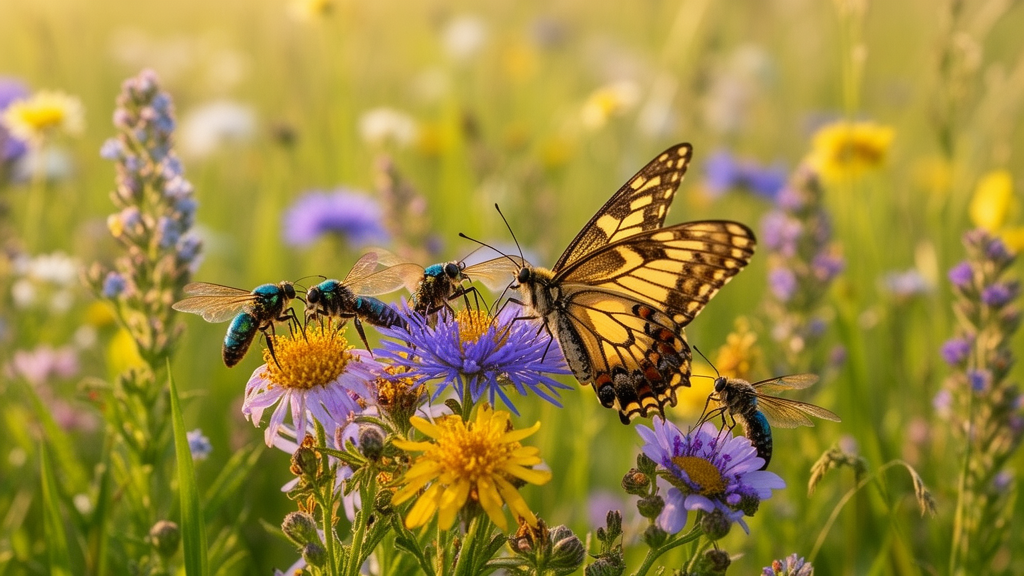
Plant and pollinator partnerships vary worldwide from broad associations to highly selective relationships, but these ecological connections do not follow a single universal gradient from the poles to the tropics. According to a global analysis led by Sailee P. Sakhalkar and Robert Tropek of Charles University and their colleagues, the degree to which plants and pollinators specialize across latitude depends heavily on the specific metric examined, the hemisphere, and the functional group of the pollinator involved.
To investigate whether plant–pollinator relationships show a consistent global pattern, the research team assembled and evaluated an extensive global dataset comprising more than 3,400 quantitative interaction networks. In total, this compiled dataset encompassed more than 110,000 distinct plant–pollinator interactions. The analysis systematically accounted for potential sampling completeness issues, methodological biases, and differences in taxonomic scope across the underlying datasets.
After adjusting for these methodological variables, the researchers determined that latitude remained significantly associated with specialization in most cases, yet its observable effects were not uniform. Network-level specialization and pollinator specialization most frequently reached their peak near the northern tropical–subtropical boundary. In contrast, plant specialization displayed a comparatively weak and hemispherically asymmetric distribution across the examined geographical regions.
The study further revealed that local climate served as the best-supported predictor of the specialization gradient more often than latitude, general biodiversity, or ecosystem productivity. However, these climatic associations differed noticeably among distinct pollinator functional groups, such as birds and hoverflies. The researchers noted that these discrepancies suggest specialization trends may stem from group-specific biological traits directly tied to climate regimes.
These observations indicate that the architecture of plant–pollinator partnerships is shaped by context-dependent interactions between climate and pollinator identity rather than a simple latitudinal rule. Because global rainfall patterns and temperatures continue to shift, pollination networks may respond unevenly across different environments. The authors concluded that incorporating local climate conditions and distinctions among pollinator functional groups will be essential when evaluating future risks to pollination systems worldwide.
Subject of Research: Global biogeographic patterns of plant–pollinator network specialization
Article Title: No one-size-fits-all in pollination
Article References: Yan, Y. (2026). No one-size-fits-all in pollination. Nature Plants, 12(11), 2146-2146. https://doi.org/10.1038/s41477-026-02488-1
Image Credits: AI Generated
DOI: 10.1038/s41477-026-02488-1
Keywords: plant-pollinator interactions, ecological networks, pollination specialization, latitudinal gradient, climate predictors, pollinator functional groups, ecological communities, biodiversity, network specialization, hoverflies, sunbirds, subtropical boundary, ecological biogeography, species interactions, community ecology
News Source: Julie Wynn. (November 21, 2026). Global Plant and Pollinator Specialization Patterns Vary by Climate and Hemisphere. Scienmag.